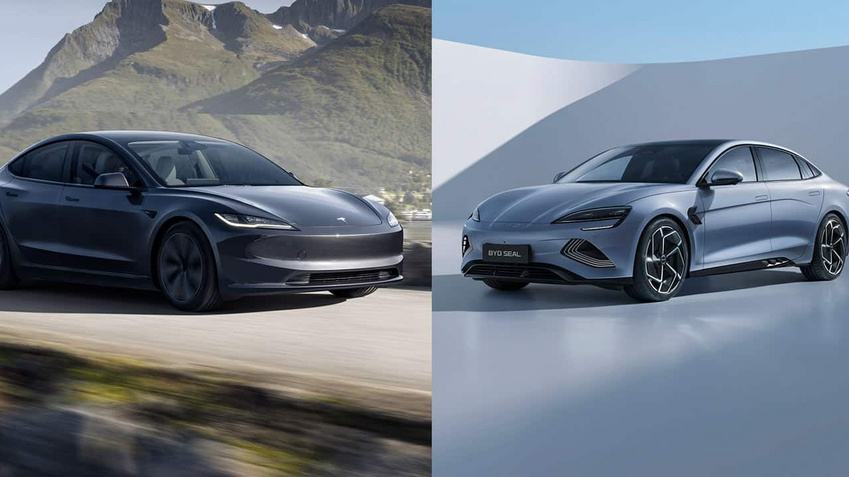
According to the latest stats from Tesla, the company rolled out 1,773,443 electric vehicles in 2024, marking its annual total production. Meanwhile, BYD pulled slightly ahead with 1,777,965 electric vehicles produced, edging Tesla out by roughly 4,500 units. The year 2024 was quite pivotal for Tesla, as it was the first year in a decade to witness a sales slump. Analysis suggests that Tesla’s main hurdles now are its slower pace in rolling out new models and its somewhat steep pricing. Tesla’s sales have heavily leaned on two popular models: the Model Y and Model 3. Although the Cybertruck was launched at the end of 2023, marking their first new model since 2020, its high price tag and unconventional design didn’t quite rev up the sales figures as expected.
Despite everything, Tesla still maintains a certain edge when it comes to sales figures. In 2024, Tesla reported vehicle sales totaling 1,789,226 units, slightly outpacing BYD’s tally of 1,764,992. This edge in sales numbers comes as Tesla sold thousands of vehicles produced in 2023, further cementing its position in the market.
In comparison, Chinese electric vehicle manufacturers like BYD have been riding the wave of government support, including benefits from last year’s cash-for-clunkers scheme. These policies have undeniably turbocharged their growth. Looking at the big picture, the Chinese government’s backing of electric vehicles and battery production has propelled the nation’s automotive industry into a significant upswing on the global stage, putting traditional automakers under pressure. Today, China has overtaken Japan to become the world’s largest exporter of automobiles, steadily chipping away at the market share of iconic brands like BMW and General Motors. In regions like South America and Europe, Chinese cars are earning rave reviews for their high quality, cutting-edge technology, and excellent value for money.