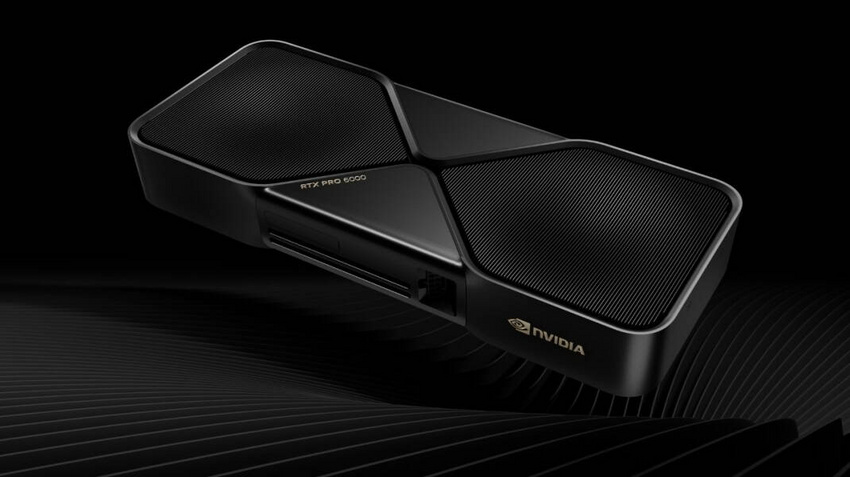
NVIDIA is set to launch the RTX Pro 6000 Blackwell artificial intelligence chip specifically designed for the Chinese market. This chip has been specially adjusted to comply with U.S. export control regulations, removing several high-end features in the process.
Reports indicate that this brand-new artificial intelligence chip is based on the NVIDIA Blackwell RTX Pro 6000 processor. However, in order to comply with regulations, key technologies such as high-bandwidth memory (HBM) and NVLink for high-speed data transfer have been removed.
NVIDIA is currently awaiting assurances from the Trump administration to confirm that its new chips won’t violate export control regulations. If the necessary guarantees are not obtained, NVIDIA may have to further adjust the chip designs. By removing high-bandwidth memory and high-speed interconnect technologies, the Chinese version of the chip will have significantly lower processing power than the standard version, but it will still provide basic AI computing support for the Chinese market.
The Chinese market is critical for NVIDIA. According to recent reports, China has become NVIDIA’s fourth-largest market, with annual sales reaching $17.1 billion, accounting for 13% of its total revenue. Huang Renxun also pointed out that due to U.S. export control policies, NVIDIA’s market share in China has dropped from 95% to 50% over the past four years.
Despite facing various technological limitations, China’s demand for NVIDIA hardware remains robust. Many large AI companies plan to build 36 data centers in the desert region of Western China to accommodate over 115,000 NVIDIA AI processors. However, due to export control policies, these high-performance H100 and H200 processors cannot enter the Chinese market through regular channels.
Amid the uncertainty surrounding U.S. policies, the Chinese market is showing a trend of reducing its reliance on NVIDIA products. Major companies like Alibaba, ByteDance, and Tencent are exploring the use of chips from domestic manufacturers such as Huawei as alternatives to NVIDIA’s offerings. However, considering the efficiency needed for artificial intelligence training and inference, using NVIDIA chips alongside the CUDA platform remains the best choice. Even newer chips with lower performance continue to see strong demand in the market.