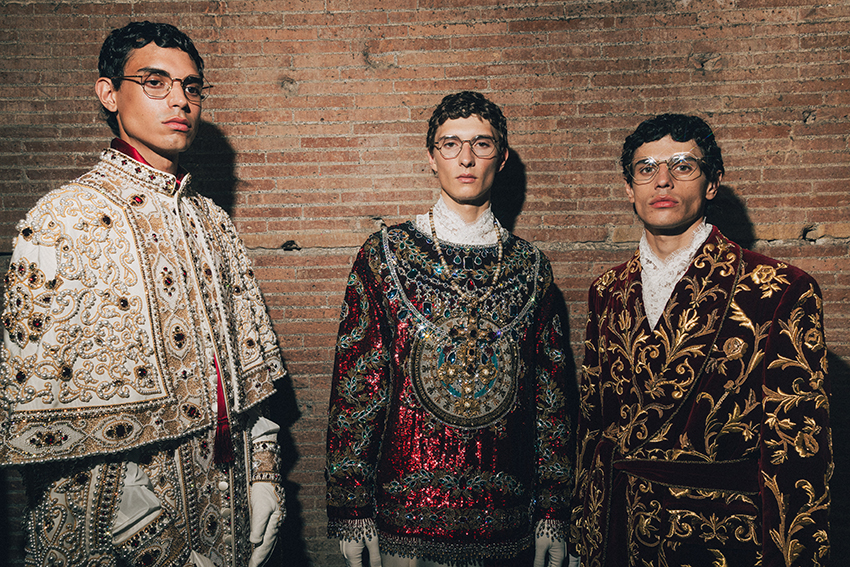
Nestled in Rome, Castel Sant’Angelo is steeped in rich history, having been completed in AD 139. Recently, the Italian brand Dolce & Gabbana held its Alta Sartoria menswear haute couture fashion show here, drawing inspiration for the collection’s backdrop, themes, and designs from this iconic castle.
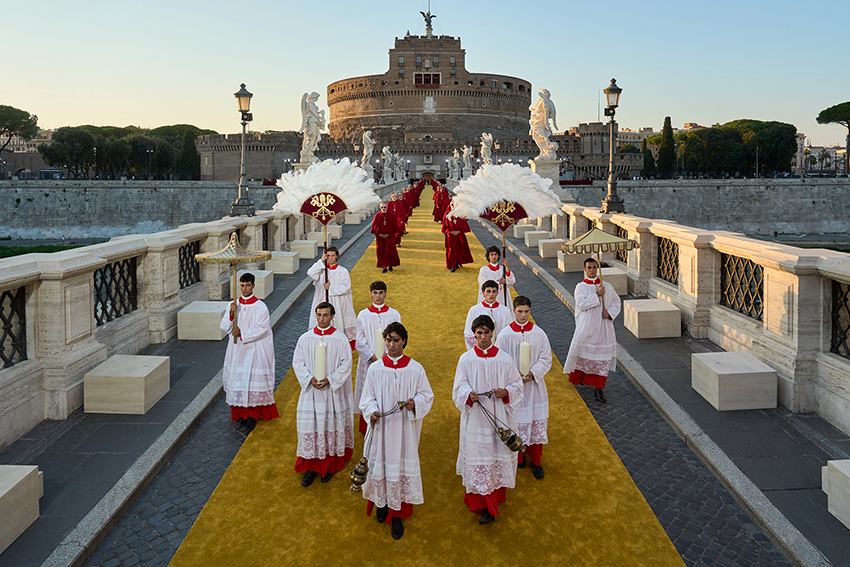
The Castel Sant’Angelo has witnessed centuries of change, and its history can’t be summed up in just a few sentences. Originally built by Emperor Hadrian, the construction began in AD 123 and was completed in AD 139 during the reign of Emperor Antoninus Pius. Initially, Castel Sant’Angelo served as a mausoleum for Hadrian, intended to showcase and commemorate his legacy. Alongside it, the Elian Bridge was constructed, connecting the mausoleum to the city. This site once held the remains of Emperor Hadrian himself, as well as many rulers of the Antonine dynasty, with the last being Emperor Caracalla from the Severan dynasty, who was interred here in AD 217.
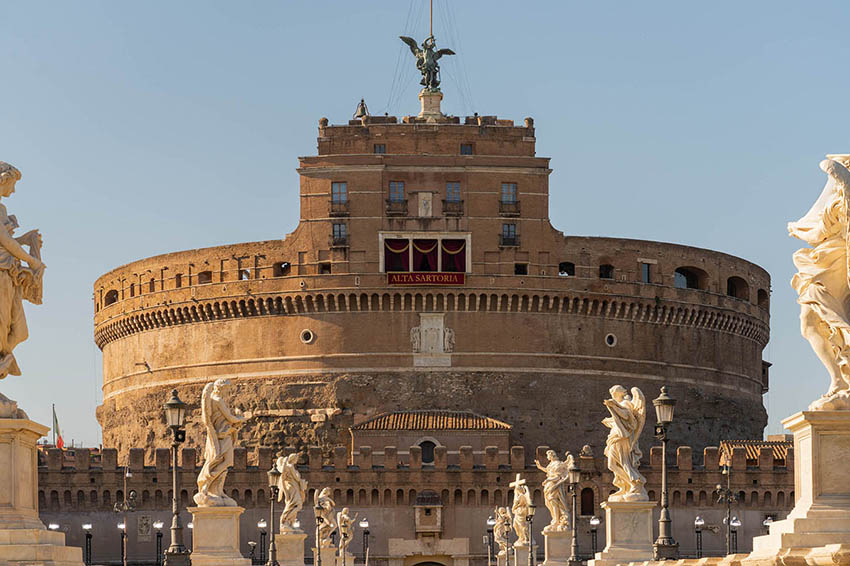
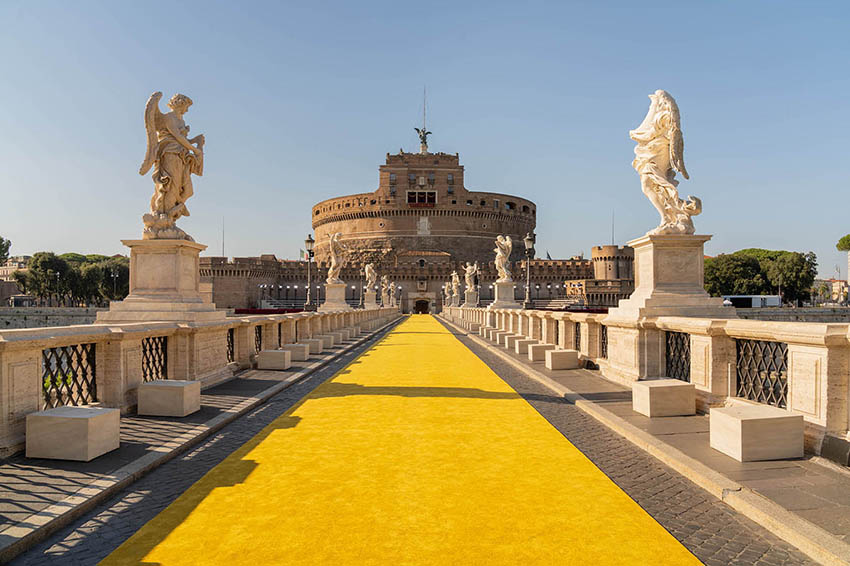
For several hundred years afterward, the Castel Sant’Angelo was integrated into the city’s defensive fortifications, becoming known as castle (Castellum). It wasn’t until the end of the 6th century that it was renamed to its present-day title, Saint Angel Castle. Between 1667 and 1669, Pope Clement IX commissioned Gian Lorenzo Bernini and his students to carve ten angel statues for the nearby Ponte E Angelo. Each statue holds a relic of the Passion of Christ, transforming this bridge into a pilgrimage path for the faithful.
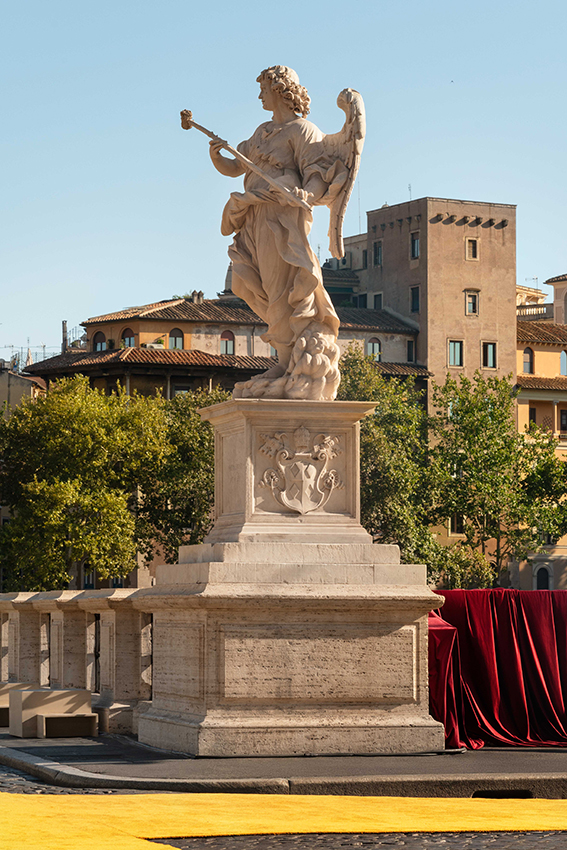
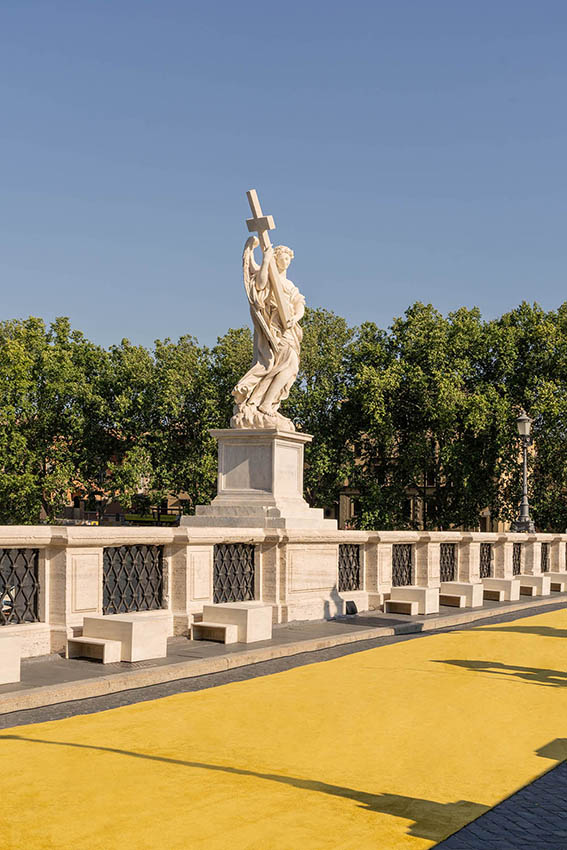
In simple terms, the Castel Sant’Angelo has served as a tomb, fortress, and papal palace, witnessing numerous significant events. Over the centuries, it has undergone continuous renovations, holding a rich historical legacy.
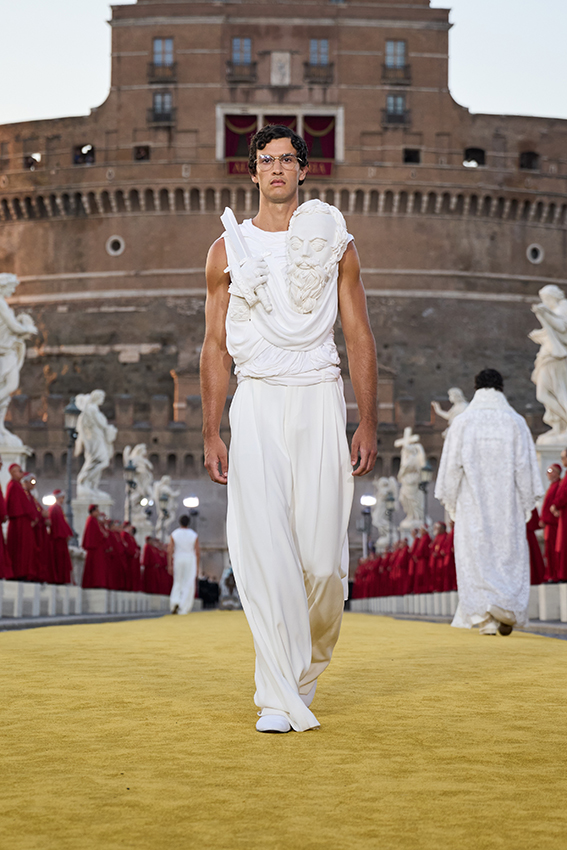
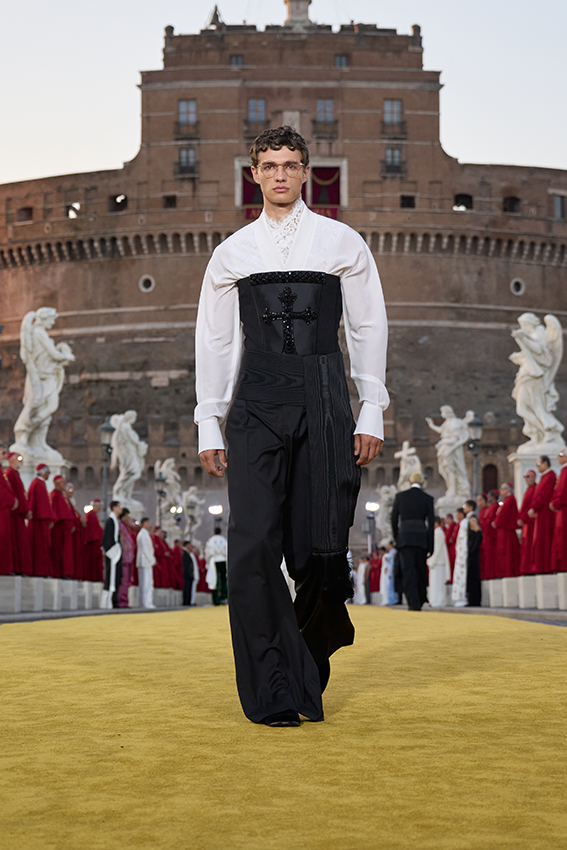
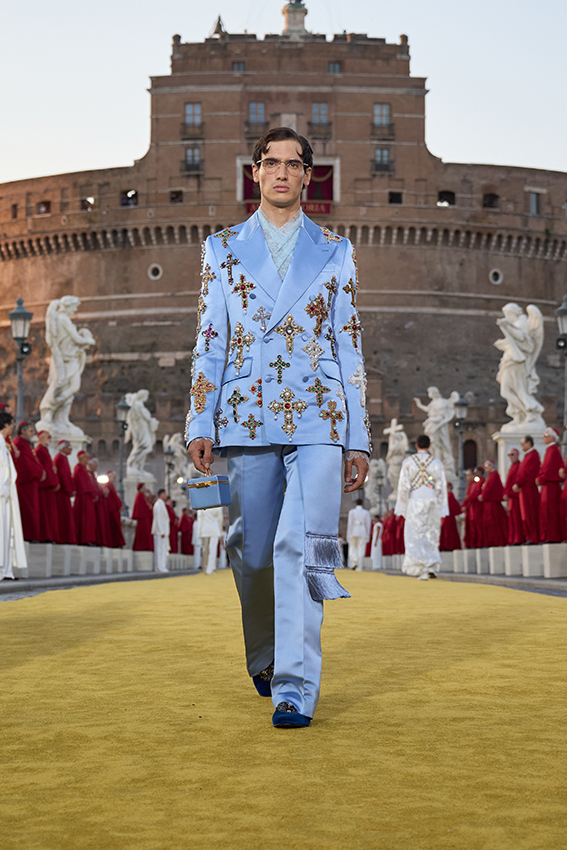
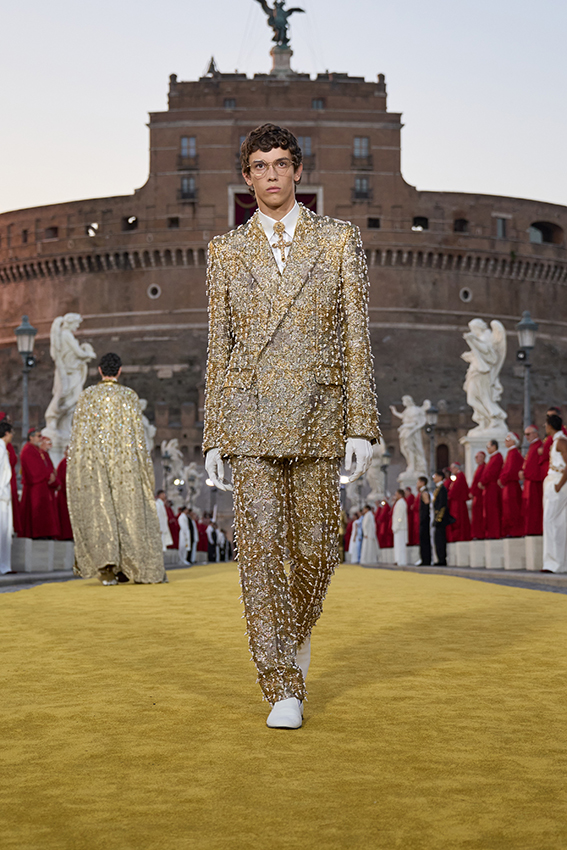
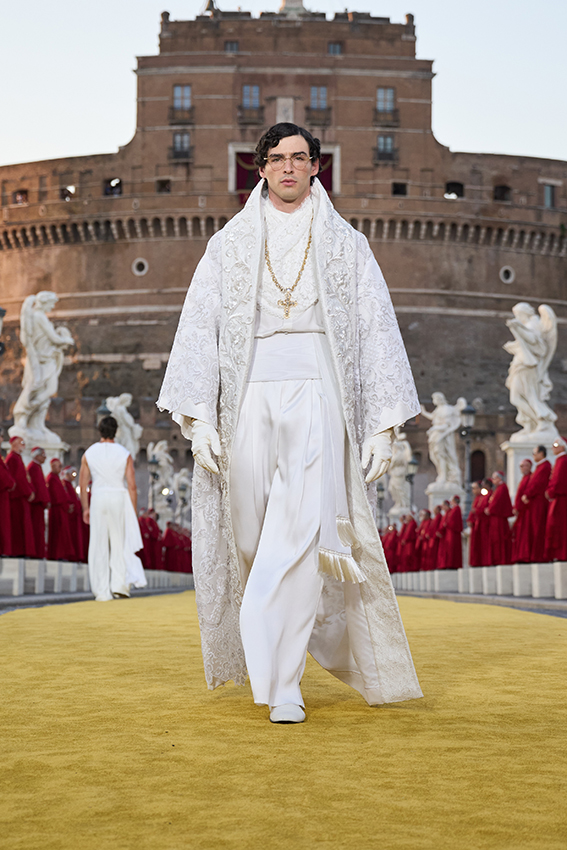
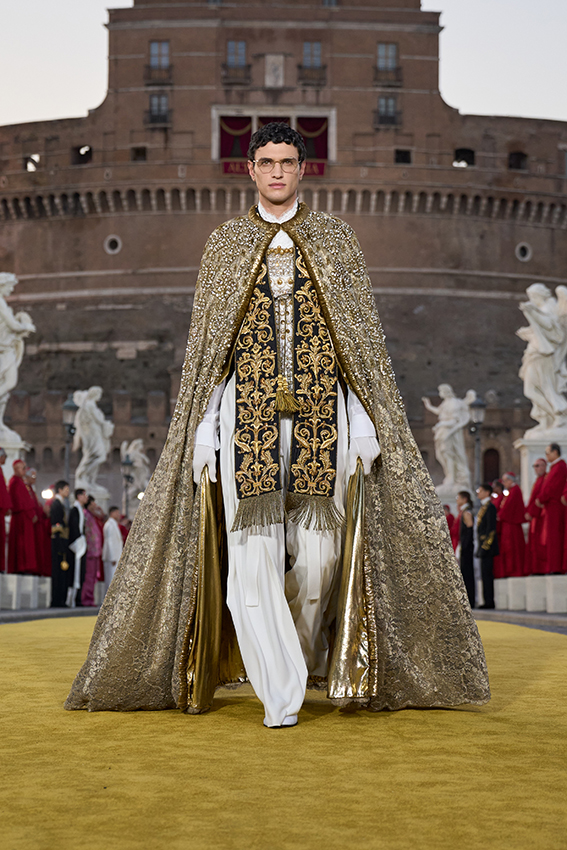
This season, the Dolce & Gabbana Alta Sartoria men’s haute couture collection made its debut at the Castel Sant’Angelo, drawing inspiration from the opulent garments of the church. The artistic masters of the Renaissance and Baroque periods, like Titian, Raphael, Michelangelo, and Bernini, captured the elegant demeanor and authority of clergy in their paintings and sculptures. The capes, cloaks, chasubles, cross sashes, liturgical robes, and sacred belts they adorned are represented in this season’s Dolce & Gabbana men’s haute couture collection.
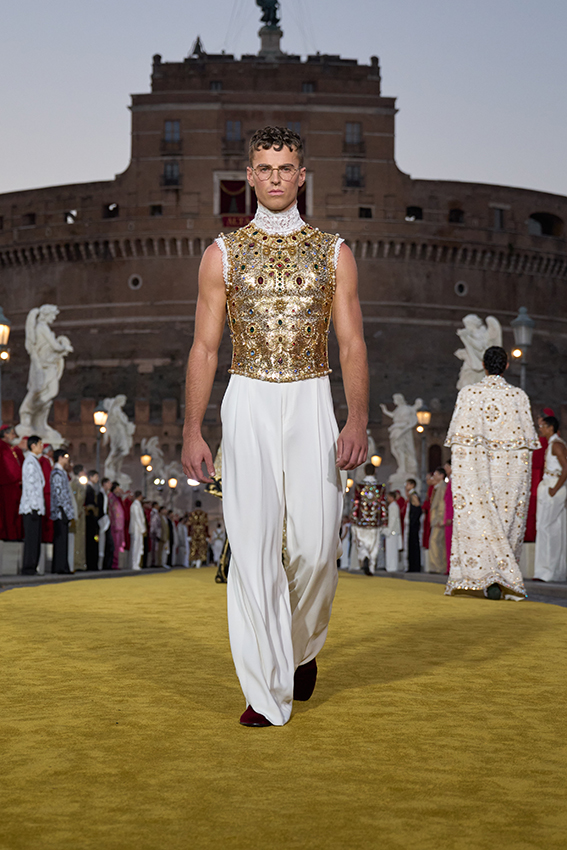
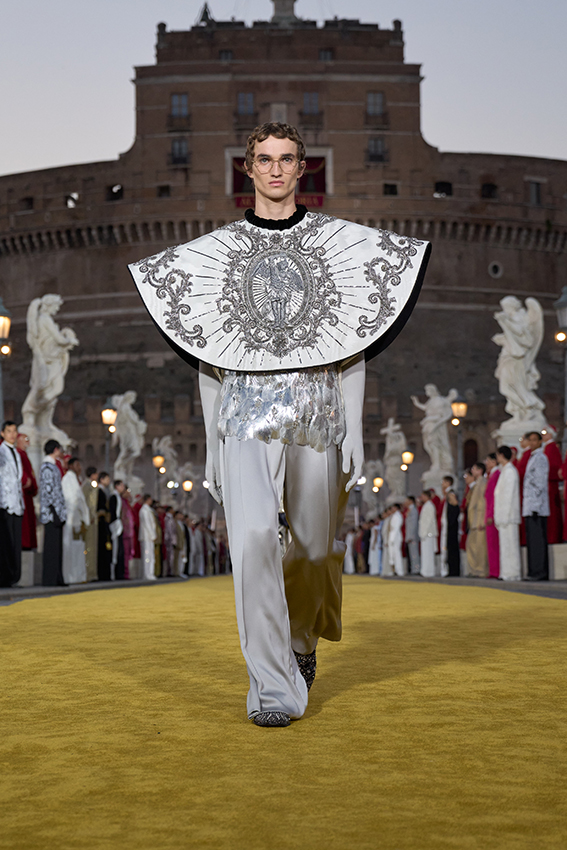
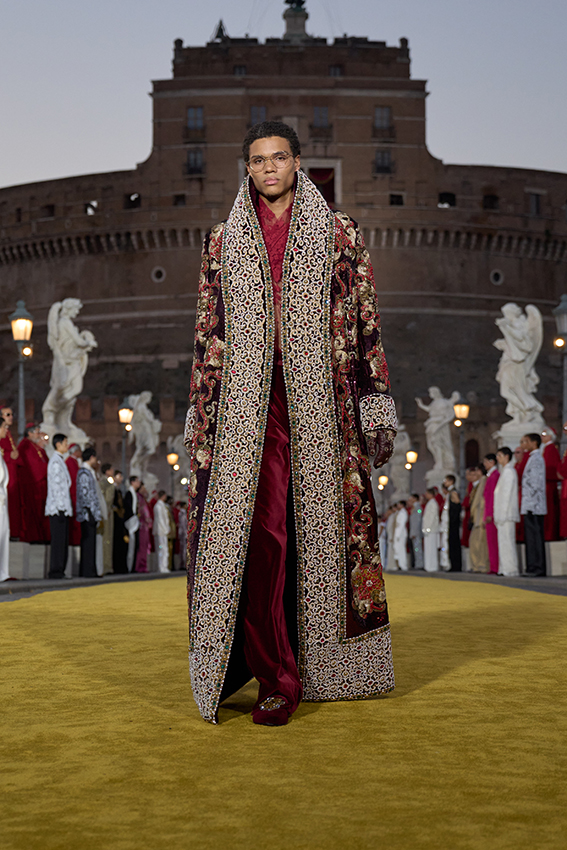
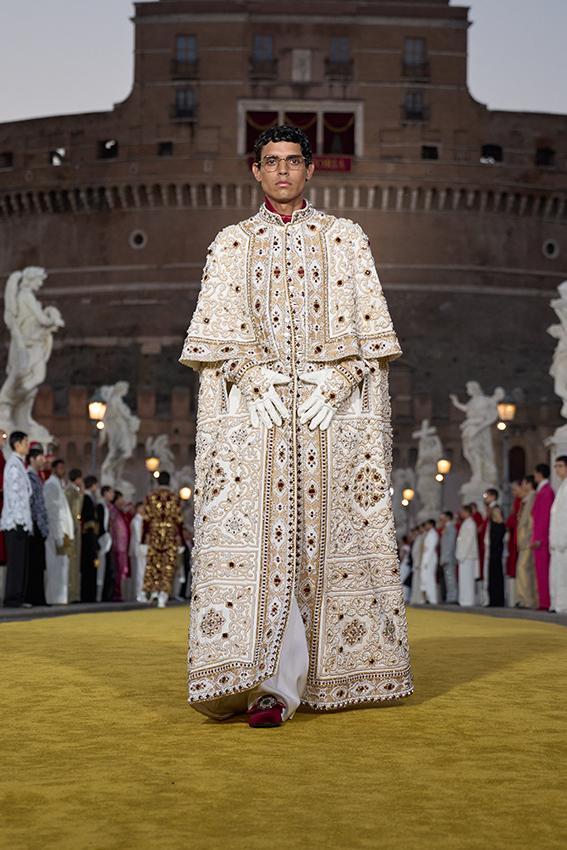
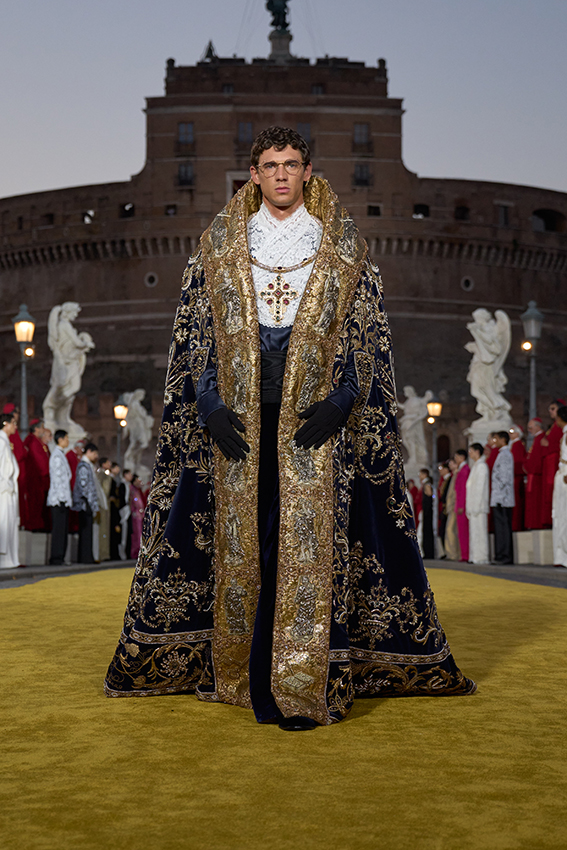
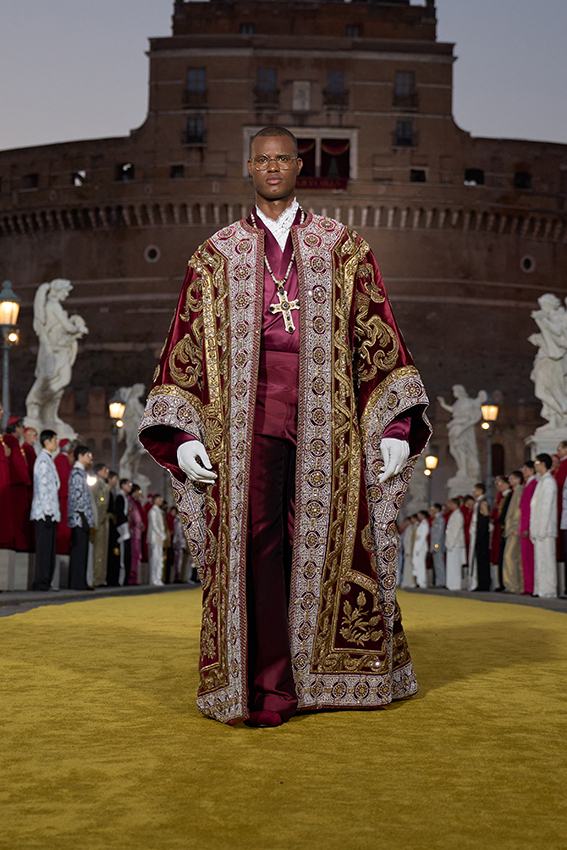
The church embodies a style where grandeur coexists with simplicity, having evolved over thousands of years into a highly refined aesthetic. Central to this is the liturgical vestments, which play a pivotal role. Church attire not only reflects the strict norms dictated by rituals and occasions, but also showcases the pinnacle of Italian craftsmanship, brilliantly captured this season by Dolce & Gabbana.