
Skullcandy Crusher 1080 arrives with Bose acoustic tuning and QuietControl active noise cancellation, and our review found the biggest change is less about vibration and more about a wider, more balanced soundstage when the Crusher bass is turned off.
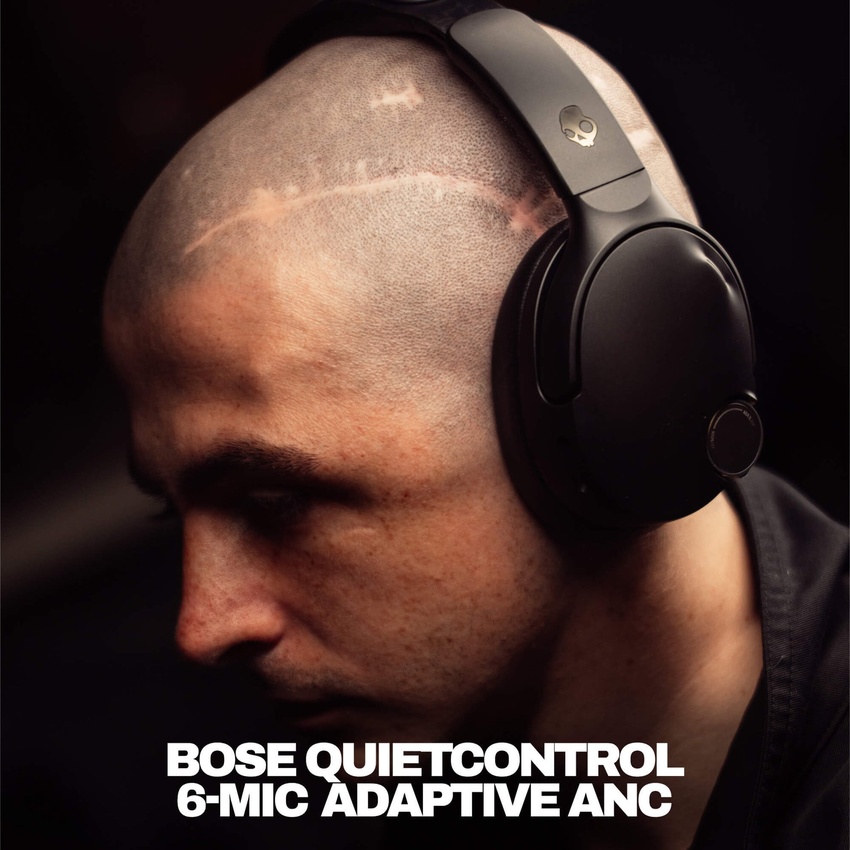
The Crusher 1080 keeps the series signature bulky silhouette, with metal accents on the headband that lift the finish. Compared with current flagships from Sony and Bose, the earcups and headband still feel noticeably larger, and long sessions make the weight on top of the head apparent.
Skullcandy abandoned touch gestures in favor of physical buttons. A large tactile knob for the Crusher vibration bass sits on the left earcup as a visible design element, and a nearby button toggles ANC and transparency modes. Holding that same button cycles four listening presets, labeled Music, Podcast, Movie, and Custom. The right side includes a rocker for volume and a dedicated power key.
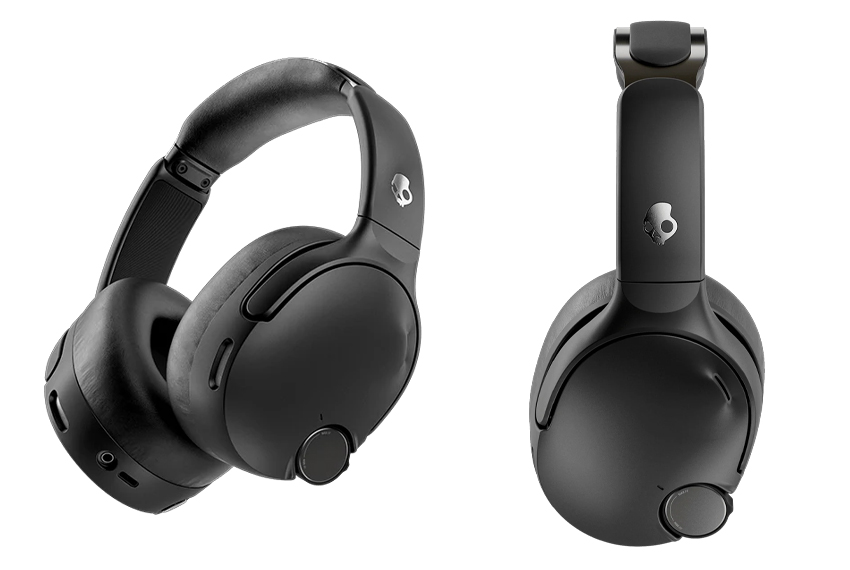
The only notable design flaw is how close the bass knob sits to the ANC button, making it easy to change noise cancelling settings while adjusting vibration. That layout highlights a common engineering challenge: adding features is straightforward, refining the interaction is harder.
Skullcandy Crusher 1080 sound and noise cancelling
With the vibration bass off, vocals and upper mids are clearly more open and balanced than on previous Crusher models such as the Crusher 540. Percussion and hi hat detail are more present, and the headphones tend to push more volume, which helps older or quieter masters come through more clearly.
Skullcandy said in a press release that it integrated Bose QuietControl active noise cancellation, TrueSpatial directional audio, and WaveForm tuning algorithms into the Crusher 1080. In our listening tests the ANC was the most surprising improvement. Skullcandy’s own lab comparisons claim the Crusher 1080 outperformed the Sennheiser HDB 630 and Soundcore Space One Pro in some metrics, although it still does not match the absolute top level of noise cancelling from Bose or Sony flagships. The gap, however, is noticeably smaller.
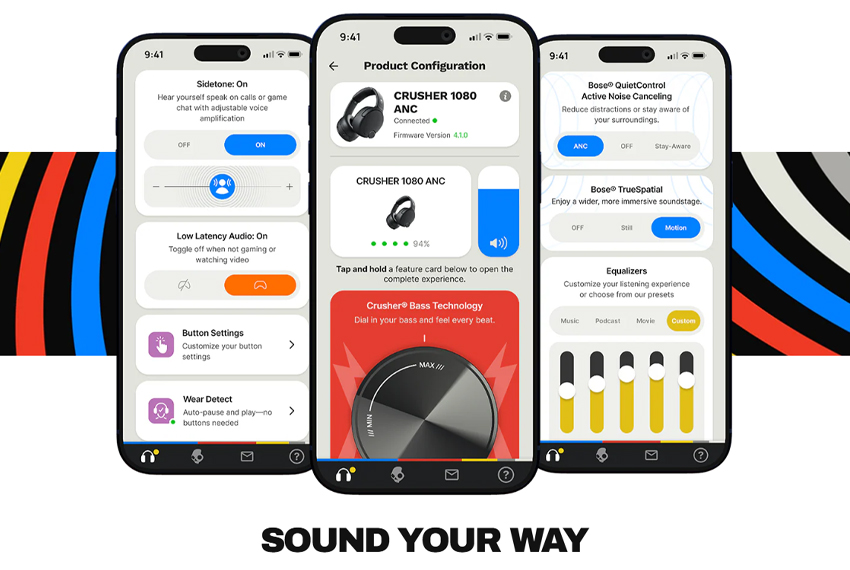
The Crusher vibration bass has been retuned so that at moderate levels it feels like an extension of the low end rather than a purely mechanical shake. Pushed to the maximum the effect remains rumbly and conspicuous, which preserves the Crusher family character but gives listeners a clear choice between tactile bass and a more accurate soundstage.
Users can combine adjustable Crusher Bass, Bose QuietControl ANC, Bose tuned presets and a customizable EQ, plus TrueSpatial mode and assignable button actions to build a personal sound profile. During our tests the presets offered useful starting points for different content types.

Battery, connections and where the Skullcandy Crusher 1080 fits
Skullcandy rates the Crusher 1080 for 60 hours of playback, or about 50 hours with ANC enabled. The headphones support fast charging, multipoint Bluetooth, and are compatible with Auracast broadcast audio for shared listening over Bluetooth LE Audio. Wired use supports both 3.5mm analog and USB C connections.
The Crusher 1080 is priced at $279.99 (originally HK$2,184) and ships in four colors: black, candy red, camo gray, and cement gray. At this price point the model competes directly with Sony WH 1000XM6, Bose QuietComfort models, and Sennheiser Momentum 5, while undercutting them by roughly $100. If you are comparing against slightly older flagships such as Momentum 4 or XM5, the Crusher 1080 looks less compelling on value alone.
Overall, the Skullcandy Crusher 1080 is the most complete iteration of the Crusher line to date. If you skipped earlier models because the vibration bass felt crude, the new tuning and Bose features make the Crusher 1080 worth reconsidering.
Online sale: https://www.skullcandy.com/products/crusher-1080-anc-headphones
Sources: Skullcandy press materials; hands on listening and noise cancelling tests conducted for this review. Additional context from Engadget and The Verge coverage of the product launch.