British self-driving car software startup Wayve announced on Tuesday morning that it successfully raised $1.5 billion in funding, with an estimated valuation reaching $8.6 billion. This financing has attracted investments from numerous tech giants and major automakers, including Microsoft, Nvidia, Uber, Mercedes-Benz, Nissan, and Stellantis.
Part of this funding comes from Uber, aimed at advancing Wayve’s global deployment of robot taxis. Together with Uber, Wayve is launching autonomous vehicles in over ten markets worldwide, with the first station set to launch in London.
Wayve’s CEO has stated that this round of funding is crucial for enabling the company to license its technology to major automotive manufacturers and robotaxi fleet platforms. Unlike Tesla or Waymo, Wayve focuses on developing self-driving technology for other companies, rather than planning to build its own autonomous taxi fleet.
Kendall emphasizes that the cost of maintaining a fleet is high and that Tesla’s model limits the company’s growth by focusing solely on a single vehicle platform. He points out, “Everyone craves self-driving capabilities, but not everyone wants to buy a Tesla.”
Wayve’s artificial intelligence driving system is designed for versatility, much like how humans can rapidly learn to drive different vehicles and adapt to new cities. This approach allows Wayve’s technology to swiftly adjust to new driving environments, learning different traffic rules—from driving on the left to handling right turns at red lights—without relying on high-precision maps and sensors, setting it apart from competitors like Waymo.
Kendall stated, “This is exactly what we’ve built, allowing us to adopt this business model and achieve high-profit software revenue.”
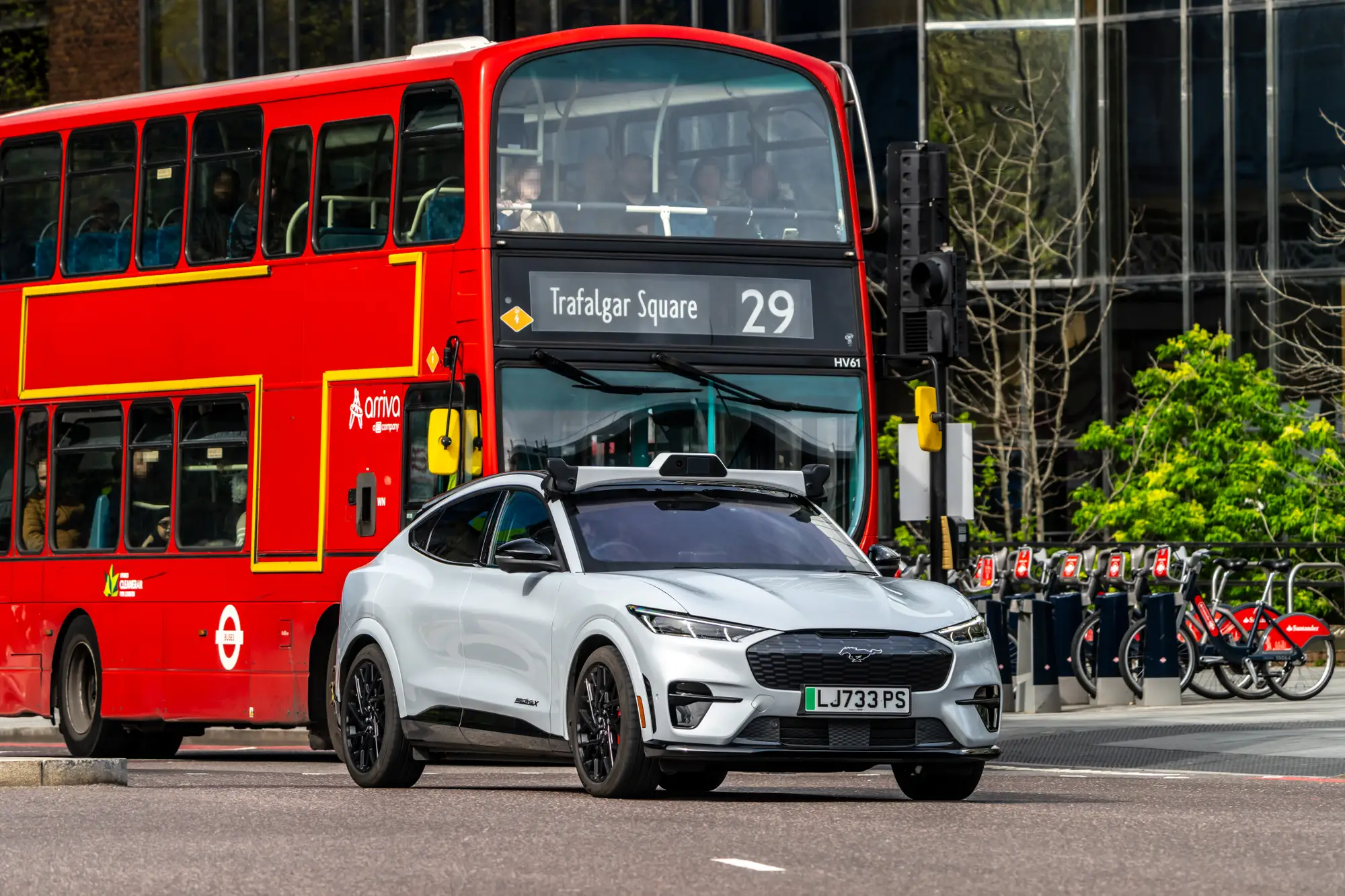
According to Wayve’s data, over the past year, the Ford Mach-E equipped with the company’s AI driving system has driven in more than 500 cities across Europe, North America, and Japan, without needing to train data specific to those cities. Wayve plans to license its technology to other car manufacturers as an advanced driver-assistance system, similar to Tesla’s full self-driving feature, which can provide human supervision across most driving tasks.
The partnership agreement between Wayve and Nissan will integrate its artificial intelligence technology as the core of the Japanese automaker’s ProPilot driver assistance system, which is expected to be unveiled in 2027.
As a British startup, Wayve has been testing its technology in London since 2017. With the competition in the London robot taxi market heating up, Wayve’s public debut marks a significant step towards further expansion. Waymo plans to roll out its self-driving vehicles in London this year, while Wayve’s vehicles will also be featured in the Uber app alongside the robot taxis from Chinese tech giant Baidu, which has also partnered with Lyft.