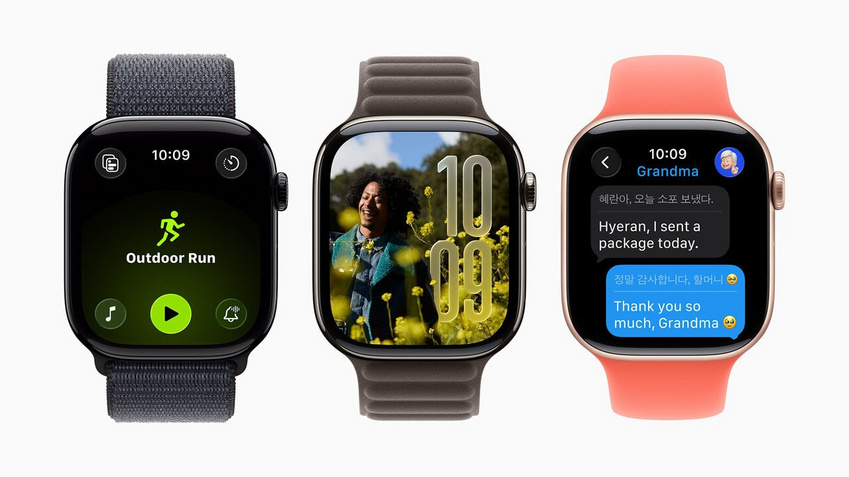
As the end of the year approaches, the spotlight is not just on the highly anticipated release of the new iPhone. Recent reports from external media, gleaned from internal Apple code, reveal that Apple is testing biometric authentication features for its upcoming Apple Watch series, set to launch in 2026. According to the code, this feature will support AppleMesa (the internal code for Apple Touch ID), and the new model is planned to be equipped with the novel T8320 processor, indicating a significant hardware upgrade for the Apple Watch.
According to leaked code, Apple is currently testing the Touch ID feature on prototype devices, marking the first time this technology will be applied in the Apple Watch series. In the upcoming 2025 lineup, references to Touch ID drivers have not been included in any model of the Apple Watch, indicating that this feature is still in the experimental phase. It remains uncertain how Apple will implement Touch ID on the Apple Watch; they may opt for an under-display fingerprint recognition system similar to some Android smartphones, or integrate the sensor into the side button. Apple has also filed several patents related to biometric systems for the Apple Watch, providing insights into the technology’s potential implementation.
Data from the code reveals that the models for 2026 will include N237 (Apple Watch Series 12), N238 (Apple Watch Series 12 Cellular), and N240 (Apple Watch Ultra 4), all powered by a new processor identified as T8320. In contrast, the current S9, S10, and the upcoming S11 chips all utilize the same T8310 architecture, indicating that the 2026 S series chips will feature significant upgrades. According to earlier leaks, the 2025 Apple Watch series will continue to use the same T8310 architecture as the S9 and S10, with the real performance boost expected to come with the S12 chip in 2026.
Internal coding has designated the 2026 series as Watch8, while Series 9, 10, and 11 are marked as Watch7. This signals that 2026 will be a significant turning point for Apple Watch design. Reports from DigiTimes earlier confirm this, indicating that the Apple Watch in 2026 will undergo substantial design changes. Insights from the supply chain reveal that the number of sensors in the high-end Apple Watch models for 2026 will double, along with improvements in aesthetic design and power efficiency. These sensors will help reduce the device’s reliance on algorithmic data interpretation, further enhancing performance and battery life.
The introduction of Touch ID will significantly enhance the security of the Apple Watch, reducing users’ reliance on short numeric passwords. Especially during payment processes like Apple Pay, the device’s biometric authentication will greatly bolster security measures. Users will no longer need to enter a password when putting their watch back on, making the overall experience much more convenient. However, it’s important to be aware that Apple may ultimately decide to forgo the Touch ID feature in the final product, potentially removing related references from the internal code. Nevertheless, considering the detailed technical information and support for multiple models in the code, the possibility of the Apple Watch Series 12 and Ultra 4 featuring Touch ID remains a compelling prospect.