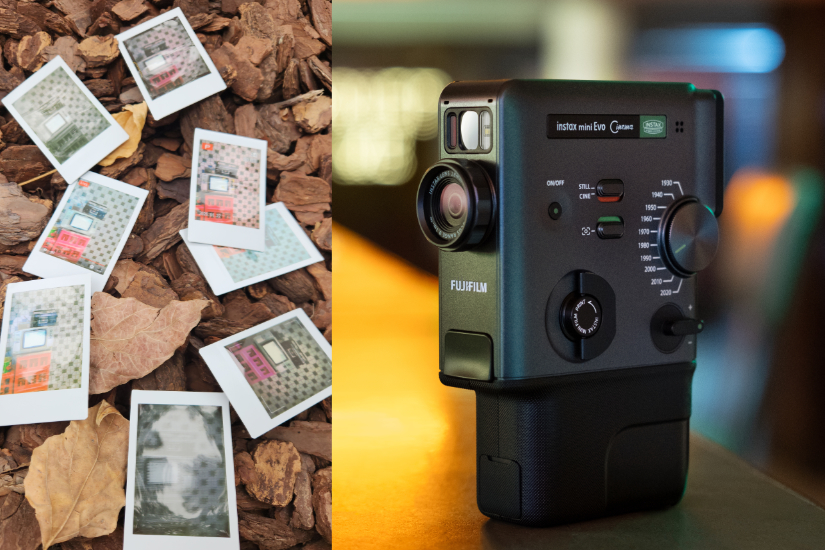
In an era dominated by 4K and AI, FUJIFILM has taken a bold step. They’ve invited us aboard a Time Machine for a 15-second short film that promises a journey through a century of cinematic aesthetics.
The instax mini Evo Cinema™ is set to be released on January 28, 2026, and it’s hands down one of the most Anti-fashion instant cameras I’ve gotten my hands on in recent years. It can only shoot for 15 seconds and uses a 1/5 inch sensor, but it attempts to reshape our perception of Short film with an almost obsessive, mechanical ritualistic feel.
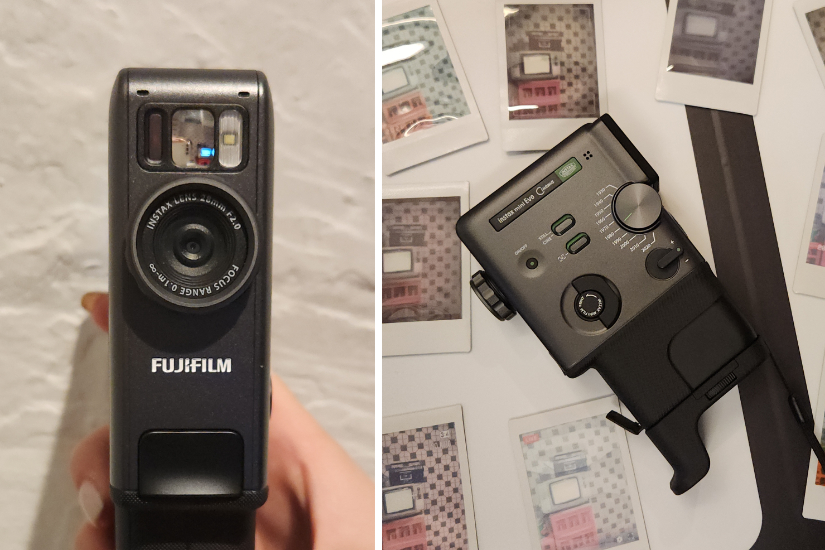
Grip and Stability: The Unseen fine-tuning
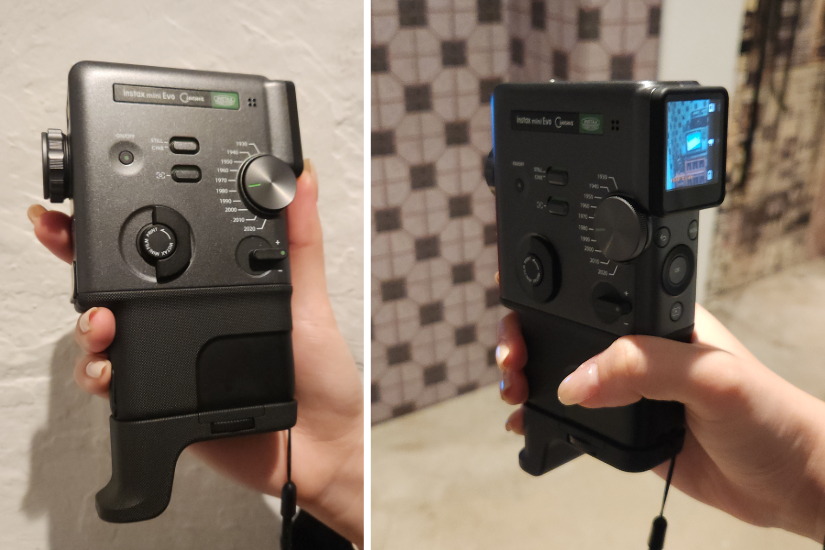
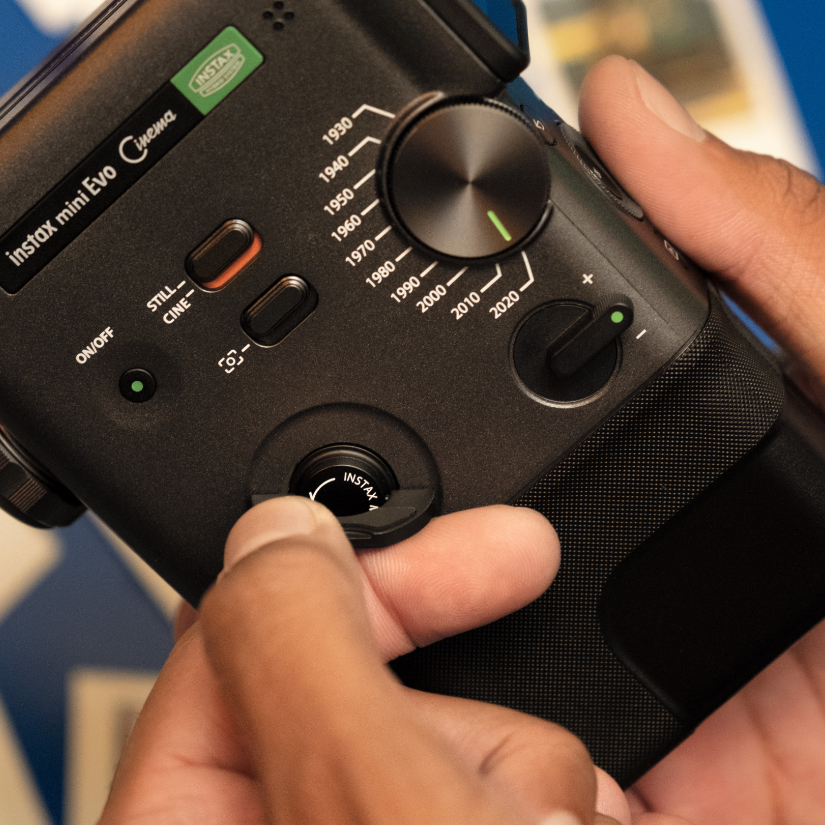
Many vintage cameras often have Resembling the form but lacking the spirit., with the biggest drawback usually being the weight distribution. The moment you pick up the instax mini Evo Cinema™, you’ll be amazed at its balance. Officially, it pays homage to the 1965 FUJICA Single-8 movie camera, but its upright grip curves have clearly been recalibrated with modern ergonomics in mind. Although the body is lightweight, the center of gravity rests perfectly in the palm of your hand. Even when lifting the camera with one hand for an IG Reels selfie, your wrist won’t feel the strain or dropping sensation due to leverage. This Light yet not airy feeling is often achieved through countless mock-up iterations.
The tactile sensation of mechanical magic at your fingertips.
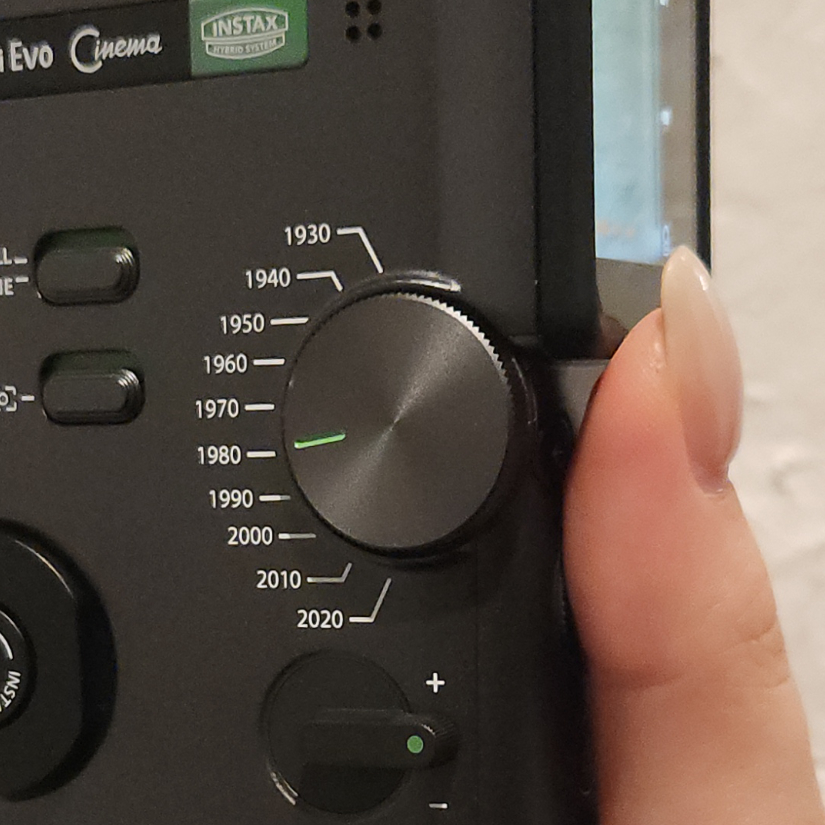
The soul of the entire machine is hidden within the brand new Eras Dial™ on the side. Here, we must commend the engineering team for their tuning of the damping sensation. Many digital dials on the market are either too loose or rely on simulated, fake vibrations. However, rotating the Eras Dial™ provides a distinct and solid tactile feedback at your fingertips. The metallic segmentation of feedback through Card, card, card allows you to switch filters while street shooting, requiring no visual input—just your sense of touch and the mechanical sound nearby enable blind operation. This isn’t just a mere stacking of functions; it embodies an intuitive design that turns the act of operation into a pleasure rather than a hindrance to capturing the moment.
15 Seconds Storyboard Philosophy: Turning Vlogs into Gifts
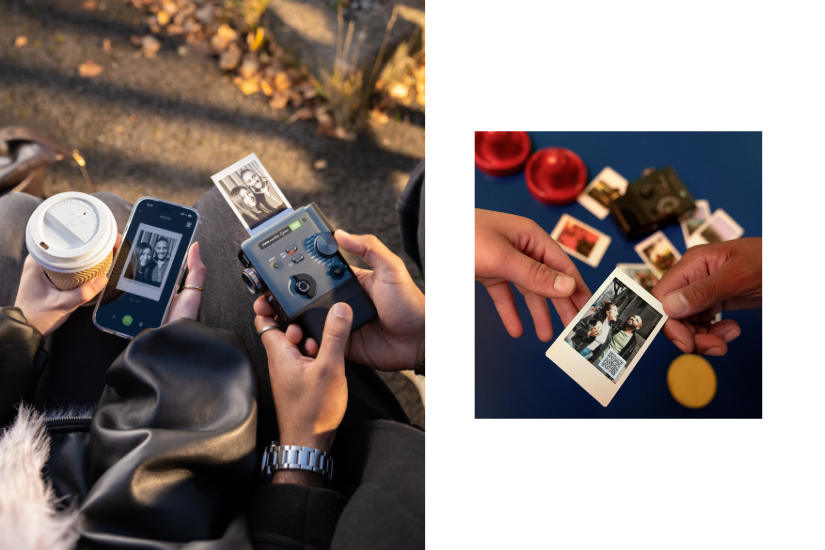
Rather than calling it just a camera, it’s more like a The Materialization of Memories terminal. Its recording logic is super intriguing: press and hold to record, release to pause. This 15-second limit actually encourages users to think about storyboarding. You’re no longer recording mindlessly for ages; instead, you’ll find yourself naturally capturing a few amazing shots, and the built-in processor will weave them together into a short clip with a narrative.
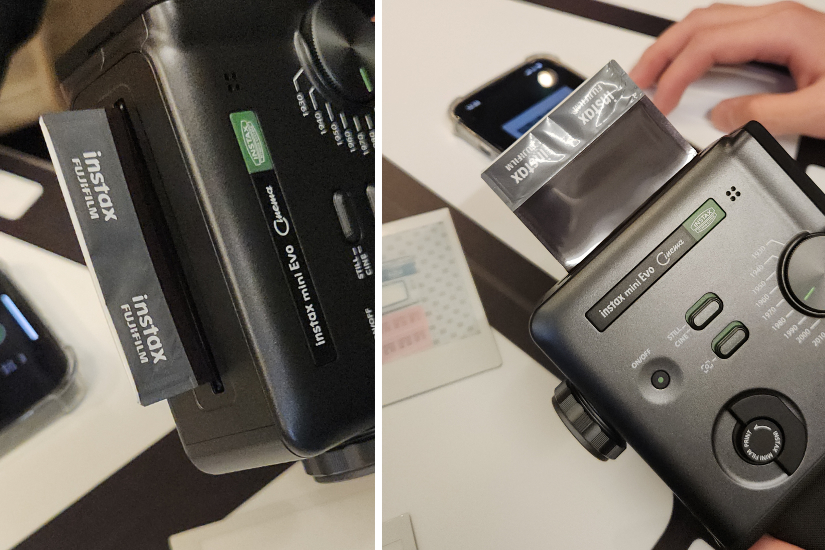
The final step is the most ceremonial: upload your photos to instaxTM using the mobile app and then pull the Print Lever. With the sound of the mechanical structure at work, a piece of photo paper printed with a QR Code slowly emerges. According to a review from Japanese media Gizmodo, the process of transforming Flowing Data into Tangible Entity and personally handing it to a friend creates a warmth that a digital file simply can’t replace. As for the concern many have about Shelf life, the official confirmation states that videos can be saved for two years after uploading. Although there is a time limit, the app supports download backups. My understanding is that the QR Code photo paper is like a two-year key, perfect for sharing; while backing it up on your phone is the true way to preserve it forever.
Rational Analysis Before Making a Purchase
Peeling back the layers of sentiment, we still must return to the practical aspects of usage.
Details Worth Savoring:
- Blind Operation Experience: The layout logic of the physical buttons is incredibly clear, making it completely unnecessary to rely on that small screen to adjust settings, which is especially practical in bright outdoor environments.
- Hybrid Cost Advantage: Although the cost of instant photo paper is around over one hundred dollars for 20 sheets, the mechanism of First, digital preview, then physical printing. ensures that every photo you print is a 100% satisfactory creation, which actually saves you more money in the long run.
Areas Where You Need to Compromise:
- Continuation of Specifications: It retains the 28mm f/2.0 lens and sensor from the previous model. This means that its quality limit is The resolution of Instax film.. Don’t judge it by 4K screen standards; its battlefield is all about atmosphere.
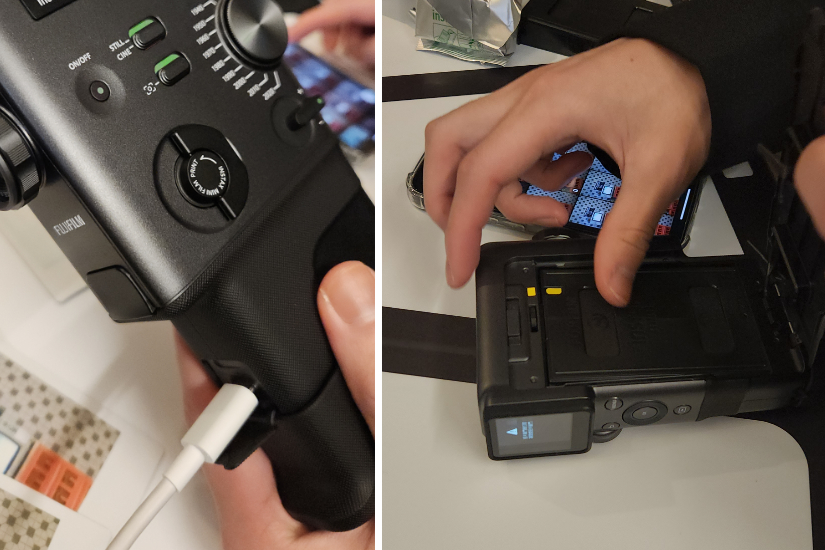
- Physical Limitations of Battery Life: To achieve a lightweight and cohesive design, it features a non-removable built-in battery. During high-demand activities like frequent recording and playback, battery drain occurs faster than when simply taking photos. While it supports USB-C live charging (which is crucial for vlogging), bringing a portable power bank when you head out is still a must.
- Performance Bottleneck: When quickly switching to high computational vintage filters (like simulating a CRT television effect) in video mode, there may occasionally be slight delays in the visuals.
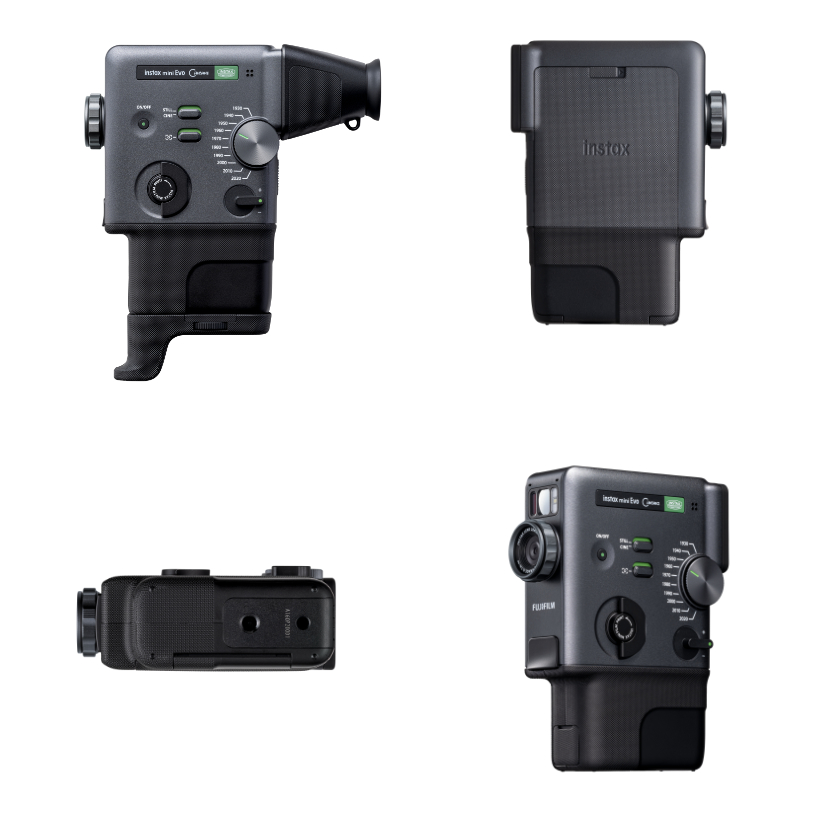
The instax mini Evo Cinema™ is a really Honesty device. It doesn’t rely on excessive parameters to appease the specs enthusiasts, but rather focuses on refining the Shoot → Print → Share overall experience for smoothness and enjoyment.
If you’re tired of having thousands of digital photos on your phone that rarely get looked at, this instant camera, which can produce a 15-second sound and image Print and feels solidly mechanical in your hand, might just help you rediscover the weight of an image.