In modern life, energy efficiency and the use of smart home technology are becoming increasingly prevalent. Globally renowned manufacturer Fujitsu General has recently partnered with cloud computing giant Amazon Web Services (AWS) to successfully increase the connectivity of their smart air conditioners on the Internet of Things (IoT) platform by 250%, setting a new standard for the smart home market.
As a leading global manufacturer of air conditioning equipment, Fujitsu General offers its products in over 100 countries and holds a significant market presence in Japan, the United States, Europe, Oceania, the Middle East, and India. With the challenges posed by climate change and urbanization, an increasing number of countries are adopting energy-efficient appliances and turning to renewable energy.
Toshiyuki Nishimi, the General Manager of System Development for the Fujitsu Air Conditioning Division, stated that they require a reliable, cost-effective, and seamlessly scalable IoT solution to fulfill the smart connectivity needs of hundreds of thousands of air conditioning units. Since 2015, Fujitsu has chosen to collaborate with AWS to advance this initiative, as IoT is not their area of expertise, but they are well aware that AWS can provide the necessary technical support.
Fujitsu chose the AWS IoT Core service, enabling them to securely and quickly connect air conditioners to the cloud. This service allows businesses to connect billions of IoT devices and efficiently route trillions of messages to AWS, all without the hassle of management.
In addition, to design an IoT database solution that aligns with best practices, Fujitsu’s development team has closely collaborated with AWS architects, opting for Amazon Relational Database Service (Amazon RDS) to ensure the stability and scalability of the solution.
After discussions with AWS, Fujitsu Electric has decided to adopt AWS Lambda to provide serverless computing capabilities, making their infrastructure’s computing layer more flexible. General Manager Xi Jian highlighted that this approach generates costs only when events are triggered, avoiding unnecessary upfront expenses.
Since establishing their IoT solutions on AWS, Fujitsu’s smart air conditioning units have seen a 250% increase in connectivity. Additionally, they’ve launched an optional Wi-Fi adapter, allowing customers to connect older model air conditioners to the IoT infrastructure for remote management and maintenance notifications.
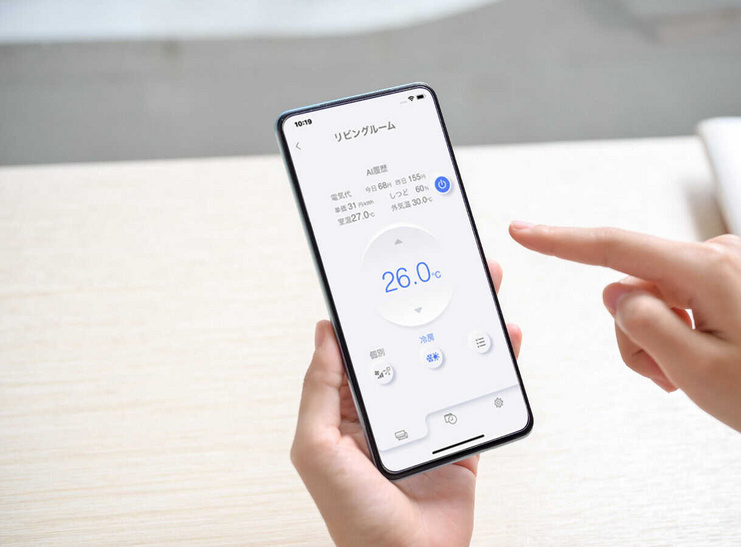
Through the Fujitsu General mobile app (available for iOS and Android), customers can remotely set and change their air conditioner’s operating settings anytime and anywhere, as well as check its operational status. Hirotaka Machida, the group’s manager at Fujitsu General, stated that the app currently has a user rating of 4.2 out of 5, showcasing its stability and performance.
Thanks to the use of AWS IoT Core and AWS Lambda, Fujitsu Electric has successfully shortened the development time for its Internet of Things (IoT) platform while reducing computing costs by 60%. This IoT platform has also accumulated a vast amount of data related to the performance of connected air conditioners, and the number of devices using Wi-Fi adapters is expected to double each year.
Data on operations and performance from the Internet of Things will help Fujitsu General develop the next generation of air conditioners more efficiently, providing households with an excellent cooling and heating experience. Manager Nishimi summarized that by leveraging IoT data on AWS, their organization can drive product innovation in local markets with greater precision.
This successful case demonstrates that cloud technology has brought revolutionary changes to the traditional manufacturing industry. Not only has it enhanced the intelligence of products, but it has also provided companies with significant cost savings and development potential. With the widespread adoption of Internet of Things technology, it is expected that more home appliance manufacturers will follow Fujitsu Electric’s lead and achieve digital transformation through cloud platforms.