Recently, Huawei held a grand event in Shenzhen to unveil their latest version of HarmonyOS for PCs. This product, highly praised by the public as Chinese people's own computer, not only boasts an exquisite design but also offers smooth operation, with the potential to surpass traditional Windows systems in terms of device connectivity experience. Huawei's new HarmonyOS PC platform has been developed from the ground up with self-researched full-stack technology, showcasing their commitment to advancing National Production.
The version of the HarmonyOS computer that debuted this time is the first based on China’s independently developed operating system core. Huawei has integrated Distributed Architecture technology into this product, allowing users to quickly connect their smartphones, tablets, and PCs, seamlessly transferring data and continuing applications. These features still rely on third-party software within the current Windows ecosystem, while HarmonyOS has built-in support, undoubtedly offering greater convenience.
In terms of performance, the HarmonyOS computer has received high praise from numerous media outlets, particularly excelling in multitasking, interface responsiveness, and power management. Compared to Windows systems, which have seen little significant optimization over time, certain laptop models often experience lagging or high power consumption. As a result, HarmonyOS PCs demonstrate greater potential for performance stability.
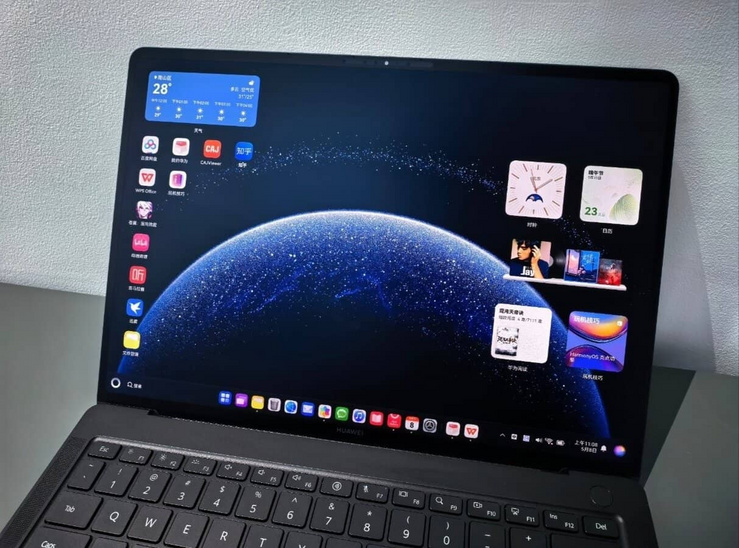
Moreover, the interface design of HarmonyOS for PC is quite noteworthy. Recently, Huawei's developer website showcased the interface of the HarmonyOS desktop version, featuring a top status bar and a bottom dock bar layout reminiscent of macOS, offering an aesthetically pleasing experience that can be personalized according to user preferences. Some media commentators have pointed out that Windows has not seen significant changes in years, making it difficult to keep up with modern aesthetics, while HarmonyOS's design better caters to the tastes of younger users.
The launch of this product is closely linked to Huawei's loss of Windows licensing. With the expiration of the licensing agreement between Microsoft and Huawei this year, Huawei opted to preload the Linux operating system during this transitional period and has intensified the development of its own new platform. The emergence of HarmonyOS for computers is a key outcome of this transformation. Huawei executives have explicitly stated that HarmonyOS for computers is not just a substitute for Windows; it is the starting point of a new system ecosystem. They encourage developers and ecological partners to participate in the construction of the Harmony platform, aiming to cultivate a computing application environment that belongs to China.
Currently, the HarmonyOS computer is still in its early stages, and some office software may need to be run through emulators. However, Chinese bloggers suggest that Huawei is likely to mimic its smartphone strategy, initially using an emulation layer to address compatibility issues. As the user base grows, it will gradually encourage third-party developers to create native HarmonyOS applications, ultimately achieving De-Guebarize.