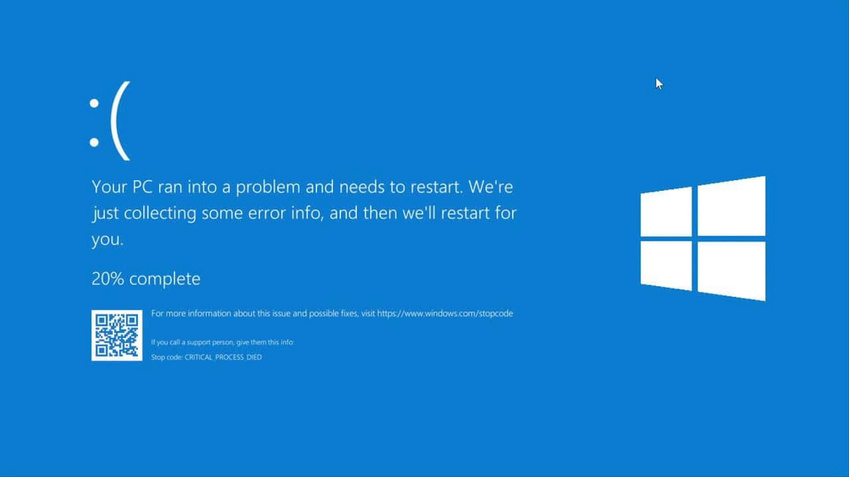
Microsoft has announced the phasing out of the infamous Blue Screen of Death (BSOD) that has been a staple in Windows systems for nearly forty years. In the upcoming Windows 11 update, they plan to unveil a brand new Black screen freeze. (Black Screen of Death) design. This transformation replaces the traditional blue background and frowning emoji with a simplified black screen, marking a significant advancement in Microsoft's approach to error handling.
The new black screen crash design will feature a black screen similar to what you see during Windows updates, but with added functionality that displays key information like stop codes and faulty system drivers. This is a significant improvement over previous crash dumps, which were often not so clear. Such enhancements will greatly simplify the workflow for IT administrators, eliminating the need to extract crash dump files from computers or rely on complex tools like WinDbg for tedious analysis.
The Vice President of Microsoft’s Corporate and Operating System Security mentioned in a media interview that this new design aims to clarify issues and provide more accurate information, helping users and technical teams understand the core of problems more quickly, which in turn accelerates the formulation of solutions. This clear information will make it easier for people to identify whether the issues stem from Windows or other components.
In addition, Microsoft will introduce Rapid Machine Recovery (Quick Machine Recovery) in the upcoming Windows 11 update, a feature designed to quickly restore non-booting computers. This dual approach aims to significantly enhance the stability and resilience of the Windows system.
The latest improvement to the BSOD is part of Microsoft’s initiative to enhance the resilience of the Windows operating system. The previous CrowdStrike incident caused millions of Windows computers to encounter blue screen crashes at startup, highlighting the critical importance of system stability and error handling mechanisms. The new black screen design is expected to help IT professionals and users quickly identify and resolve system issues, while also reducing the likelihood of similar large-scale failures in the future.
This change marks the official end of the nearly forty-year history of the blue screen crash on Windows systems, heralding a new era in error handling and laying a solid framework for the future stability of systems.