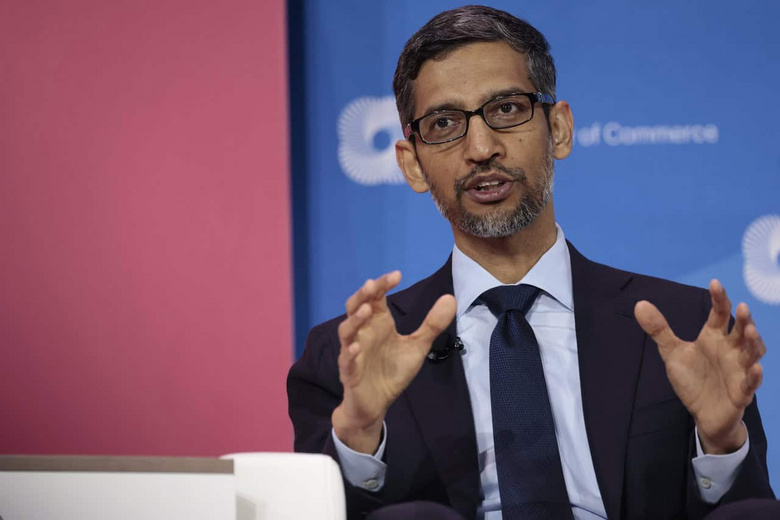
Sundar Pichai, the CEO of Google, recently shared his vision for the future of technology and his personal growth story during an interview at Lex Fridman Podcast. Growing up in the arid regions of India, he witnessed firsthand how technology transformed quality of life in his youth. This experience instilled in him a strong belief that technology can empower people.
The interview content is both insightful and accessible, with Pichai sharing stories from his childhood all the way to the realm of Artificial General Intelligence (AGI). He elaborates on how he merges the two powerhouse teams, DeepMind and Google Brain, applying AI capabilities to search products and pushing forward challenging reforms in platforms like Chrome and Waymo. He has designed a framework Main trunk – branches that ensures business stability while fostering cutting-edge innovation simultaneously.
In the realm of AGI development, Sundar Pichai has introduced the concept of “zigzag intelligence,” forecasting that true AGI could emerge post-2030, though he refrained from providing a specific timeline. He stressed the importance of preparing early for the potential consequences that may arise. Using the metaphor of a “Neolithic Package,” he emphasized that AI will catalyze a chain reaction similar to the Neolithic Revolution, enhancing creativity and programming capabilities, thereby enabling billions across the globe to express their ideas in increasingly liberated ways.
In an exclusive interview, Sundar Pichai discussed the impact of AI on the world of art. He noted that as AI starts to take over content creation, the emotions experienced by humans will become even more precious. Google has partnered with director Darren Aronofsky to utilize the Gemini model, aiming to engage in artistic creation and establish AI as a foundational tool for artists to explore new forms.
Regarding the ethics and safety of AI-generated content, Pichai mentioned that Gemini’s intelligence has improved, now capable of self-judging complex material, moving away from strict rules. Google also plans to allow users to customize prompts to enhance transparency and control. When confronted with the ethical dilemmas of AGI and P(Doom), Pichai does not lean toward fear; rather, he believes that whenever an apocalypse risk becomes a significant threat, it will awaken and unite the world into collective action.