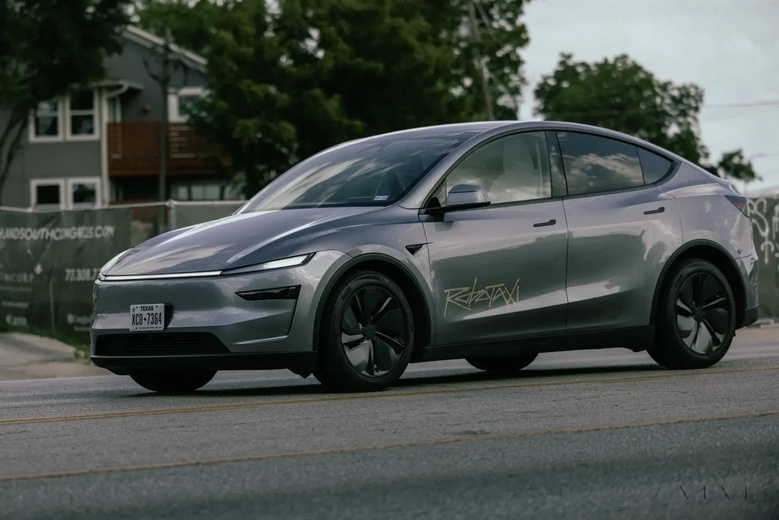
Tesla has recently officially launched the Robotaxi iOS app, marking the transition of this self-driving ride-hailing service from its early invite-only testing phase into a public operational stage. Users can now download the app from the App Store and join the waiting list, with the Android version set to be released later.
Since its launch in June in Austin, Texas, the Tesla Robotaxi service has expanded its coverage to an impressive 190 square miles, including stretches for highway driving, marking a significant milestone. After nearly three months of operating the Robotaxi service in Austin, Tesla has finally decided to allow the public to download the app. Over the past 10 weeks, Tesla has repeatedly scaled up its fleet and service areas, and this new version of the app signifies its official opening to the public.
After downloading the app, users need to join a waiting list, with those who registered and downloaded earlier getting priority for a test ride in the driverless Model Y. Based on past data, the average time from downloading the app to being granted access to the service is about 3 hours.
The service range of Tesla's Robotaxi has impressively expanded from an initial 20 square miles to currently 190 square miles, covering several key locations including the Giga Texas manufacturing plant, and for the first time extending to highways. Notably, Tesla adopts a more cautious approach when operating on highways, with safety supervisors temporarily taking the driver’s seat to ensure safe travels. This demonstrates that Tesla is continuously improving its system to adapt to various road environments.
Tesla's launch of its public application demonstrates the company's confidence in the Robotaxi platform, aiming to attract more local users. In the past, many of the test users were not residents of Austin, but now Tesla hopes to entice users who need transportation for daily commutes and social gatherings through this service.
Compared to its competitor Waymo, Tesla's service area in Austin has once again taken the lead. However, Waymo still holds the edge when it comes to fully autonomous driving. To reach its profitability goals, Tesla needs to eliminate safety monitors to boost service efficiency.