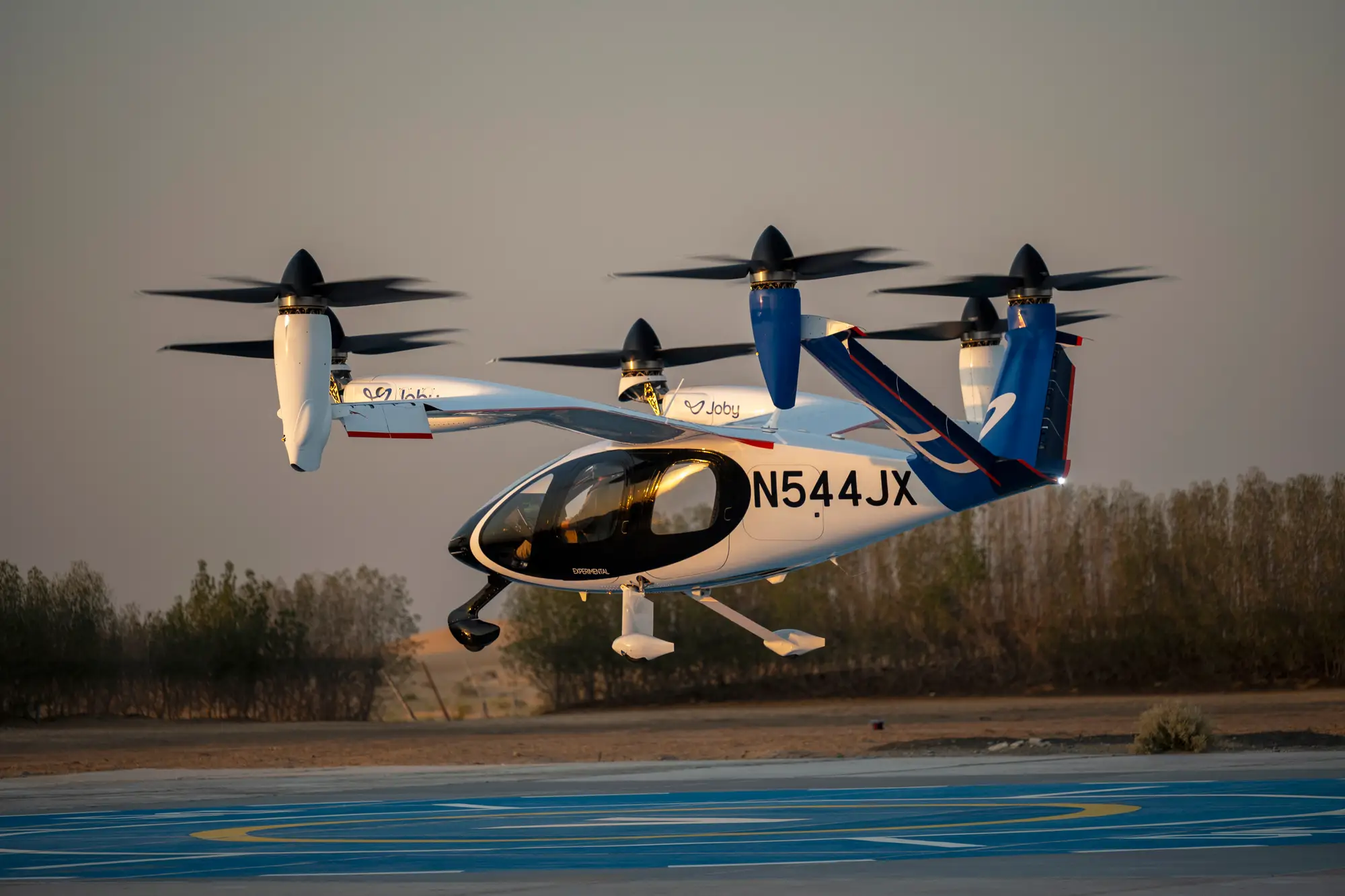
Uber has announced that by the end of 2026, passengers will be able to directly book air taxi services through the Uber app, in partnership with Joby Aviation. This initiative will first be implemented in Dubai, featuring four dedicated vertical takeoff and landing facilities, referred to as Vertical Harbor, which will serve as hubs for electric aircraft, marking a significant step forward in urban transportation.
According to the published information, the electric aircraft developed by Joby Aviation can accommodate up to four passengers and is piloted by a licensed commercial pilot. The cabin design features a lightweight structure combined with a fully electric propulsion system, emphasizing low noise levels and zero operational emissions, making it ideal for operation in densely populated urban airspace. Compared to traditional helicopters, the electric aircraft offers optimized performance in terms of takeoff and landing noise as well as energy efficiency, providing an alternative option for urban aerial transportation.
The first phase will establish four vertical ports in Dubai, which will connect to Dubai International Airport, large shopping malls in the city, a hotel on Palm Island, and the American University in Dubai. This layout indicates that the service is not merely a sightseeing experience; rather, it caters to airport transfers, business travel, and the needs of commuting to and from the city center. Passengers can freely choose between traditional ground taxis or Joby electric aircraft within the same app, and the system will integrate travel times and transfer arrangements to enhance overall mobility efficiency.
The aerial taxi journey also includes the ground pickup and drop-off service of Uber Black, meaning passengers can travel from their doorstep to the vertical port and then take an aerial vehicle to their destination nearby, all seamlessly connected through the Uber platform. This smooth integration merges ground and aerial transportation into a single experience, minimizing the hassle of transfers and encouraging users accustomed to using Uber services to try out this new model.
Uber’s Chief Product Officer, Sachin Kansal, stated that the company has always believed that advanced aerial mobility technology can transform urban transportation. Eric Allison, Chief Product Officer at Joby Aviation, pointed out that by collaborating with Uber, they can introduce a new mode of transportation within a familiar platform interface, allowing passengers to feel natural and at ease while saving precious time. Both parties emphasized that technological innovation must align with clear processes and safety standards in order to truly take off.
On the regulatory front, Joby Aviation has revealed that its services have entered the final phase of certification with the Federal Aviation Administration (FAA). This certification process encompasses various aspects, including aircraft design, safety testing, operational specifications, and maintenance standards, making it a crucial step before commercial deployment. While a specific timeline for service launch has not yet been disclosed, the progress indicates that airborne taxis are getting closer to becoming a reality.
It’s worth noting that Joby Aviation acquired Uber’s aerial ride-sharing division, Uber Elevate, six years ago. According to the 2020 deal, Uber invested $75 million in Joby. This move came during the early stages of the global pandemic when Uber was forced to restructure its business due to a sharp decline in transportation demand, leading to the sale of several non-core divisions, including selling its self-driving car unit to Aurora. In recent years, Uber has announced partnerships with Lucid and Nuro to advance its robotaxi project, highlighting its continued focus on the mobility tech sector.
From a business strategy perspective, Uber’s decision to integrate air taxis within its app rather than creating a separate platform reflects its desire to leverage its extensive existing user base to accelerate the penetration rate of the new service. For Joby Aviation, partnering with a well-established mobility platform can save on marketing and customer education costs while taking advantage of Uber’s existing data systems and dispatch technology to enhance route planning efficiency.
The future development of airborne taxis will continue to depend on regulatory approvals, infrastructure support, and operational cost control. However, the current planning indicates that the four vertical ports are strategically located across airports, commercial areas, and educational districts, showcasing a demonstrative nature. Once operational maturity is achieved, Joby Aviation also plans to expand its services to markets including New York, Los Angeles, the UK, and Japan.