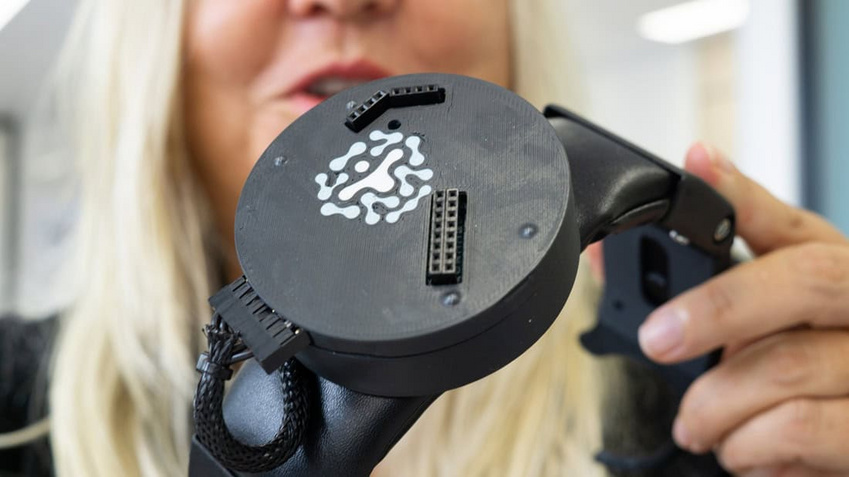
The University of New South Wales (UNSW) has recently developed an innovative treatment system called PainWaive, which combines brain wave monitoring with gamified training to offer a groundbreaking option for patients suffering from chronic neuropathic pain. Preliminary clinical test results indicate that this system can effectively alleviate pain, with results that even rival traditional opioid painkillers.
The PainWaive project, led by Professor Sylvia Gustin, focuses on analyzing the thalamic region, which is responsible for processing various sensory signals. Researchers have discovered abnormal brainwave activity patterns in patients with neuropathic pain, leading to the design of this targeted intervention system. At the heart of the whole system is a game app that works in conjunction with a brainwave monitoring headset. In the game, a jellyfish floats in the water, and players control brain signals by maintaining a calm mindset, transforming the murky water surrounding the jellyfish into a clear, light turquoise color. This process trains the brain to regulate neural activity associated with chronic neuropathic pain.
In preliminary testing, four patients suffering from corneal neuropathic pain (CNP) were involved. CNP can cause symptoms such as sharp pain, burning sensations, and light sensitivity. After four weeks of playing the PainWaive game, about 75% of the participants reported significant relief from their pain, with results comparable to traditional painkillers, and even better in some cases. Researchers emphasize that PainWaive is not just a pain relief tool; its core principle lies in retraining the brain’s communication pathways to enhance neurological regulation. The system employs EEG (electroencephalogram) real-time feedback technology to help patients actively manage their condition, moving away from dependency on medication.
Additionally, researchers found that patients generally prefer technologies that offer high usability, self-management capabilities, and easy accessibility. This is especially true for those with mobility issues or limited medical resources, making PainWaive showcase significant practical value. Professor Gustin noted that while the number of participants in the current testing is limited, preliminary results have already indicated PainWaive's potential as an alternative therapy for patients with chronic neuropathic pain. Future plans include conducting a larger-scale clinical validation to further assess its actual effectiveness.