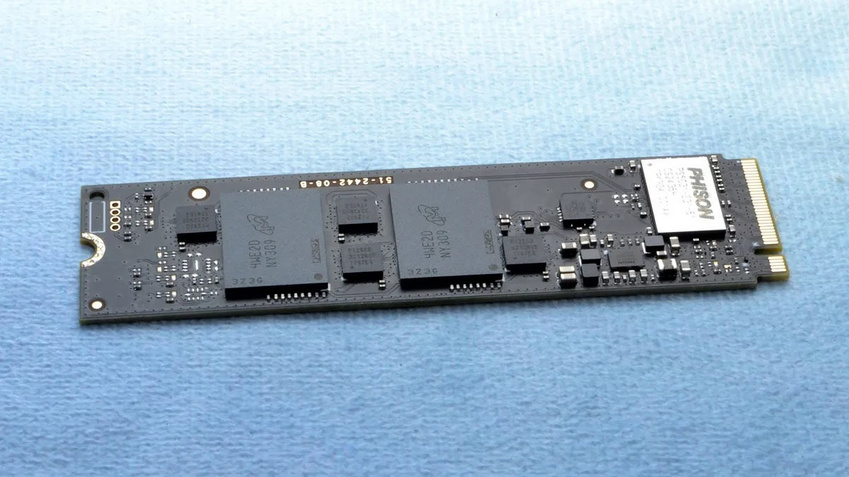
Recently, discussions have surged online regarding the latest Windows 11 security updates KB5063878 and KB5062660, which are reportedly causing failures in SSDs utilizing Phison controllers. This has sparked concerns among users about data corruption and disappearing hard drives. After thorough investigations, both Microsoft and Phison stated that they could not replicate the issues reported and denied any connection between these updates and SSD failures.
This issue was initially raised by several tech YouTubers and TikTok creators, who have accused Microsoft of causing data corruption and SSD drives to disappear following updates. Reports indicate that problems are more likely to arise when SSD usage surpasses 80%, with continuous write loads reaching 55GB or more, or during the download and installation of large files. Affected systems are primarily running the Windows 11 24H2 version and have installed the KB5063878 update released on August 12.
On August 14, Japanese Twitter user @Necoru_cat shared the results of a recent test revealing that 21 different SSDs encountered failures while writing large amounts of data. The problems were most prevalent when file sizes exceeded 50GB and disk usage surpassed 60%. Notably, one SSD, the WD Blue SA510, which uses a non-Phison controller, completely failed, rendering the data irretrievable.
On August 18, SSD controller manufacturer Phison began an investigation after receiving reports, and in a statement released on August 27, the company noted that despite conducting over 2,200 test cycles and accumulating a total testing time of 4,500 hours, the issues have not been replicated. Phison emphasized that, for now, no partners or customers have reported that the problem has affected their hard drives.
Subsequently, Microsoft further responded, stating that after a comprehensive investigation, No correlation has been found between the types of failures related to Windows security updates and social media reports.. They pointed out that both internal evaluations and telemetry data did not indicate an increase in hard drive failures or data corruption, and the customer service team had not received any user feedback reporting this issue.
At the same time, counterfeit Phison official documents have been circulating online, claiming that the company acknowledges its controllers are affected by the Windows 11 24H2 updates KB5063878 and KB5062660. Phison has clearly stated that this document did not originate from the company and questions whether this action is intended to tarnish its reputation.
Although Microsoft and Phison have both denied the existence of the problem, some tech experts still suggest that users who have installed the KB5063878 update should avoid transferring large amounts of data to their SSDs until Microsoft releases a patch. Users who have not installed the update are advised to delay automatic updates until the September update is released or until Microsoft provides an emergency fix.