



Bangkok Design Week 2026 transforms the Thai capital into a living laboratory for design, architecture, and urban thinking, drawing more than 400,000 visitors across 11 days of exhibitions, talks, and installations spanning nine city districts. Organized by Thailand’s Creative Economy Agency (CEA), the festival ran from Jan. 29 to Feb. 8, 2026, under the theme “DESIGN S/O/S,” positioning design as an urgent tool for economic resilience and city-building at a time of rapid global change. Two architecture exhibitions stood out as anchor projects: “Central Park Design for Bangkok,” which envisions a new civic core for the Thai capital, and “Projecting Future Heritage: A Hong Kong Archive,” which argues that the most relevant blueprint for tomorrow’s cities may lie in yesterday’s overlooked buildings.
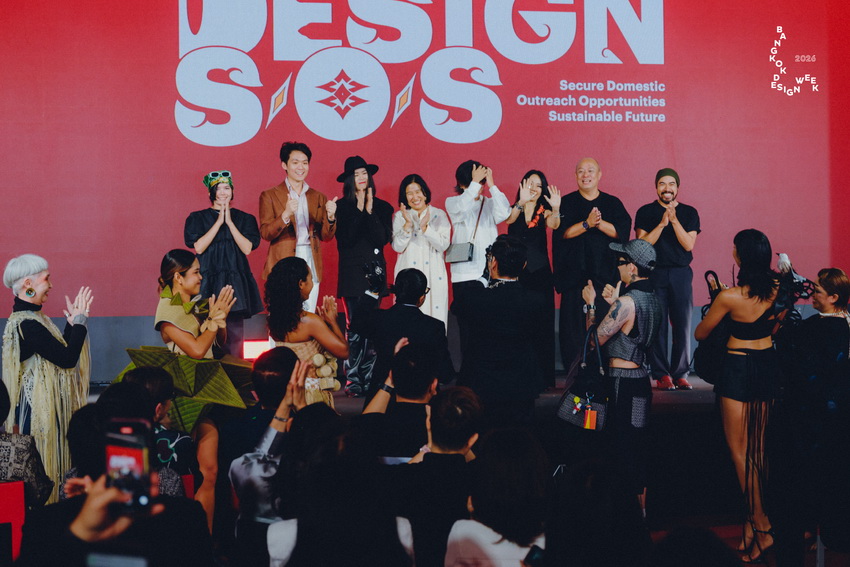
The acronym S/O/S carries a dual meaning: a universal distress signal and a three-part framework of action. “Secure Domestic” calls for strengthening local industry and raising design standards at home. “Outreach Opportunities” encourages Thai and international creatives to build cross-border connections. “Sustainable Future” pushes designers to develop solutions that address climate, density, and long-term livability. When design is understood as policy, economics, and spatial strategy rather than pure aesthetics, architecture becomes its most persuasive and publicly readable language.
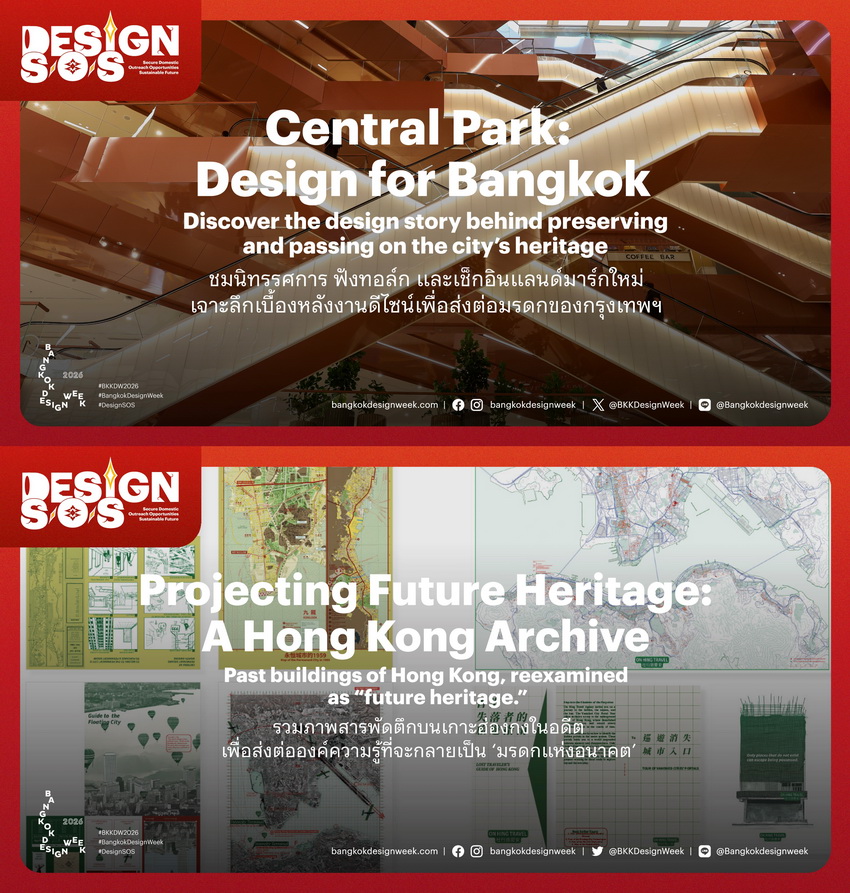
Two exhibitions presented two sharply contrasting architectural positions: one directed at the future, responding to urban renewal and shifting lifestyles; the other looking back, using archival research to preserve the city memories most at risk of erasure. Taken together, the two projects allowed Bangkok Design Week 2026 to expand architectural conversation across multiple scales and timelines.
Bangkok’s New Heart: “Central Park Design for Bangkok”
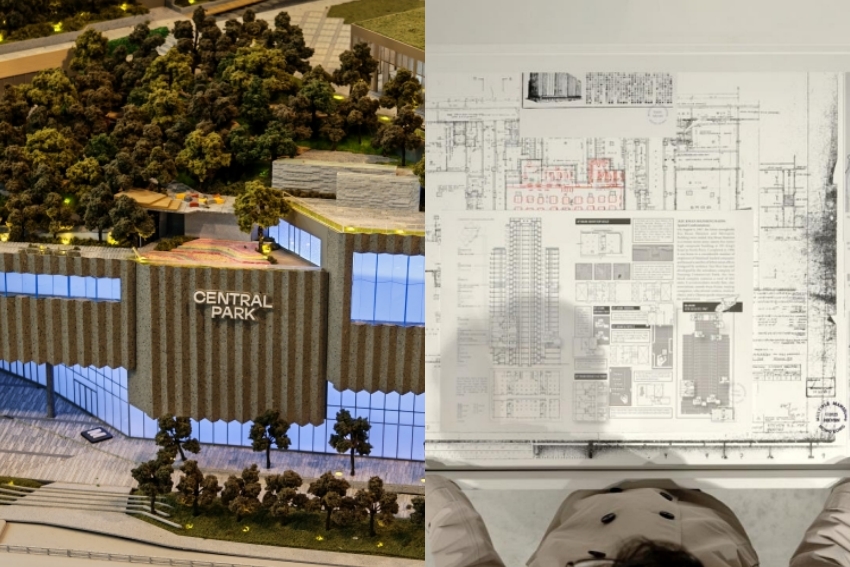
Dusit Central Park, a large-scale mixed-use development facing Lumpini Park in Bangkok’s city center, is a joint venture between Dusit Thani Group and Central Group, and is one of the most significant urban renewal projects in Bangkok in recent memory. During Bangkok Design Week 2026, “Central Park Design for Bangkok” offered the public a comprehensive look at the project’s design vision: how a major urban development can respond to Bangkok’s specific city context, and what values and spatial aspirations it carries.
Unlike a typical real estate showcase, the exhibition deliberately stepped away from emphasizing scale, luxury, or technology. Instead, it foregrounded the relationship between the city and nature, culture and everyday life, and how architecture and spatial strategy can reframe and reorder those connections.
In a panel discussion at the festival, Kunayudh Dej-Udom, asset director at Central Park, noted that the hardest challenge was not creating a visually striking landmark but maintaining a clear and consistent urban narrative across a team of designers with very different aesthetic orientations and working methods. The central management challenge, he explained, was establishing a shared values framework so that every design decision could trace back to a single city vision.
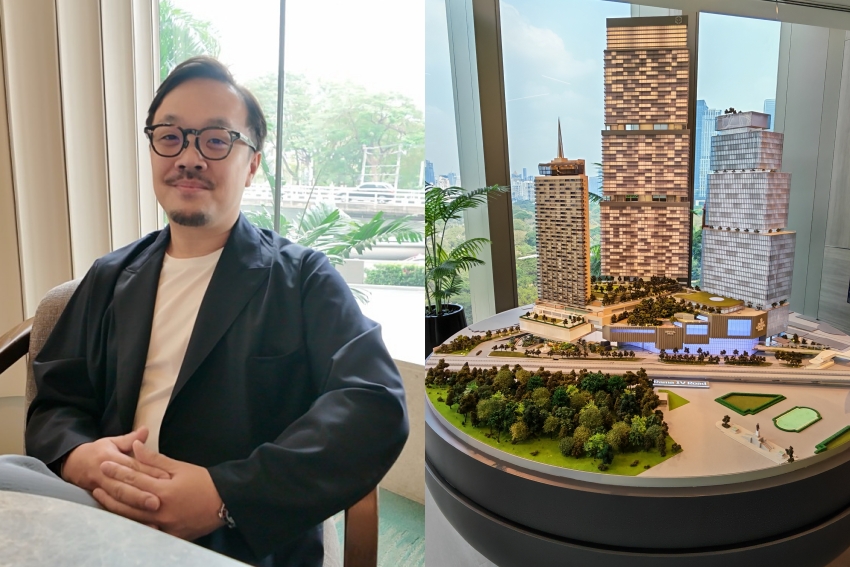
Kunayudh summarized the guiding principle: “We are not placing a building into the city. We are making it part of the environment.” That philosophy runs through several design decisions: a highly permeable ground-floor level, connections to public transit infrastructure, and a visual and pedestrian interface that opens toward Lumpini Park, allowing urban activity to flow naturally while letting the park’s natural landscape permeate daily city life.
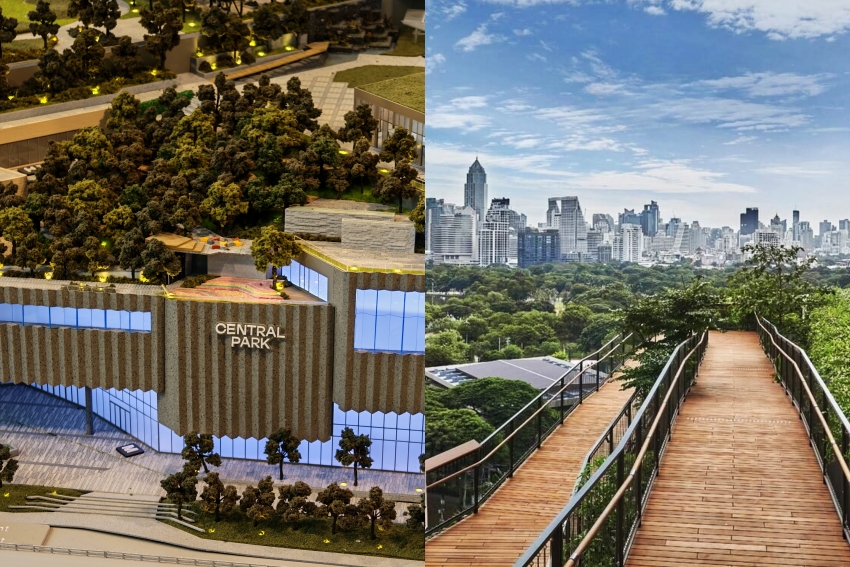
One of the project’s most complex challenges was not structural or formal, but organizational. Dusit Central Park spans commercial retail, public space, landscape design, ecology, and transit infrastructure. It was not guided by a single lead architect but assembled through a team of specialists from different professional backgrounds, disciplines, and cultural perspectives. The result is a project where collaboration itself functions as a design method, not a logistical hurdle.
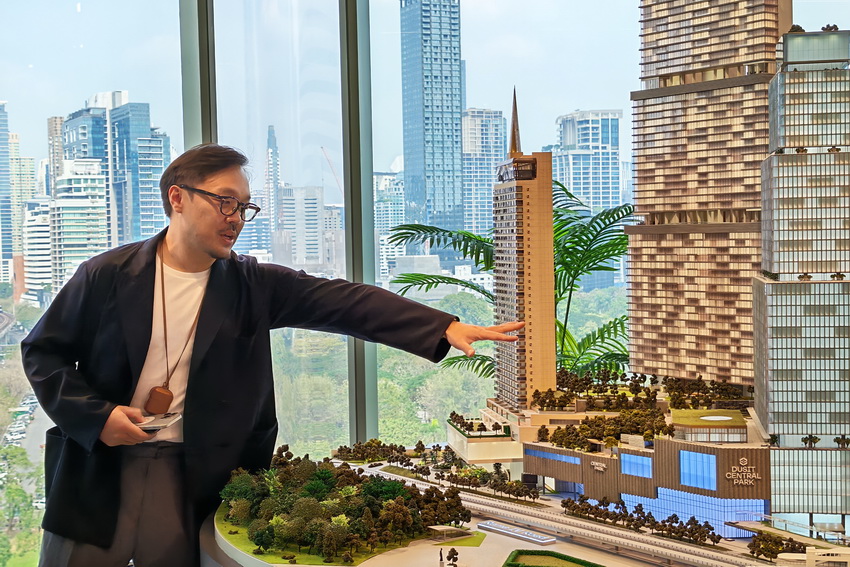
This cross-disciplinary, multi-stakeholder model mirrors the spirit Bangkok Design Week is built on: cities are never shaped by a single voice, but emerge through negotiation, adjustment, and shared commitment. Central Park does not attempt to erase those differences. Rather, it treats collaboration as an integral part of the design process, enabling different expertise to operate within a unified system rather than in competition.
Architecturally, the project also pursues what the design team describes as a “recognizably Thai” quality. That local identity is not achieved through direct references to traditional architectural forms, but through a deep understanding of Bangkok’s city rhythm, tropical climate conditions, and the practical patterns of everyday use. The team uses spatial experience itself as the vehicle for cultural expression, so that the building reveals its city character in the act of being used rather than in its surface imagery.
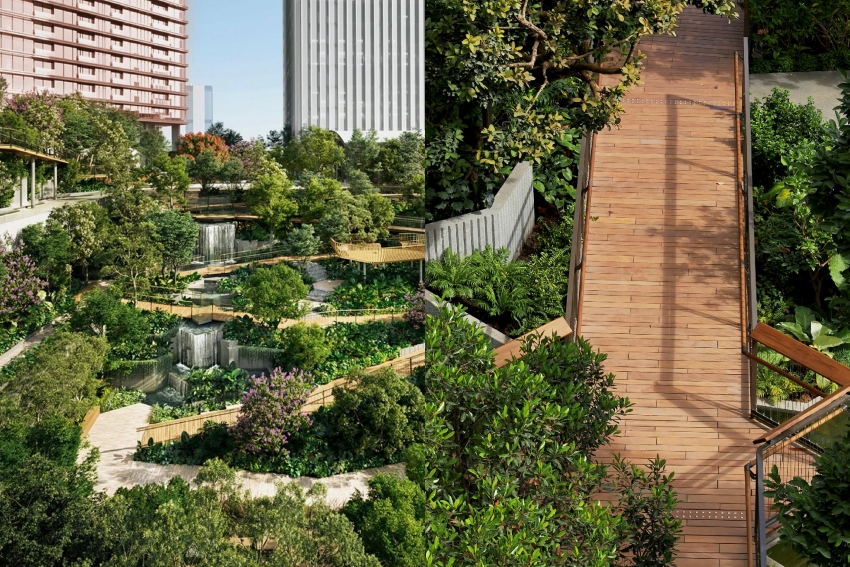
The rooftop park and public zones use native tropical planting to create an urban landscape built for coexistence with nature. Spatial scale, shading, and material selection all prioritize comfort and lingering, responding to a tropical city’s demand for ventilation, shade, and unhurried movement. These design choices allow the project to retain an approachable, nature-connected, community-oriented character even within a high-density urban environment, inviting people to slow down, stay, and interact. The building becomes an extension of city life rather than a backdrop to be quickly consumed. As one of the featured exhibitions at Bangkok Design Week 2026, “Central Park Design for Bangkok” directly echoes the “Secure Domestic” and “Sustainable Future” pillars of the festival’s curatorial theme: through deep engagement with Bangkok’s specific urban conditions, the project explores how a globalizing city can continue to build a civic center that feels unmistakably its own.
Building the Future From Memory: “Projecting Future Heritage”
Where “Central Park Design for Bangkok” maps the shape of a city still forming, “Projecting Future Heritage: A Hong Kong Archive” takes the opposite approach: before the city moves on, it builds a readable, teachable, and transferable architectural archive of the buildings and ways of life most at risk of being overlooked, demolished, or forgotten.
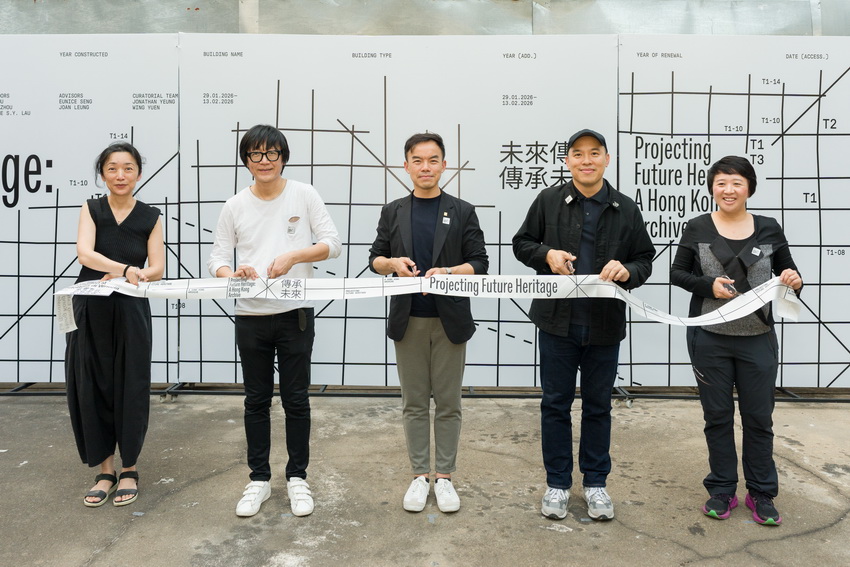
The roving architecture exhibition originated at the Hong Kong Pavilion at the 2025 Venice Architecture Biennale, where it received wide international attention, before traveling to Bangkok for Design Week 2026. It was shown at The Former Residence of Prince Sawasdiprawat, a historic royal building in Bangkok. That venue choice is itself a form of spatial argument, placing the exhibition inside another Asian city navigating its own tensions between rapid modernization and architectural memory.
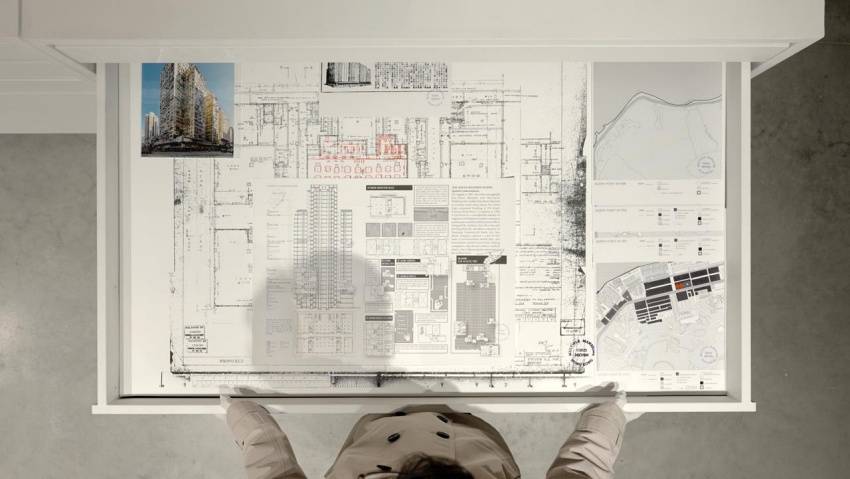
Curators Fai Au, Ying Zhou, and Sunnie S.Y. Lau focused on Hong Kong’s civic architecture: buildings designed by local architects across the postwar decades that kept the city running but were long taken for granted. The approximately 30 exhibits, re-presented from Venice in Bangkok, include composite buildings, multi-functional market complexes, cooperative housing, public housing estates, street infrastructure, and industrial buildings. None of these are landmarks. Yet collectively they carry the daily lived experience of more Hong Kong residents than any iconic tower, and they demonstrate extraordinary adaptability and collective intelligence under conditions of extreme density, climate stress, and resource constraint.
The exhibition frames its core argument as “future heritage,” deliberately challenging the assumption that heritage equals historical monuments. Using architectural survey drawings, models, photographic documentation, and archival materials, it reorganizes these disappearing urban fragments into knowledge that can be inherited and reexamined rather than simply mourned. Curator Ying Zhou articulated the purpose clearly: “We are bringing them to Bangkok to share both the archive as media for communication and exhibition, and also the contents of the archive, which has resonance with the modern-era buildings in Bangkok as well.”
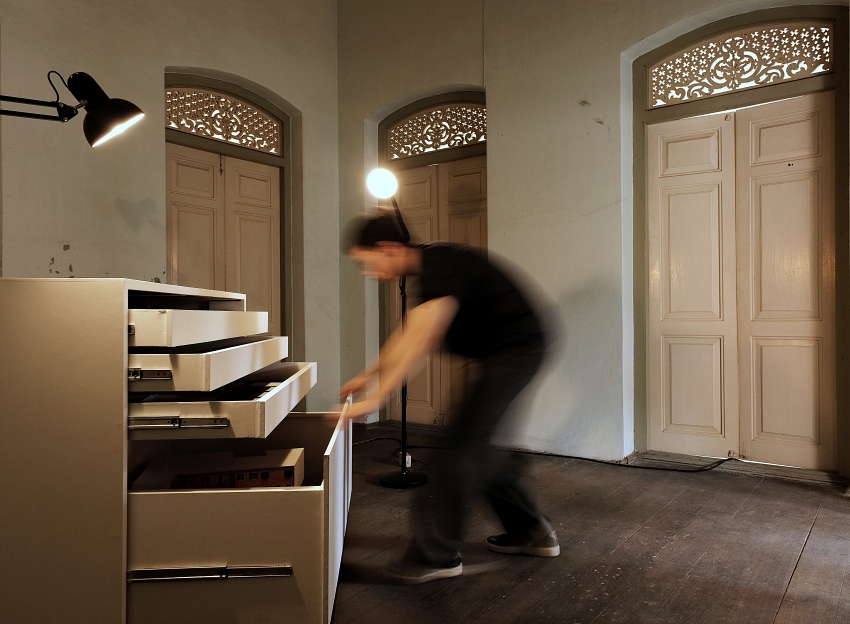
Rather than a nostalgia exercise, the exhibition poses a forward-facing question: as city development tilts ever further toward closed, capital-driven, image-focused architecture, are we losing the spatial intelligence that once supported genuine public life? And can that intelligence still offer meaningful guidance for contemporary cities?
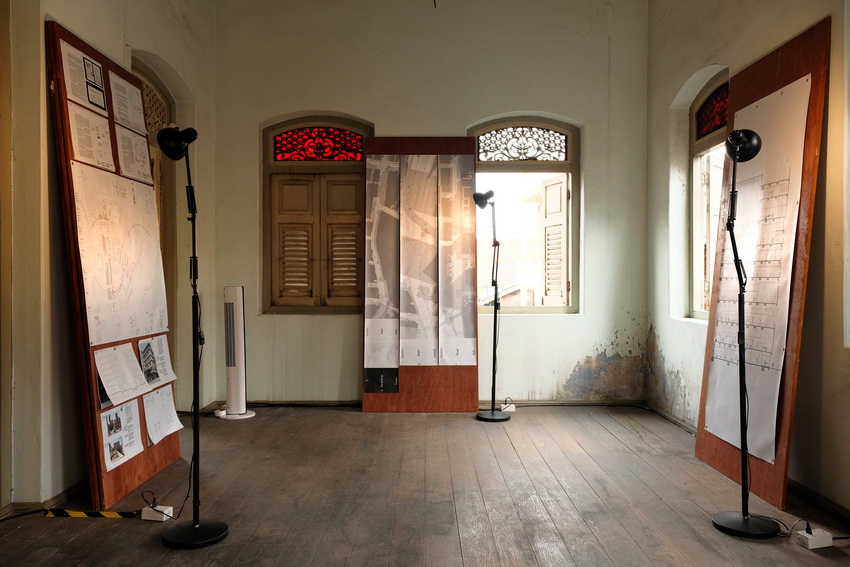
In Bangkok, those questions land with particular force. As an Asian metropolis facing its own pressures of high-speed development, land reorganization, and urban renewal, Bangkok audiences see in the exhibition not only Hong Kong’s story but a familiar urban condition. How does public space hold its ground between density and efficiency? How does architecture preserve cultural and social value within an economy-first city logic? These questions cross borders, creating a reflective mirror between cities.
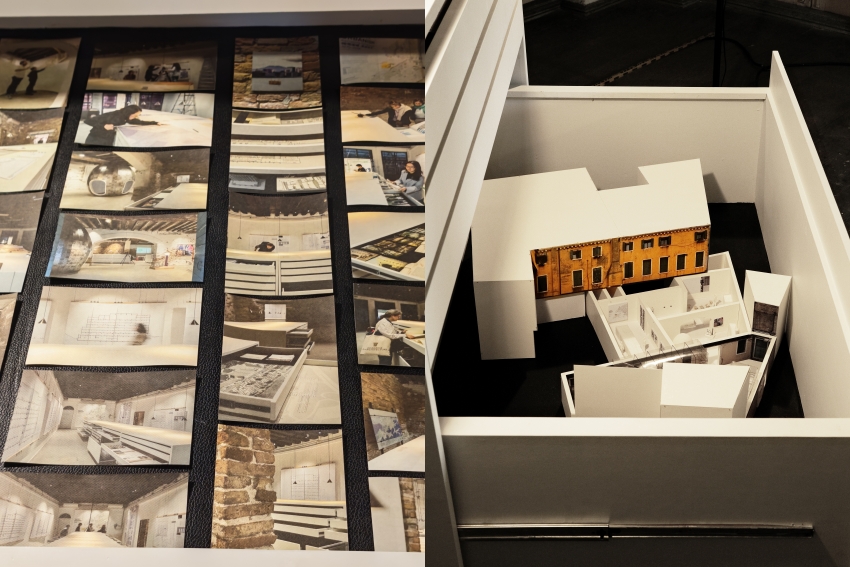
The curatorial framing also places Bangkok, Hong Kong, and Shanghai in deliberate dialogue, treating all three as urban nodes intimately connected by water, infrastructure, and global mobility. By doing so, the exhibition lifts architecture out of any single city’s frame and transforms it into experience that different cities can understand and reinterpret on their own terms. Within Bangkok Design Week’s overall program, “Projecting Future Heritage” aligns directly with the “Outreach Opportunities” pillar: the festival does not showcase Thai design in isolation but actively brings in architectural perspectives from elsewhere in Asia, enabling cities to learn from one another as they confront shared challenges.
Architecture as Urban Public Language
When design is understood as a response to the state of the city, architecture becomes the most publicly accessible medium available. Whether through Central Park’s vision for a new urban core or “Projecting Future Heritage’s” careful preservation of intimate civic spaces, both projects demonstrate how architecture responds to city change and tension at fundamentally different scales.
Bangkok Design Week 2026 draws no boundaries around form or scale. Through interdisciplinary programming, open access, and broad public participation, it frees architecture from its professional silo and pulls it into a wider urban conversation. More than 350 projects spanning commerce, art, community, and policy ensure that architecture is no longer just models and blueprints but a form of city practice that can be understood, interrogated, and reinterpreted by anyone.
In these brief but intensely concentrated spatial experiments, what Bangkok presents is not a finalized vision of the future but a city still in process: a place where how a city is designed and how it is understood remain open, urgent, and genuinely unresolved questions.
Bangkok Design Week
Website: www.bangkokdesignweek.com
Facebook/Instagram: bangkokdesignweek
X: @BKKDesignWeek
Line: @bangkokdesignwee