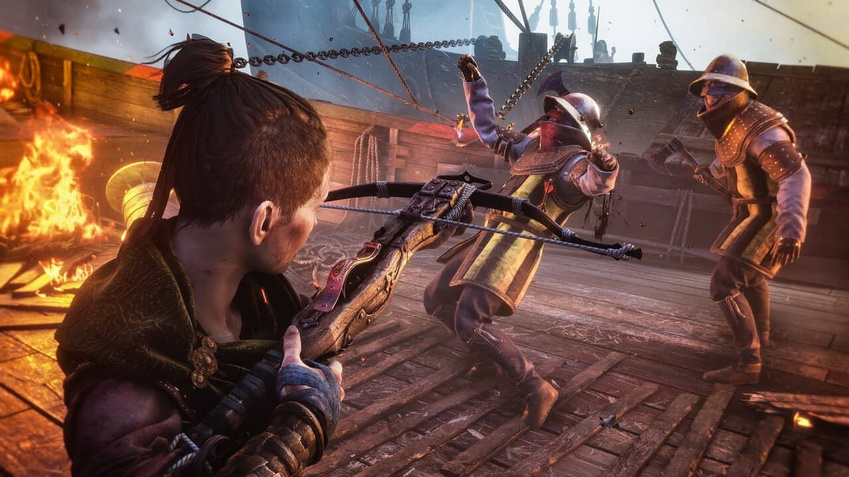
According to the latest research published in International Journal of Psychophysiology, players experiencing violent content in game chapters report a subjective increase in pressure, yet their actual physiological responses show a contrasting trend, indicating a certain stress-relieving effect within the game. This study examined players' stress reactions while playing A Plague Tale: Requiem, revealing that whether in violent or non-violent scenarios, physiological indicators significantly decreased.
The study led by Gary L. Wagener involved 82 participants aged between 18 and 40. They were subjected to stress factors induced by Social Evaluation Pressure Test (SECPT) and asked to submerge their non-dominant hand in ice-cold water at 4 degrees Celsius for three minutes, while emotional assessments were conducted every 20 seconds.
Later, the participants were divided into two groups, each experiencing different chapters of the game on the PlayStation 5. The first group delved into the violent stealth and combat sequences, while the second group focused on the non-violent segments that advanced the story. Set in 14th-century France, the game revolves around the struggle of a brother and sister against supernatural forces.
Physiological indicators reveal that, regardless of which group participants belonged to, they all experienced increased heart rates and heightened stress hormone levels after undergoing a cold water test. However, following the gaming experience, their physical metrics returned to a more stable state, suggesting that even with violent elements present, the experience can still help alleviate stress. Yet, on a subjective level, emotional responses varied between the two groups; players who experienced the violent segments generally felt an increase in stress and a decrease in relaxation, whereas those who played through the non-violent sections reported an improvement in their emotional condition.
The research team explains that the phenomenon of Disconnection between mind and body. may be due to the way players evaluate the content of the game. Violent scenes often require more challenges and quick reactions, but physiologically, stress indicators have shown a decrease regardless of the game content. The study also notes that this survey was conducted on a single game, and future research should delve into different types of games for a more thorough validation, exploring their diverse effects on both the mind and body.