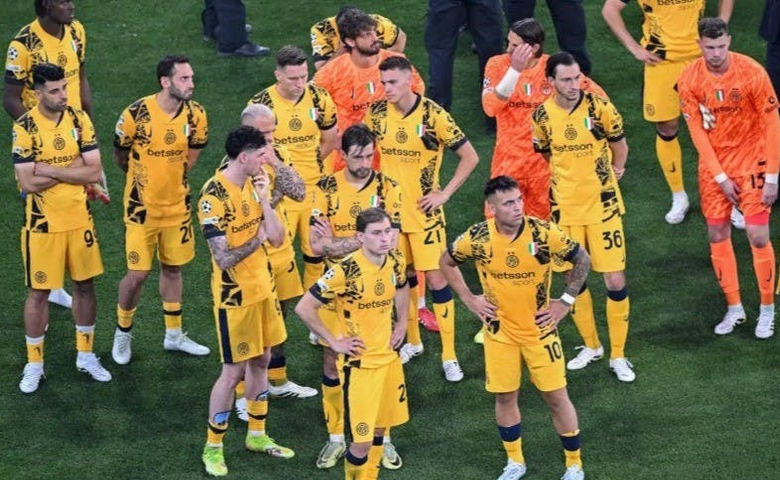
In the latest Champions League final, Paris Saint-Germain delivered a stunning 5-0 victory over Inter Milan, setting a record for the largest margin in Champions League history and turning the match into a hot topic. Despite Inter Milan reaching the finals twice in the past three years and facing strong teams like Bayern Munich and Barcelona while dealing with injury challenges, they seemed utterly powerless in this game, highlighting the stark contrast in strength compared to Paris Saint-Germain.
In this Champions League final analysis, we’ll delve into the match dynamics and its pivotal highlights, particularly focusing on the contrasting strategies employed by both teams. Inter Milan demonstrated their resilience by defeating Barcelona in the semi-finals; however, in the final, they were completely overwhelmed by Paris Saint-Germain. This unexpected outcome, anticipated to be a showdown between heavyweight contenders, instead revealed a lopsided performance, highlighting the stark disparity in strength between the teams.
In terms of the starting lineups, Paris Saint-Germain opted for a 4-3-3 formation, while Inter Milan chose a 3-5-2 setup. Although both teams emphasized possession play, the technical prowess of PSG players allowed for seamless rapid and intricate combinations in tight spaces. In contrast, Inter Milan’s approach to possession appeared a bit one-dimensional, primarily relying on the forwards dropping back and the midfield’s quick advancement to create offensive opportunities.
As the match kicked off, Paris Saint-Germain dominated possession, while Inter Milan struggled to apply an effective high press. This allowed the opposing defenders and goalkeeper to control the ball with ease. This issue might be linked to their relatively older average age, which limited their stamina and ability to cope with intense pressure. In contrast, the high press from Paris Saint-Germain placed immense stress on Inter Milan during their passing and ball distribution.
While Inter Milan has historically excelled in ground attacks, particularly utilizing the impressive synergy between Bastoni and Dimarco to create scoring opportunities, they faced a formidable challenge from Paris Saint-Germain’s tight defense in this match. Although there were a few sporadic attacks in the first half, they posed minimal threat to the Parisians. Ultimately, PSG’s successful collaboration between Djué and Dembélé broke the deadlock, highlighting Inter Milan’s defensive weaknesses.
When facing Paris Saint-Germain’s intense pressure, Inter Milan completely revealed their attacking deficiencies, with an underwhelming offensive strategy that left them struggling. Despite Lautaro’s efforts to find a breakthrough on the field, their passing quality clearly failed to meet offensive demands, exposing the areas they need to improve upon when challenging strong opponents.