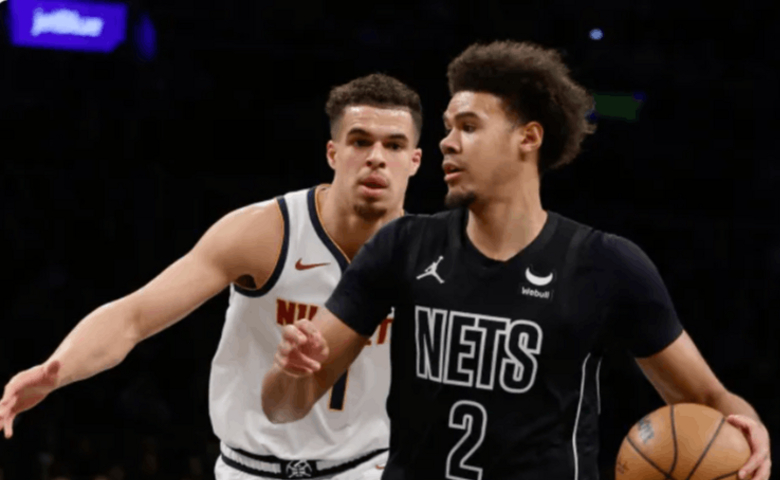
Before the start of the free agency market, the shocking trade between the Denver Nuggets and the Brooklyn Nets captured widespread attention in the NBA. The Nuggets exchanged Michael Porter Jr. (MPJ) and an unprotected first-round pick for 2032 for shooter Cam Johnson from the Nets. This move reflects the Nuggets’ considerations regarding the risks of injuries, while also optimizing the team’s salary structure, aiming to create a more stable championship-contending lineup. Meanwhile, the Nets are looking toward the future and hope to leverage MPJ’s potential to add firepower to their rebuilding process as they accumulate assets. This trade highlights the profound implications set against the backdrop of both teams’ future trajectories.
MPJ stands at an impressive 6 feet 10 inches, showcasing remarkable range and finishing ability at the rim. Since being drafted in 2018, his potential for development has drawn significant attention. Despite averaging 19.0 points during the 2020-21 season, with an outstanding three-point shooting percentage of 44.5%, his ongoing injury history raises concerns for the Nuggets. To mitigate this risk, the Nuggets are looking to bring in players with greater stability.
In comparison, while Cam Johnson may not possess the raw talent of MPJ, he has solidified his reputation as an efficient shooter, showcasing remarkable catch-and-shoot skills. Since entering the NBA in 2019, Johnson’s performance with the Nets has progressively improved, averaging 16.6 points and a 39.1% three-point shooting rate during the 2022–23 season. This makes him the ideal representative of Three and D, perfectly aligning with the team strategy built around superstar Jokic.
From a technical standpoint, MPJ is well-suited to serve as a secondary core player or primary scorer for the team, while Johnson acts as a supportive piece, seamlessly integrating into the team but struggling to drive the offense on his own. The contrasting roles of both players on the court lend greater significance to this trade—the Nuggets aim to secure a more stable performance, while the Nets are betting on MPJ’s potential.
Moreover, the structure of the MPJ contract has a distinct impact on the salary situations of both the Nuggets and the Nets. The Nuggets’ high-paying contract puts them under tax pressure and limits their maneuverability in the free market; on the other hand, the Nets can effectively manage MPJ’s salary burden, paving the way for their future seasons. This trade is not just an exchange between players; it’s also a pivotal decision for both teams regarding their direction and strategies for future development.