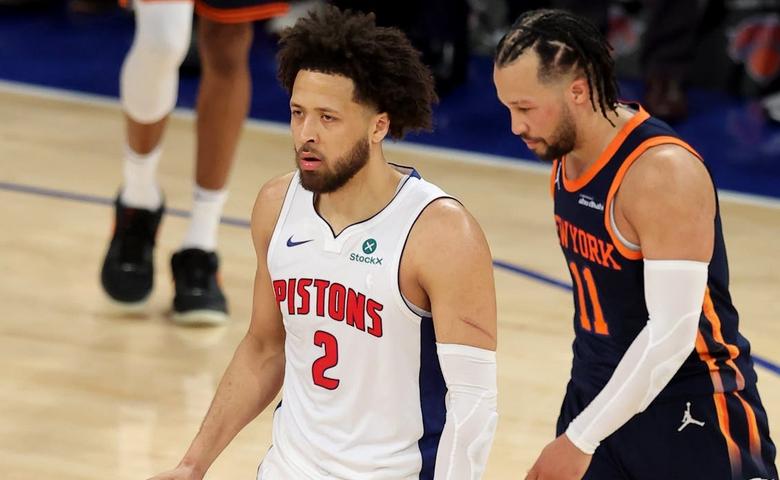
The Detroit Pistons showcased resilience during the intense series of the 2025 NBA Playoffs, but critical mistakes in clutch moments and questionable coaching decisions have posed significant challenges for them. Facing a New York Knicks team with superior talent and experience, the Pistons are now banking on a resurgence in their three-point shooting to turn the tide.
In the first two games of the series, despite the Pistons' slight lack of experience, their performance on the road showcased an impressive fighting spirit. Moving into Game 3, the higher-seeded Knicks ultimately took control of the game, demonstrating their strength.
The flow of Game 3 mirrored that of the first match, with the Pistons briefly taking a 45-41 lead in the latter half of the second quarter, thanks to a three-pointer from Tim Hardaway Jr. and a mid-range jumper by Dennis Schröder. However, the Knicks responded with a blistering 25-8 run, flipping the script and achieving a double-digit lead for the first time in the series. This momentum shift marked a turning point in the entire game.
The key to this game was the resurgence of Karl-Anthony Towns (KAT). In the previous two games, KAT had fewer attempts from beyond the arc, but in this match, he wasted no time after grabbing defensive rebounds, looking for shot opportunities. Although his shots didn’t land, he set the tone for the game, particularly by exploiting the Pistons' weakness in defending shooting big men.
The Pistons' wing Tobias Harris performed exceptionally in the first two games, prompting coach J.B. Bickerstaff to assign him to guard KAT. Initially, this strategy worked effectively. However, in Game 3, Harris struggled with foul trouble, forcing the Pistons to rely on the less defensively skilled center Jalen Duren to match up against KAT, which created defensive vulnerabilities.
Heading into Game 4, although Harris managed to keep his fouls in check, the Knicks still concentrated their firepower on attacking KAT. KAT knocked down five three-pointers throughout the game, successfully breaking through the Pistons' defense. Compared to the earlier high-octane offense, the pace of Game 4 seemed slower, making the impact of three-pointers even more pronounced.
Despite the Pistons showing an impressive comeback performance in the second quarter, even briefly leading by double digits, they ultimately couldn’t turn things around due to their lackluster three-point shooting. Facing the Knicks’ swift counterattacks, the Pistons’ struggles beyond the arc proved to be the key factor in their defeat.
After the game, referee David Guthrie, when asked why no foul was called on Tim Hardaway Jr.'s three-point attempt, stated that upon reviewing the replay, Josh Hart's defensive action was indeed a foul. With this crucial decision, the Pistons had no choice but to reluctantly accept the referee's ruling.
The first four games were extraordinarily intense, with the Pistons recording more turnovers in each game compared to the Knicks. Notably, ball handler Cade Cunningham struggled with a significant turnover issue. Bickerstaff also revealed shortcomings in managing certain game details—his frequent failures with challenge calls cost him the opportunity to make crucial challenges in pivotal moments, directly impacting the outcomes of the games.