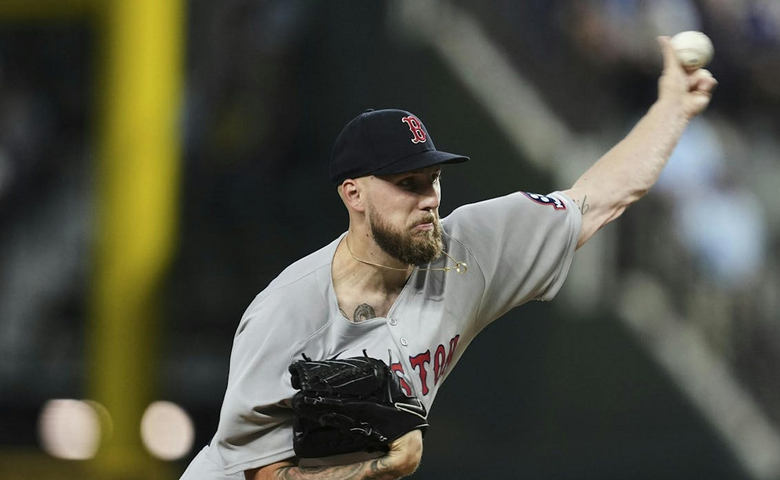
Recently, Garrett Crochet made the exciting switch from the Chicago White Sox to the Boston Red Sox, showcasing an impressive pitching talent that has particularly garnered attention during the standout performances of the 2024 season. As a first-round draft pick in 2020, Crochet rapidly ascended in the Major Leagues, and in 2024, he successfully transitioned to being a starting pitcher, undeniably becoming a fresh force in the Red Sox lineup.
Despite being limited by team strategies, Crochet’s pitching innings in past seasons have been fewer, yet his remarkable pitching stats are convincing. He boasts a staggering 12.88 K/9 rate, leading all starting pitchers in the league, and his FIP and xFIP performances are also at the top, showcasing his ability to suppress opponents’ hitting. Under such circumstances, the Red Sox decided to acquire him in a 4-for-1 trade and offered him a 6-year, $170 million contract, which undoubtedly reflects the team’s high expectations for him.
Crochet’s performance has been on the rise this season. Since he took over as a starter, he has delivered a stunning eight-inning scoreless game and accumulated 102.1 innings pitched with 125 strikeouts over 16 starts, leading the majors in those stats. Additionally, his ERA, FIP, and xFIP have consistently ranked among the top seven, while his fWAR has also reached three digits, showcasing his potential to become a top-tier pitcher.
When it comes to pitching techniques, Crochet’s style has evolved alongside his experiences. Initially, he relied heavily on fastballs, but he later began to modify his pitching mechanics to enhance the vertical movement of his fastball. After undergoing Tommy John surgery, he further refined his pitching angles and the variety of pitches he used, gradually incorporating new weapons like the cutter and the changeup. This transformation has made his pitching arsenal more diverse, increasing the difficulty for batters attempting to predict his next move.
In the 2024 season, while his fastball speed has slightly decreased, his slider, curveball, and changeup have performed remarkably well. Even though the whiff rate on his fastball remains strong, the effectiveness of his other pitches has significantly improved, particularly his use of the sinker, which still gives him considerable dominance against left-handed batters. These changes in data indicate that Crochet’s proactive adjustments to his pitching strategy have played a crucial role in maintaining his on-field performance, adding greater depth and stability to the Red Sox’s pitching lineup.