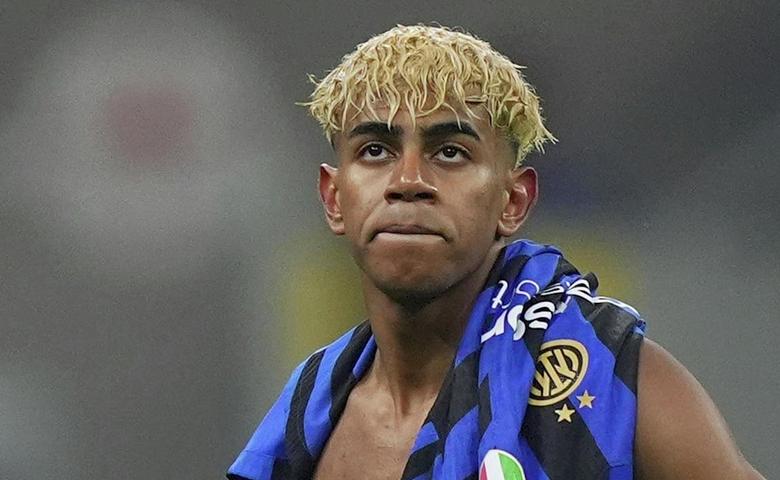
In a crucial UEFA Champions League match, Inter Milan defeated Barcelona 2-1, showcasing their precise defense and rapid counterattacks, finally reaching the finals after a two-year wait. The team maintained a classic 3-5-2 formation, with the defense composed of Bastoni, Acerbi, and Bisseck, while wing-backs Dumfries and Dimarco transitioned between defense and attack. In the midfield, Mkhitaryan, Barella, and Calhanoglu provided support, with Marcus Thuram and Lautaro Martínez leading the front line. Early in the game, Inter’s defense clearly settled back, with Dimarco frequently dropping deep to form a five-man backline, effectively stifling Yamal’s breakthroughs.
In the 21st minute, Dimarco made a strong tackle on Olmo in the opponent’s half and passed the ball to Dumfries. The latter swiftly broke through the offside trap and sent in a cross, which Lautaro calmly finished to put the ball in the net. This attack stemmed from a defensive play, showcasing the stability and flexibility of the three-center-back system under pressure. Just before halftime, Inter executed a rapid counterattack successfully once again. Güler brought down Lautaro in the penalty area, and Calhanoglu converted the penalty, extending the lead to 2-0. Although Barcelona came back aggressively in the second half, with Eric García scoring a goal in the melee to close the gap, their overall momentum failed to break through Inter’s tightly organized defense.
Franke de Jong tried to control the rhythm in the midfield, but it was difficult to establish effective connections under Inter Milan’s relentless pressure. As the match entered extra time, Inter Milan held firmly to their lead, successfully maintaining the score until the final whistle. This game saw standout performances from Dimarco and Dumfries, who repeatedly executed crucial transitions from defense to attack, highlighting Inter’s command over the game’s tempo and their adaptability. Overall, this victory not only reflects Inter’s clear tactical deployment but also showcases the maturity and stability of the players in executing their roles.