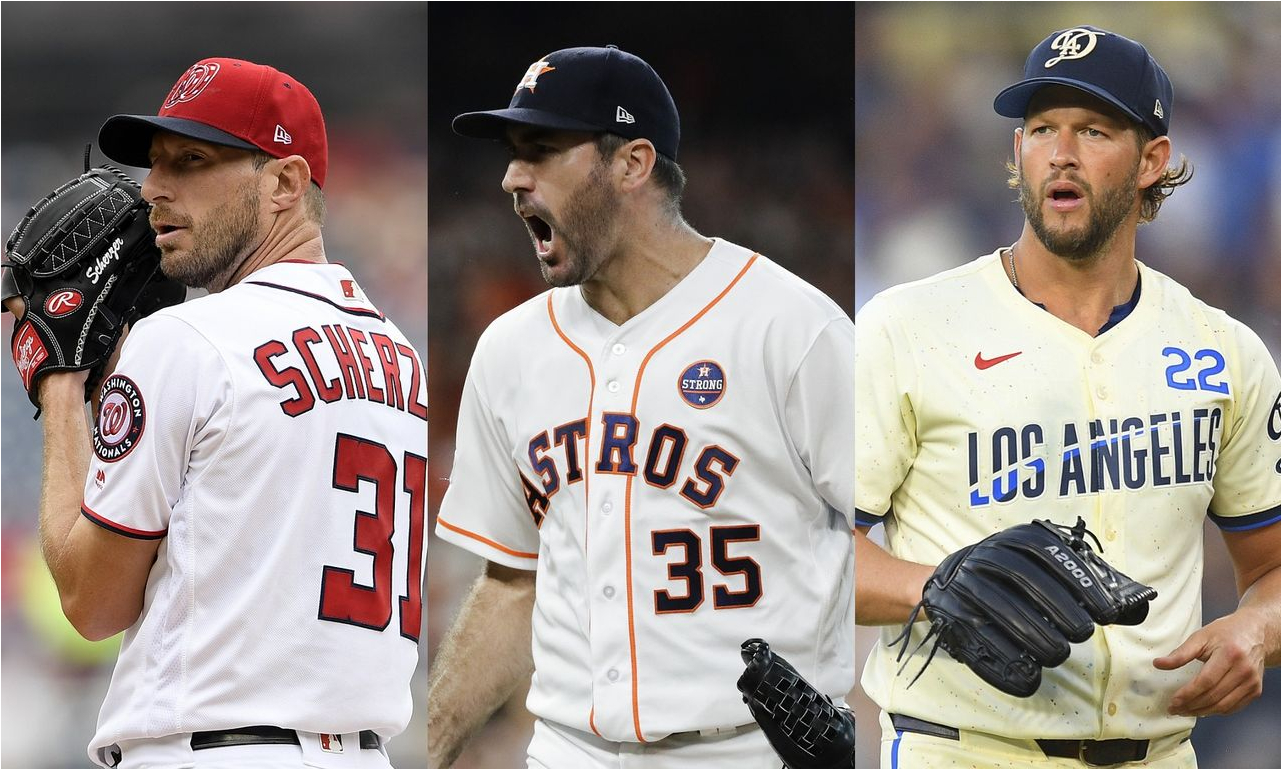
In the vast history of baseball, various scenarios involving If often arise, especially when discussing pitchers. The stories of Clayton Kershaw, Justin Verlander, and Max Scherzer present a captivating topic. During the 2006 draft, the Detroit Tigers originally intended to select the promising high school pitcher Kershaw. However, circumstances changed during their pick. That year, left-handed pitcher Andrew Miller from the University of North Carolina was chosen by the Kansas City Royals but opted for Luke Hochevar due to dissatisfaction with the offered signing bonus. Consequently, four teams passed on Miller, prompting the Tigers to change their pick to the talented pitcher.
Not long after that draft, the Los Angeles Dodgers selected Kershaw with the seventh overall pick. At just 20 years old, this pitcher dazzled everyone on his debut, throwing six innings, allowing only two runs, and striking out seven batters. His blazing fastball, which reached speeds of 97 mph, combined with a sharp curveball, drew high praise from then-manager Joe Torre. Although Kershaw’s rookie year saw him finish with a 4.26 ERA, over the next 15 years, he lowered his ERA to below 3.00 in 13 of those seasons, showcasing his incredible growth and progress.
Meanwhile, at the same draft, the Arizona Diamondbacks selected Scherzer with the 10th pick. However, due to concerns about his pitching mechanics, the Diamondbacks ended up trading him to the Tigers. This led to Scherzer and Verlander becoming teammates, battling together from 2010 to 2014, helping the Tigers dominate the AL Central for four consecutive years and even reaching the World Series. If Kershaw had also been part of the Tigers’ starting lineup back then, conversations this year might have taken a different turn. Just imagine the miracles that could unfold if these three pitching prodigies found themselves on the mound together.
Today, Kershaw may have officially retired, but he spent an impressive 18 years fighting for the Dodgers, leaving the game last autumn with a World Series championship ring on his finger. His retirement has left many baseball fans feeling a sense of loss; even though he faced just one batter in last year’s World Series, he managed to overcome a crucial bases-loaded situation in extra innings, ultimately leading the Dodgers to win that pivotal game.
As for the current Verlander and Scherzer, although they are both over forty, they still strive to extend their pitching careers. Scherzer performed admirably in last year’s World Series seventh game, proving he can still contribute significantly when it matters most. These two have been focal points in the pitching world alongside Kershaw for the past 20 years, showcasing their profound influence.
As we approach the announcement of the Hall of Fame inductees for 2026, the question of which of the three potential inductees stands out as the pitching titan of this generation has become a hot topic. Many might wonder: Kershaw, Verlander, or Scherzer—who will leave the most dazzling mark in the annals of history? Is it even possible to find a definitive answer to this question?
Next, let’s delve into the career value of these three pitchers, particularly focusing on their fundamental statistics and achievements. According to data from Baseball-Reference and FanGraphs, Verlander’s WAR value clearly surpasses that of the other two pitchers, which is quite reasonable. After all, Verlander has pitched approximately 600 more innings than Scherzer, and the gap with Kershaw is an impressive 700 innings. Even though Verlander participated in only one game as a starter in 2020 due to surgery that sidelined him for the entire year, his record of over 200 innings pitched in a single season is at 12, compared to Scherzer’s 6 and Kershaw’s 5. This demonstrates his exceptional durability and ability to log innings, traits that other pitchers find hard to match.