On January 9, the Audi racing team completed its first test of the 2026 race car at the Catalonia Circuit in Spain. This test primarily took place during a video shoot, and while the actual test details have yet to be revealed, an AI-generated photo has sparked quite a bit of discussion.
In this test, the Fédération Internationale de l’Automobile (FIA) imposed quite strict restrictions, allowing only two days of testing each year, with a daily mileage limit of 200 kilometers. Additionally, there are specific tire compounds and a cap on the output power of the power units. However, this filming day is not just a necessary step for promotion; it actually offers a great opportunity to assess the assembly conditions.
Shortly after the end of their annual leave, the Audi team selected the perfect weather conditions to conduct their first test at the Catalunya circuit. Although this test was held behind closed doors, the media and onlookers quickly uploaded photos and short clips from the scene to social media platforms.
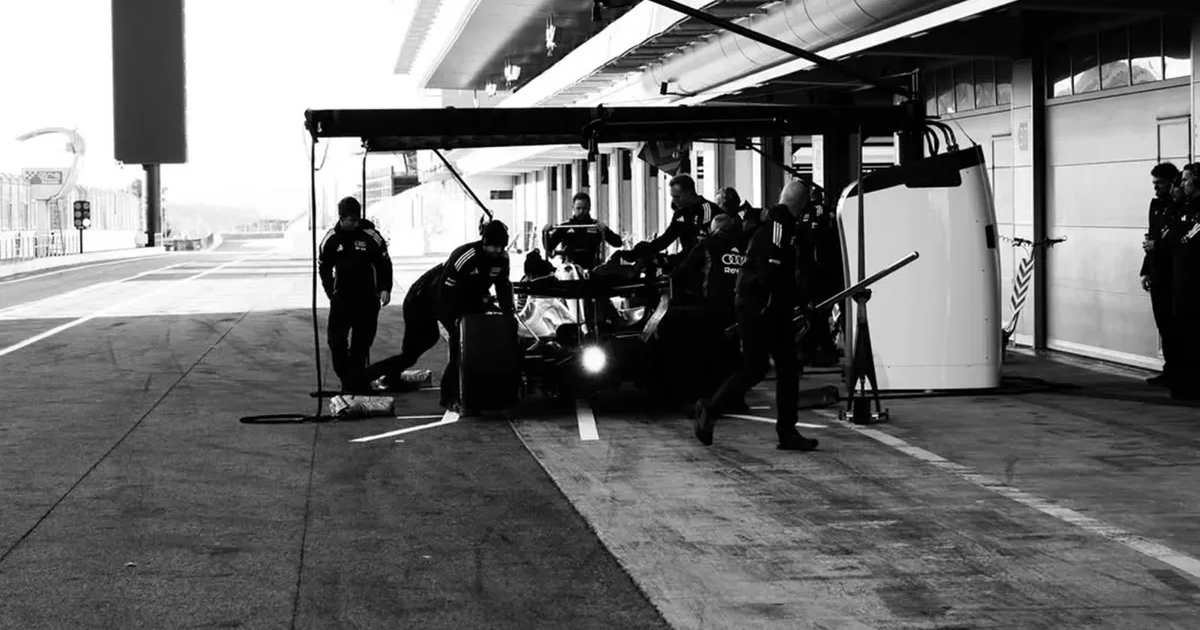
It’s worth mentioning that two photos claiming to be of the upcoming R26 racing car have sparked widespread discussion. These images have led many to speculate that this represents Audi’s preliminary design for their 2026 racing car, but they’ve also raised some doubts, particularly concerning the details.
In the composite photo, there are clear signs indicating that this is not an actual race car. The driver’s seat lacks a driver’s helmet, and the design of the car differs from the concept vehicle released by the FIA. Moreover, the painted curbs of the track are noticeably inconsistent with the current Circuit de Barcelona-Catalunya. Additionally, the sponsorship logos on the track raise suspicions that these so-called “spy shots” might actually be AI-generated images.
According to the report from The Race, the source of this composite image may be race track photos from recent years, as well as private tests conducted by the Cadillac team using older Ferrari race cars last year.
Although the Audi team quickly released several real testing photos to clarify the situation, these composite images could negatively impact the closed preseason tests scheduled for January 26 to 30 at the same track, making this assembly test almost feel like a rehearsal.
With major media outlets unable to access the primary racetrack, the public is left waiting for press releases and videos from the F1 website and various teams post-testing to get their updates. During this waiting period, fake news, AI-generated photos or videos can spread rapidly on social media, forcing journalists to invest extra time clarifying the truth.