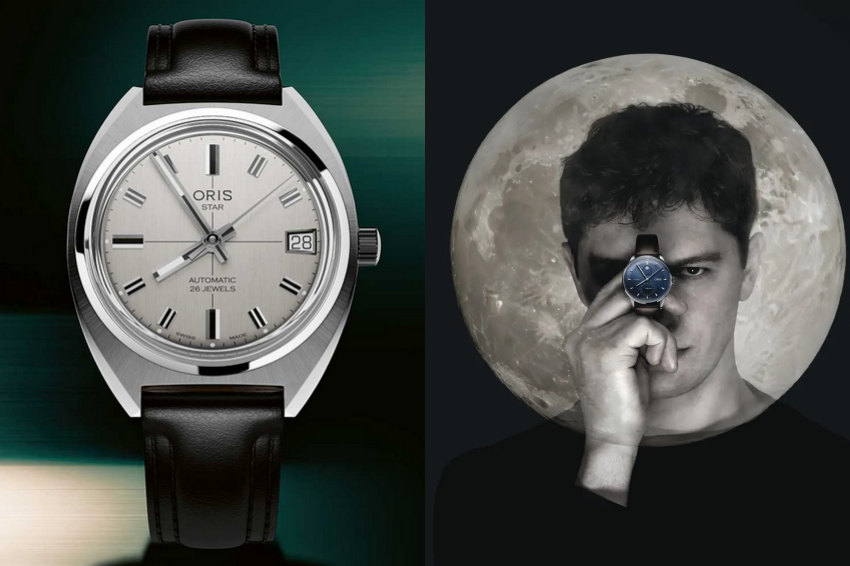
Oris Star Edition returned as the centerpiece of Oris’s Watches and Wonders booth, anchoring a quieter, moonlit presentation that marked a clear shift from last year.
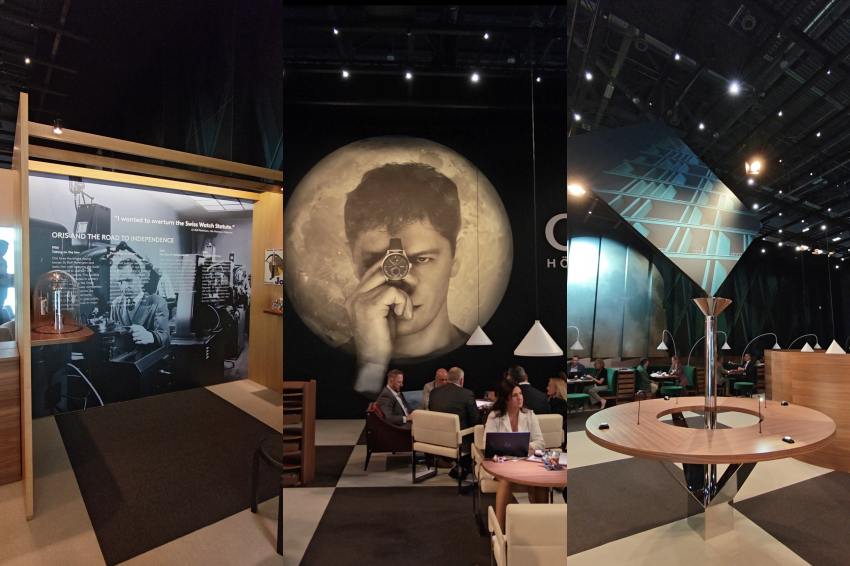
At the fair, Oris replaced its trademark bear installation with a dimly lit cityscape and a giant moon backdrop, using cool tones and shadowed silhouettes to create a more restrained atmosphere. Oris said the design aimed to link the booth visuals directly to this season’s moon-phase Artelier Complication while also celebrating the brand’s turning point embodied by the Oris Star Edition.
The booth included panels on company history that focused on Dr. Rolf Portmann, whom Oris credits with more than a decade of work to free the brand from restrictive industry rules. Oris said that history led to the 1966 debut of the original Star model, and that the new Oris Star Edition is meant to make that connection visible again.

Visitors encountered two parallel threads at the stand: a historical revival centered on the Oris Star Edition, and a contemporary suite built around the moon-phase Artelier Complication. Together, the exhibits tightened the show theme from booth to product.
Oris Star Edition history and design
The significance of the Oris Star Edition is less about silhouette than about context: Oris frames the model as a symbol of regained technical freedom after decades of industry limits.
Oris traces the story to the 1930s, when Swiss government measures aimed at stabilizing the watch industry also restricted some brands from adopting newer lever escapement systems. Oris said the brand was effectively limited to pin-lever escapements for years, which constrained precision advances.
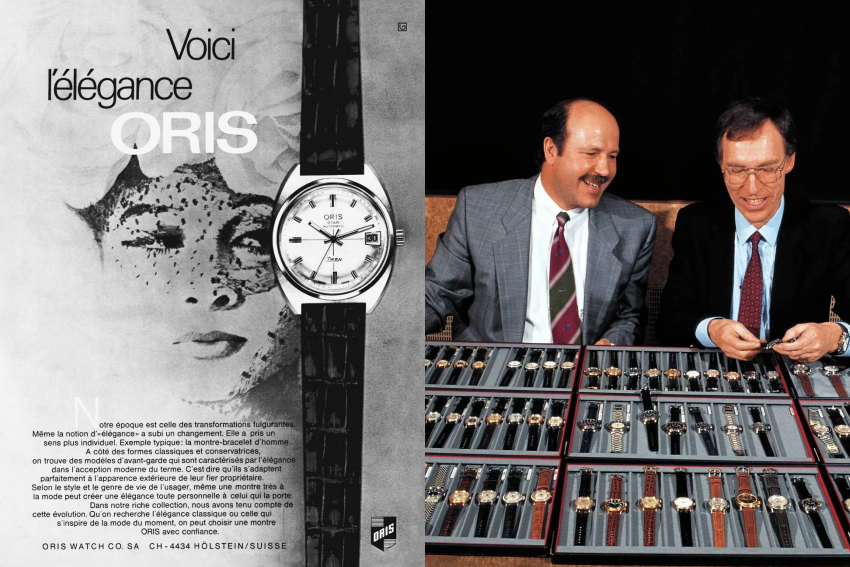
In 1956 Oris hired Dr. Rolf Portmann to address those constraints. After more than a decade of negotiation and technical work, Oris said he helped secure regulatory changes that allowed the brand to develop its own movements, culminating in the original 1966 Star model.
Design trends of the 1960s also mattered. Watches moved beyond round, gold dress designs toward new shapes and proportions. The original Star used a barrel-shaped case that reflected that shift, and the 2026 Oris Star Edition reproduces those cues with attention to period detail.
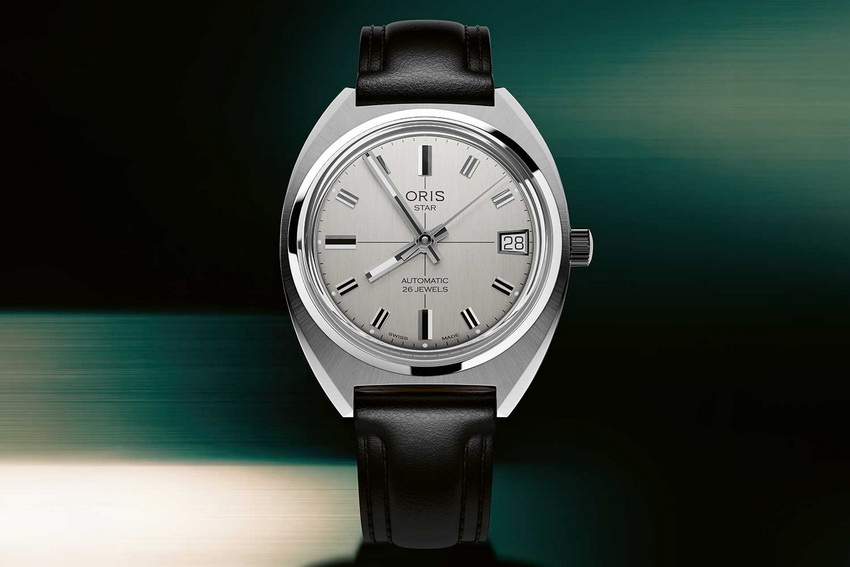
The modern Oris Star Edition keeps the original proportions, with a 35.00 mm stainless steel case and a cushion profile that reads distinctly vintage. The silver dial uses applied three-dimensional hour markers, bold hands, and a slightly offset date window at three o’clock to echo the 1966 layout.
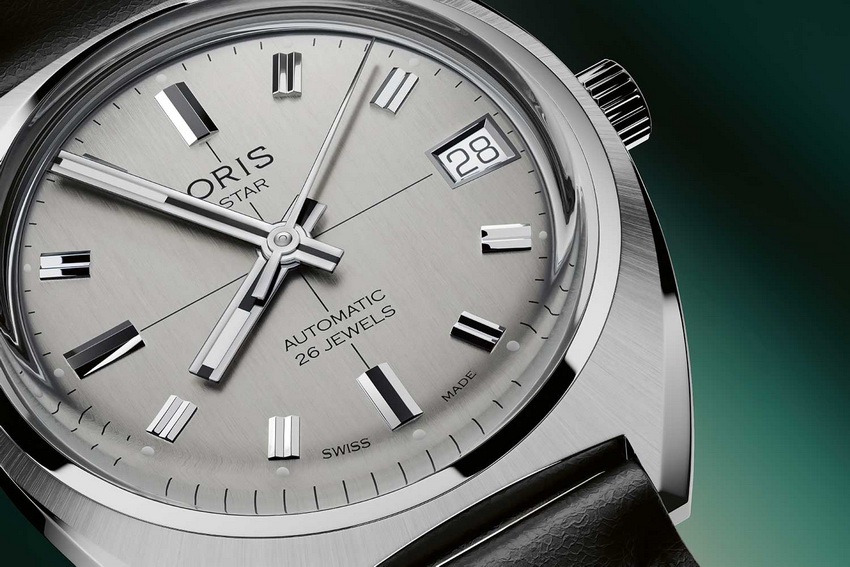
The watch uses an acrylic crystal to produce a softer reflection and reinforce the vintage look. Power comes from the Oris Calibre 733 automatic movement, which Oris lists with about 41 hours of reserve and functions for hours, minutes, seconds, and date.
As a modern reissue, the Oris Star Edition also carries a different cultural meaning. In an era when phones and smart devices handle routine timekeeping, Oris said the model aims to remind wearers of why a simple mechanical watch still matters: craftsmanship, history, and intentional choice.
Oris Artelier Complication and moon-phase focus
By contrast with the Star’s revival, the Artelier Complication targets everyday wear. Oris described it as a modern reworking of the Artelier family that draws inspiration from architecture, craft, and interior design.
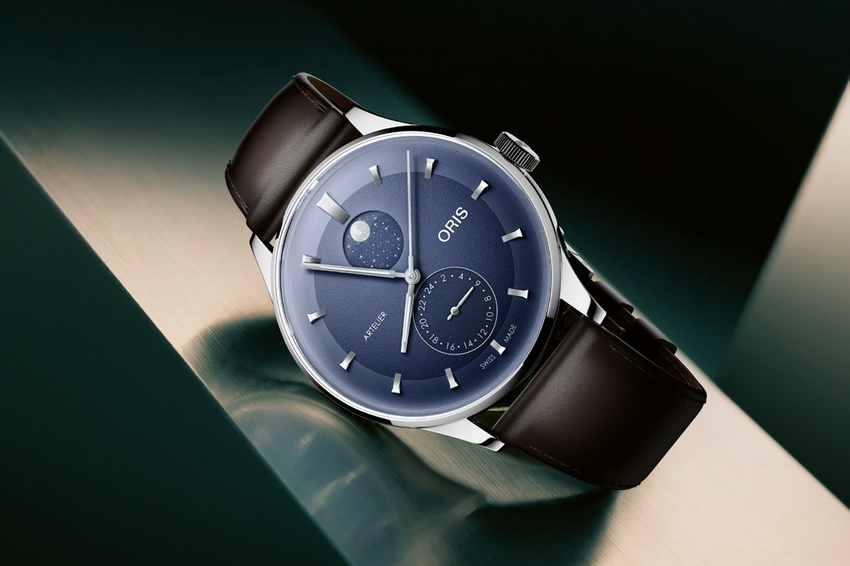
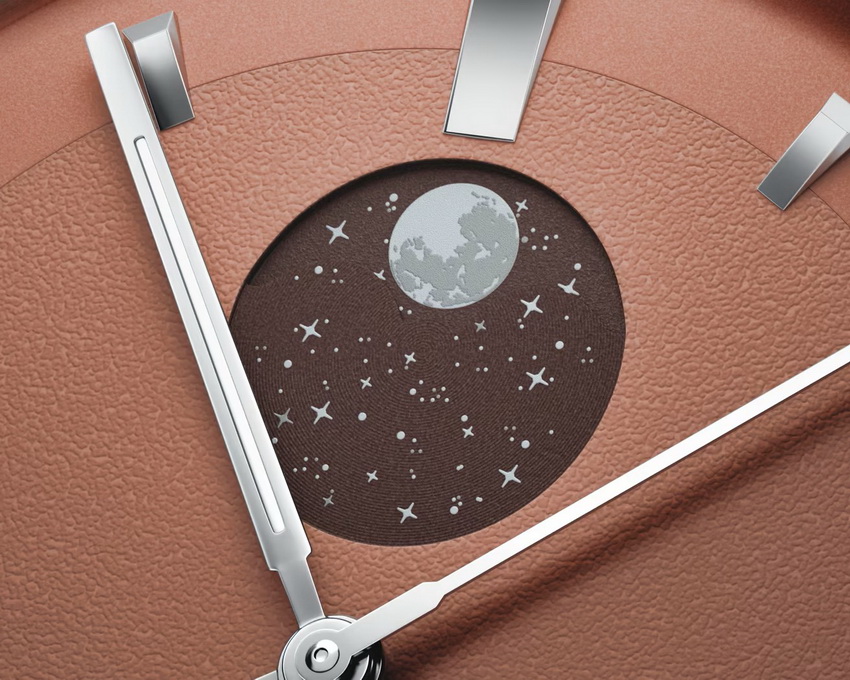
One key design choice reduced the previous four subdials to two primary display zones, opening visual space for a moon-phase that integrates into the dial rather than feeling tacked on. Oris said the moon display uses a dial-matched starfield background to make the complication read as part of the whole.
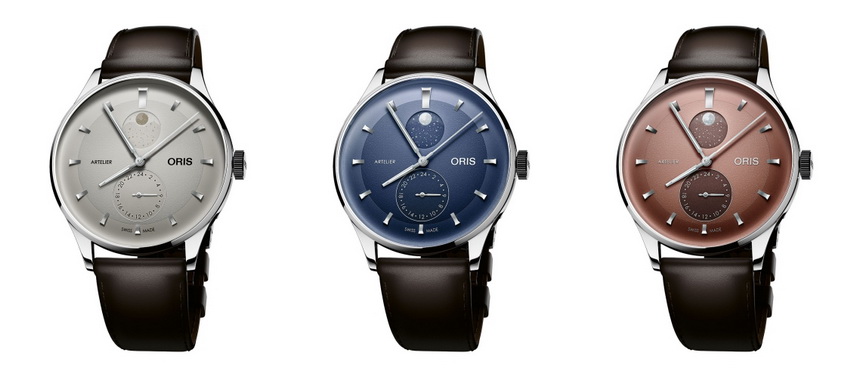
The Artelier Complication keeps practical elements, including a second time zone, and places complications in an upper and lower layout that Oris said improves legibility. The case measures 39.50 mm in steel with an 11.80 mm thickness, proportions Oris described as balanced for daily wear.
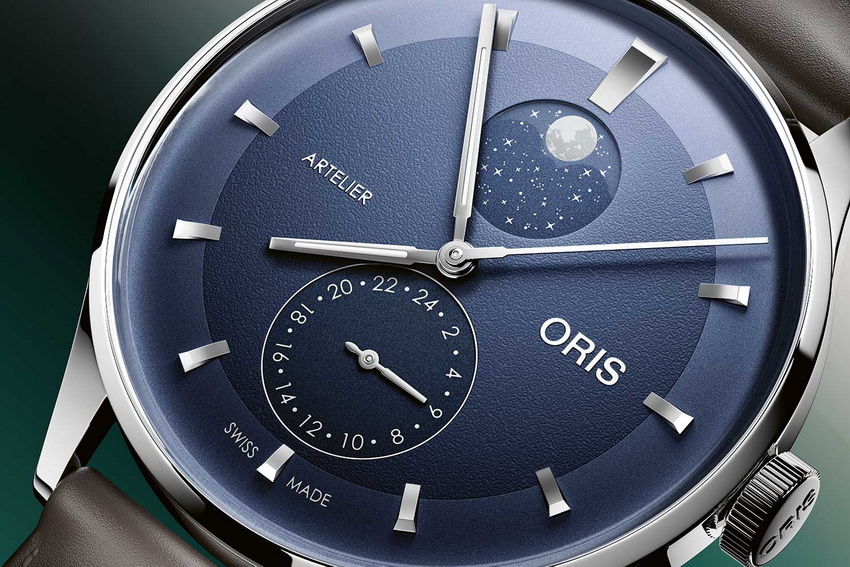
The movement is the Oris Calibre 782 automatic, offered with about 41 hours of reserve and operated via crown and side pushers. Dial options include ivory white, midnight blue, and chestnut brown, and strap choices are leather or a steel bracelet.
At the Watches and Wonders booth the two releases read as a deliberate pairing: the Oris Star Edition represents a historical turning point for the brand, and the Artelier Complication addresses how Oris sees contemporary, wearable complications. Oris said putting the “star” and the “moon” together was meant to create a visual and conceptual dialogue about time, continuity, and design choices.
Both models show how Oris is using design and heritage to make coherent product statements. The Oris Star Edition anchors that message by referencing a specific moment in the brand’s history, while the Artelier Complication translates the booth’s moon motif into a functional, modern wristwatch.