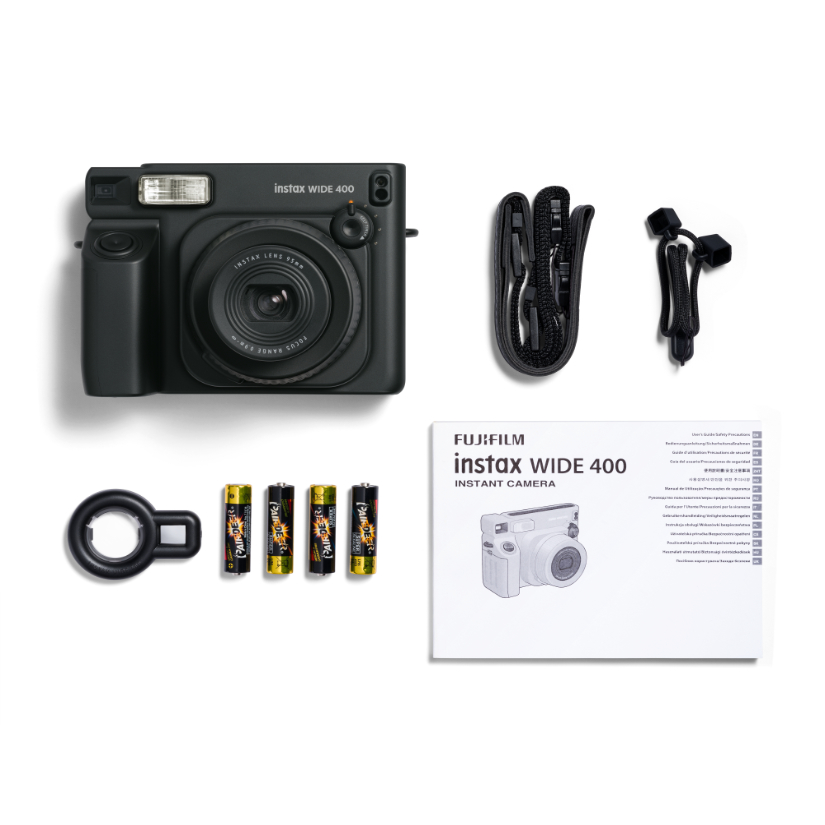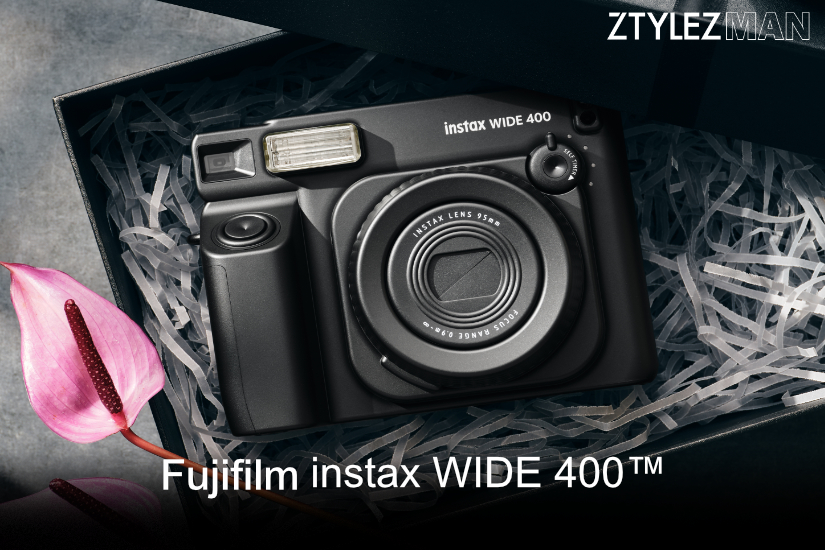
Have you ever paused before pressing the shutter to decide whether this moment is worth keeping with an instax WIDE 400?
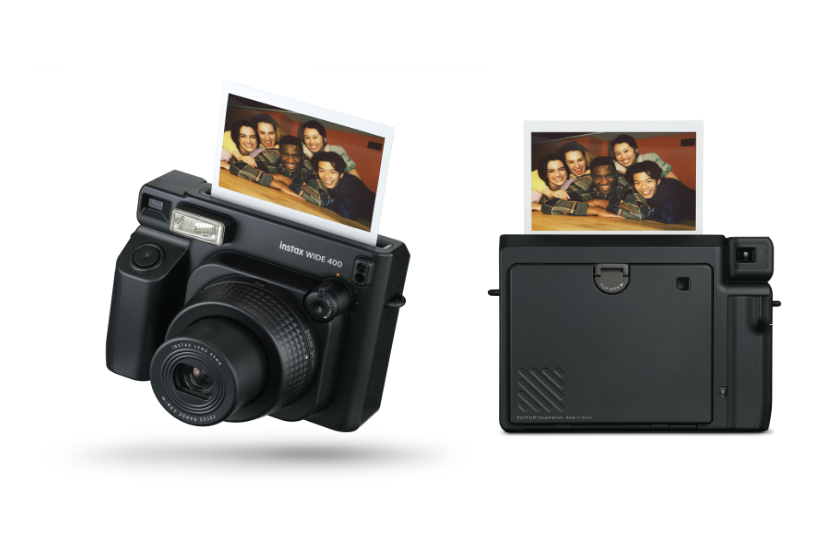
instax WIDE 400 and instant photography’s original purpose
When the world’s first instant camera debuted in 1948, it found a foothold not as a novelty but as a tool for insurance claims, property records, and accident investigations: instant images were first valued for speed and objectivity, not gift shop charm.
That pragmatic origin is what instant photography was built to be.
In 2009 Fujifilm saw an opening in Asian youth markets and by 2012 repositioned instax as an emotional camera for young women and teenagers. That strategy rescued a dying format and lodged an impression in a generation: instant cameras, especially small-format instax, equaled pink, girlish, and giftable.
That cuteness was a commercial overlay, not an original trait.
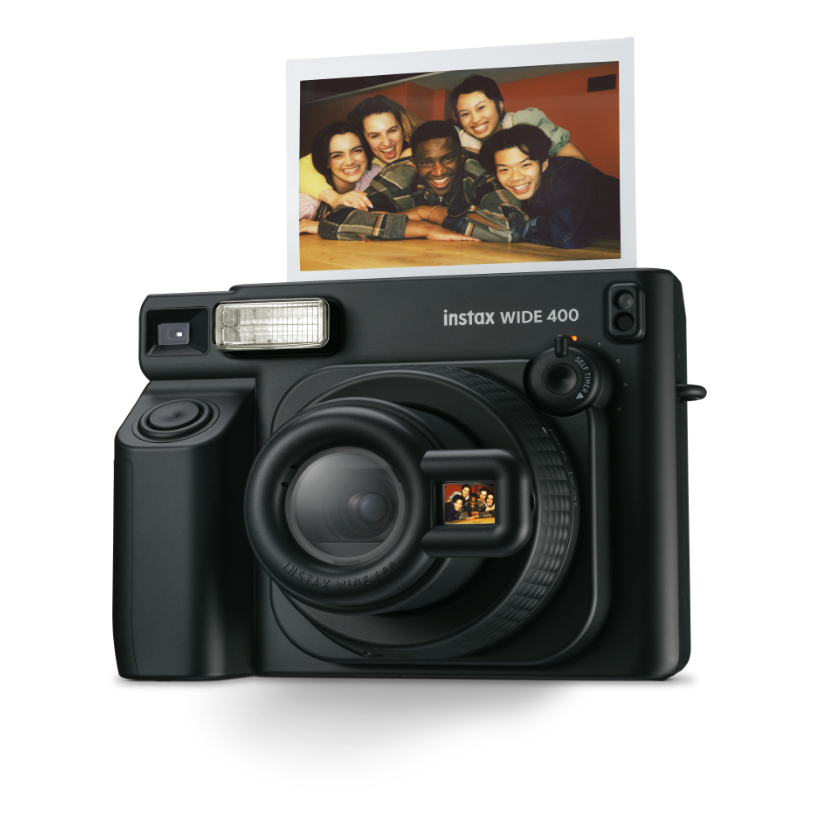
Why people with style pick different tools
A study published in a Nature journal in December 2025, spanning 600 participants, found that film photography can raise self esteem and reduce stress, through the mediating effects of nostalgia and mindfulness (Nature journal).
But people who choose instant film are often motivated by more than nostalgia. For many it is an identity statement, a way to resist homogenized digital aesthetics. Phone AI smooths skin, auto adjusts color, and applies HDR so every picture looks technically flawless, but none may look like the person who lived the moment.
Film is finite, so every shutter press carries cost. That physical limit forces intention; taking a photo becomes a deliberate decision, not a reflex.
Why instax WIDE 400 images feel warmer than phone files
instax film is a silver halide, three color instant film rated at ISO 800 with a color temperature near 5,500 K. In plain terms, the image is not printed, it grows on the paper through a chemical reaction, and that process gives the result a distinct visual voice: skin tones lean warm, shadow detail is preserved, and highlights resist going pure white, which often makes prints feel closer to how memory registers a scene.
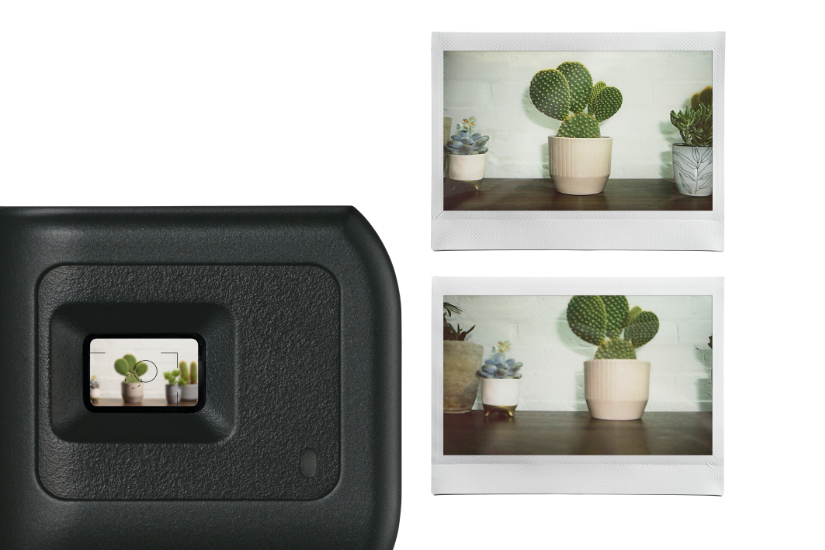
The WIDE format gains an edge from physical size, at 108 by 86 mm (about 4.3 by 3.4 inches), nearly twice the area of mini. In tests, WIDE output reads as sharper with richer detail; mini hits the chemical limits of the film at tiny sizes, so even premium lenses cannot overcome that physical ceiling. WIDE tones skew warmer, and that quality recalls the vintage look of 1970s and 1980s Polaroid, which is why photographers with an eye choose WIDE over mini.
Film grain and digital noise may look similar at a glance, but they are different in nature. Digital noise is electronic interference that makes an image look damaged. Film grain is the physical pattern of silver halide crystals, which adds texture, emotional depth, and a sense of time, much like the weave of cloth gives fabric character.
Tools such as Photoshop, VSCO, and Lightroom all offer film grain filters, but you will not find a filter called add digital noise. That choice is telling.
instax WIDE 400 Jet Black, the new finish
Fujifilm on April 2, 2026 officially launched the instax WIDE 400 Jet Black in Hong Kong, with a suggested retail price of approximately $173 (HK$1,350). A matching protective case is available at the same time.
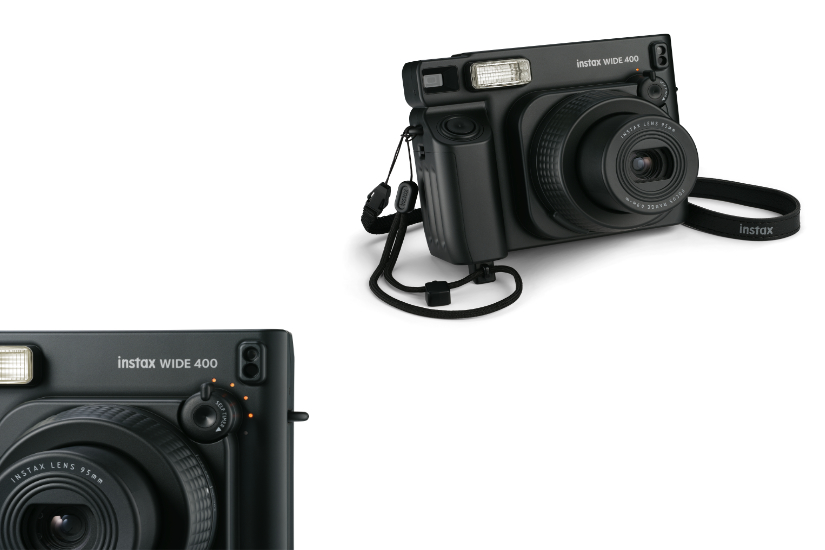
The Jet Black finish uses a deep matte surface treatment that resists reflection and fingerprints. The textured finish feels more like a design pen in the hand than a toy. In bright light it also reduces stray reflections that can affect metering, which helps exposure accuracy in practical shooting situations, a detail designers value even if reviews rarely mention it.
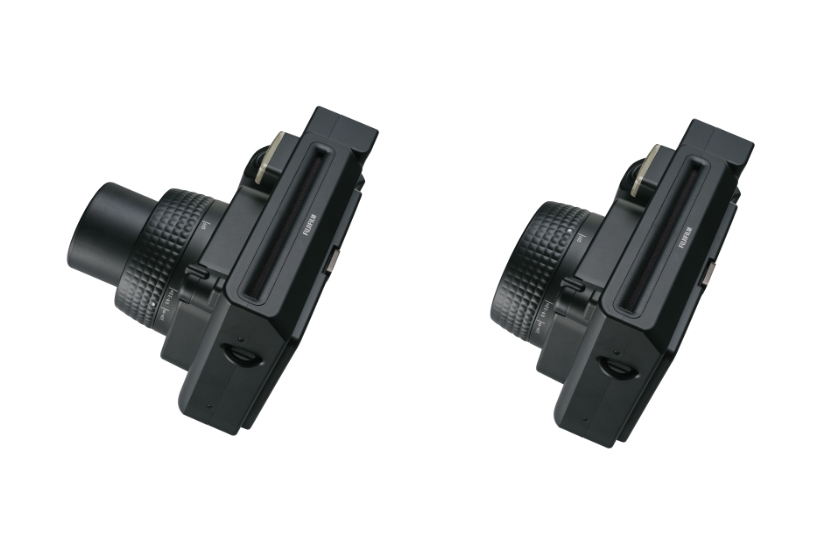
The camera keeps its signature operation: rotate the lens ring to power on, which preserves a sense of ritual while staying precise. The self timer is retained, so a solo photographer can easily include themselves in a frame, matching the tone of many real world shoots.
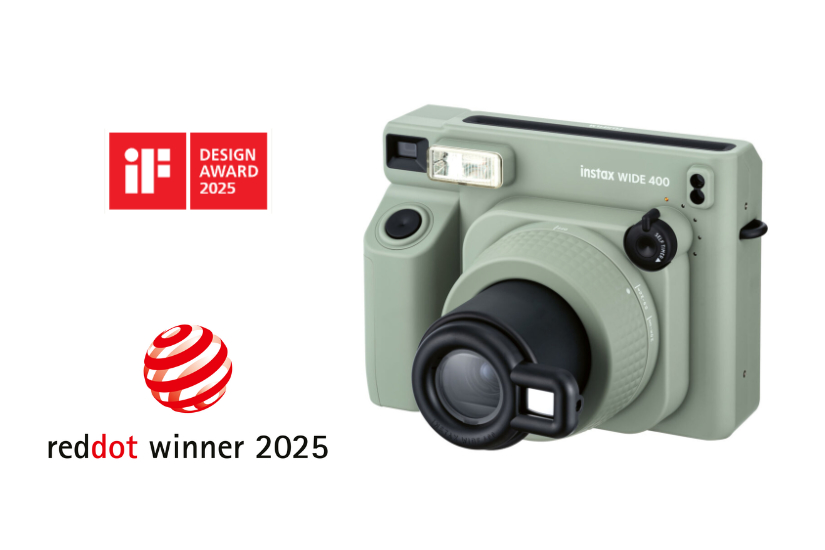
The WIDE 400 has earned international industrial design recognition, taking both the Red Dot Design Award and the iF Design Award, honors the award juries say reflect the camera’s elevated design language.
At present Fujifilm offers the instax WIDE 400 in two colors: a restrained military green and Jet Black. Both reject overtly decorative tones, one evoking outdoors restraint, the other urban composure. Together they form a clear brand statement, and from day one WIDE 400 has never tried to be cute.