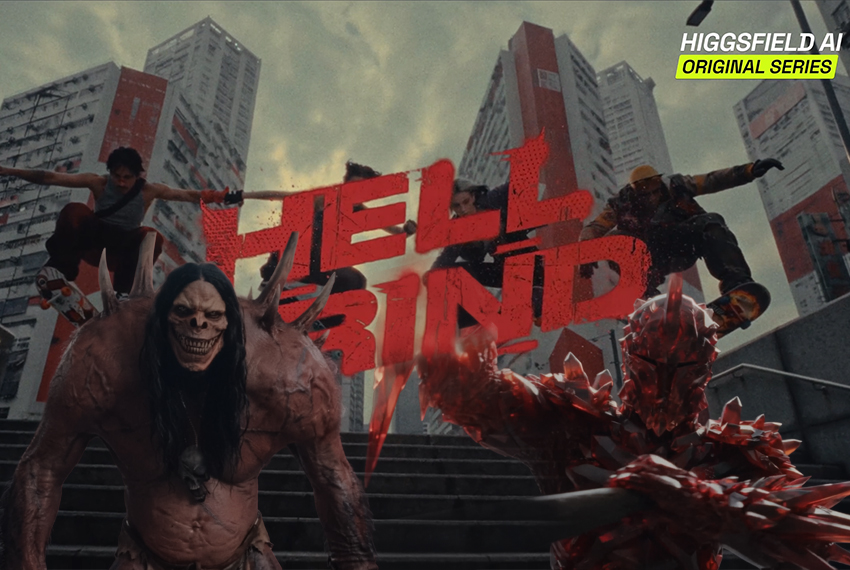
AI-generated feature film Hell Grind was produced by a 15-person team in 14 days for $500,000, but 80 percent of that budget went to GPU compute, the makers say.
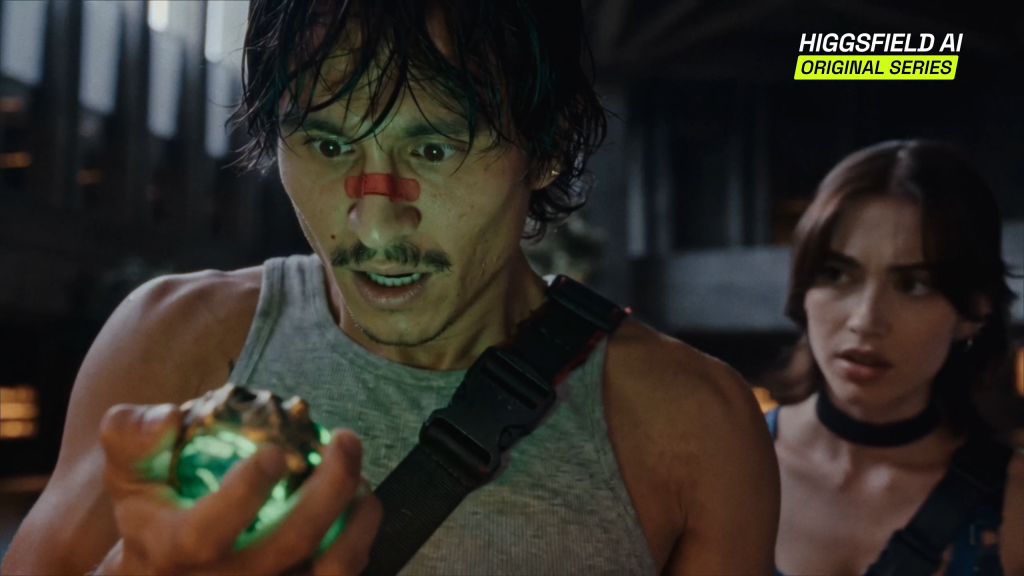
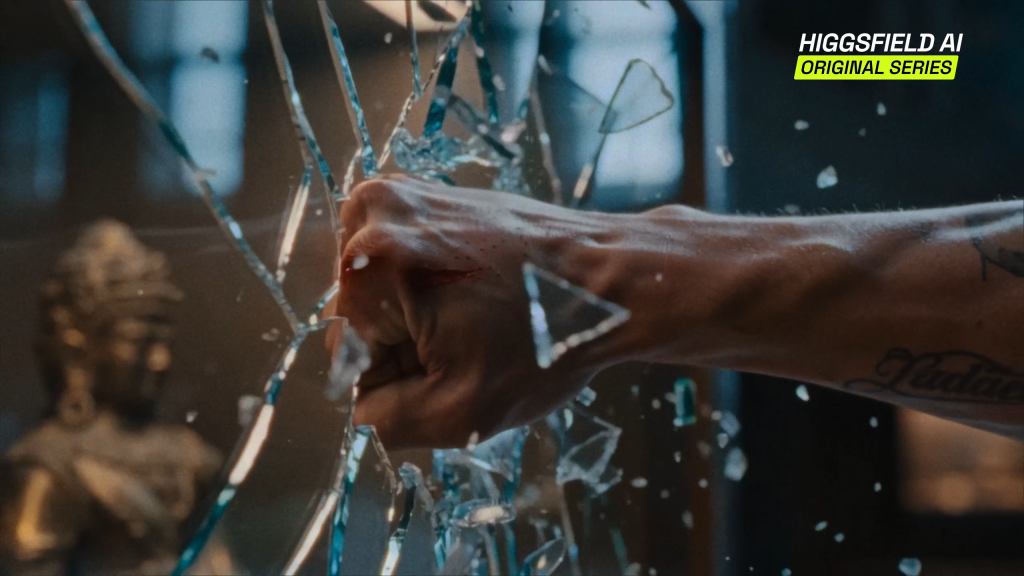
The project was unveiled during events held in Cannes in May 2026 by San Francisco AI start-up Higgsfield AI, which says the team generated tens of thousands of short clips to assemble the 95-minute film.
Hell Grind | Official Trailer
Higgsfield AI lists the budget as $500,000, approximately HK$3.9 million (reference rate 1 HKD = 0.1276 USD). According to Higgsfield founder Alex Mashrabov on LinkedIn, a comparable traditional production would cost about $50 million, a difference of roughly 100 times.
The company provided a breakdown showing that $400,000, or 80 percent of the $500,000 budget, went to compute for AI, with the remaining roughly $100,000 covering personnel and postproduction. Higgsfield also posted a production log on its YouTube channel that documents the workflow and output rates during the May 2026 shoot period.
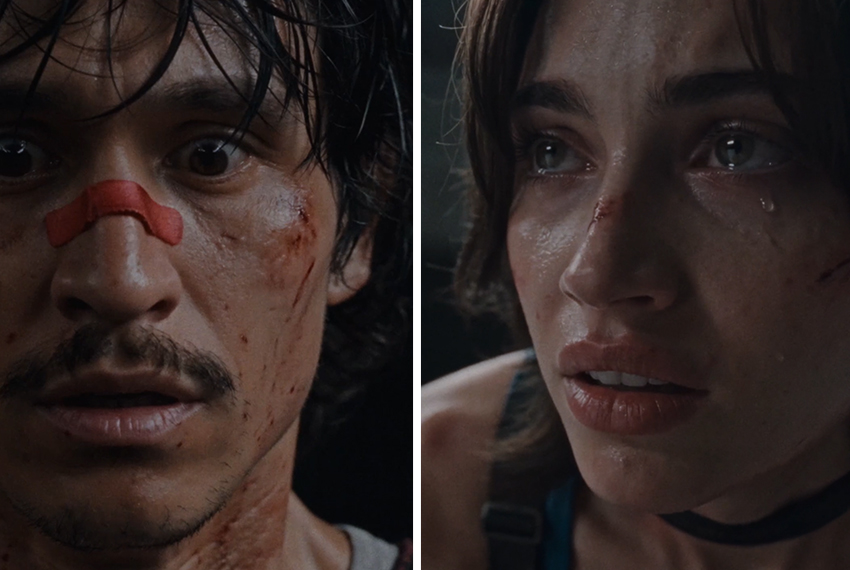
How the AI-generated feature film Hell Grind was made
Hell Grind, directed by Aitore Zholdaskali and co-written with Kazakh director Adilkhan Yerzhanov, follows four street thieves who trigger an ancient artifact during a heist, sending one member to an underworld. The survivors travel through Tibet and feudal Japan to rescue their friend, the production notes say.
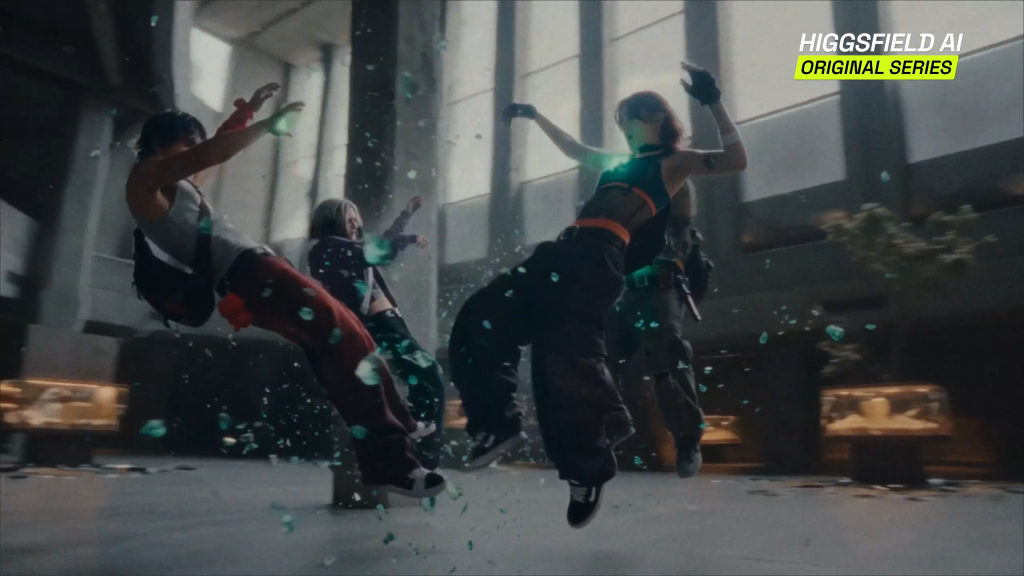
Early clips released by Higgsfield show a dark fantasy aesthetic with mythic creatures and action sequences. Reviewers and the production team say facial expressions show fewer distortions than typical AI footage, but observers still note telltale AI artifacts on close inspection.

Toolchain and workflow
The team used a combination of models rather than a single generator. Higgsfield identified three main tools: Dreamina Seedance 2.0, a ByteDance-supported engine used for primary video generation; Soul Cinema, a Higgsfield in-house system that preserves character continuity; and Soul Cast, another in-house tool for managing casting and visual consistency.
Higgsfield says the split reflects a broader industry reality: no single AI model yet handles storyboarding, character continuity, and long-form consistency without specialized support systems. The company demonstrated how the tools interlock in the YouTube production series.
Prompt engineering and production scale
The production team published a 28-part set of production tips on YouTube, and one striking detail is the volume of prompt work behind each shot: an average of up to 3,000 words of prompts for every 15 seconds of footage, the team says.
Producers describe prompt engineering as writing a detailed storyboard and stage directions, then translating that document into machine-readable prompts. Higgsfield recommends generating a top-down map with Claude before drafting camera-by-camera prompts, a step the company says helps coordinate complex action sequences.
Low yield, high volume: the numbers
Higgsfield’s production log reports that for the first 25 minutes of Hell Grind the team generated 16,181 AI clips and kept only 253 for the final edit, a yield below 2 percent. The company compared the process to a card-draw system in which roughly one in 64 outputs meets the quality threshold for inclusion.
Common failure modes included unnatural gaze, stiff facial expression, and perspective errors that reveal compositing seams. The production team says strict quality standards were a deliberate choice, but it also notes structural limits to long-term continuity in current AI systems.
How the $500,000 was spent
Higgsfield provided the headline figure: $400,000, or 80 percent of the $500,000 budget, paid for AI compute, with about $100,000 left for crew wages and postproduction. The company frames the project as an experiment that swaps human payroll for GPU invoices rather than an example of cost elimination.
On LinkedIn, Higgsfield founder Alex Mashrabov wrote that a traditional production of similar scope would cost about $50 million, a claim he posted without independent third-party verification. The numbers are Higgsfield’s disclosure, and readers should weigh them in that context.
Cannes screening, and why it matters
Several outlets described Hell Grind as premiering at the Cannes Film Festival, but a Cannes festival spokesperson told Futurism that the film was not part of the Festival de Cannes official selection; Screen Daily and other trade outlets reported the screening took place at third-party industry events during the festival period.
The film screened on May 16 at a private industry preview at Vieux Port and on May 21 at Cinema Olympia as part of Marché du Film market programming. Higgsfield told reporters that Marché du Film is a commercial market with no formal selection barrier, and the company cautioned that the phrase Cannes premiere has been used loosely by some outlets.
Industry reaction
The appearance of Hell Grind tested the film community’s mixed posture toward AI. At a Cannes press briefing, festival director Thierry Frémaux said AI-generated work is not eligible for the main competition. Filmmaker Guillermo del Toro, after a 4K screening of Pan’s Labyrinth, walked on stage and shouted an expletive directed at AI, an episode that received wide coverage.
At the same time, major tech and entertainment companies are investing in generative tools: industry reporting cites Walt Disney taking a reported $1 billion stake in OpenAI in December 2025 and Netflix acquiring an AI film-technology company in May 2026 for as much as $600 million, though both transactions include undisclosed terms, trade reports say.
Higgsfield’s small team accomplished a workflow that some studios say they will not adopt at present. Director Aitore Zholdaskali told Creative Bloq, “The future is a time when one person can make a whole movie,” a comment the director framed as an optimistic forecast rather than a production prescription.
What it means for creators
The film makes clear that while core tools such as Dreamina Seedance 2.0 are becoming available to creators through services like CapCut, the hidden labor of prompt engineering and the high compute bills remain significant barriers for independent filmmakers, especially outside major markets.
For independent creators and production houses, the Hell Grind case offers a benchmark: a 95-minute genre film completed for $500,000, but with a production model that traded human payroll for massive GPU spend and extensive prompt labor. That model lowers some entry barriers while raising others, Higgsfield and outside observers say.
Higgsfield’s production notes and public logs provide a level of transparency that may help other teams estimate costs, but the company warns that tool pricing and compute rates can change quickly, which will alter future budgets.