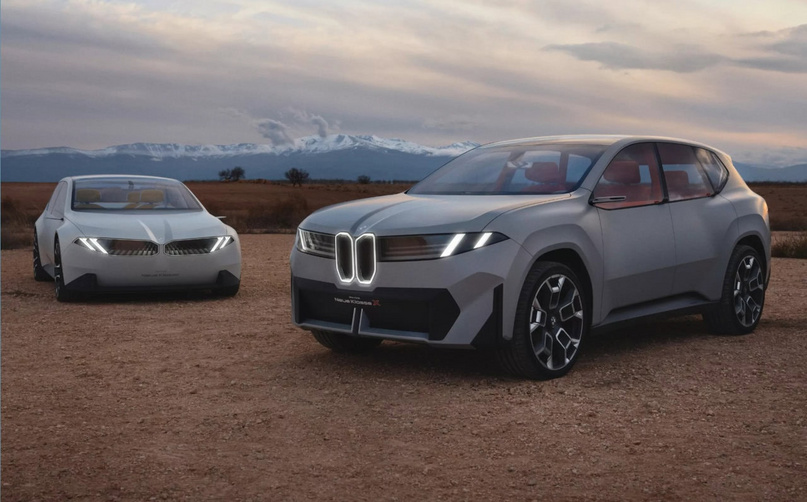
BMW Group has officially kicked off the production of the sixth generation eDrive electric motor at its Steyr plant in Austria. This milestone marks a new phase for the revolutionary Neue Klasse platform as it enters mass production. The all-electric drivetrain will first be used in the upcoming BMW iX3 50 xDrive, which is set to launch in 2026. The company plans to invest over 1 billion euros in electric drive technology development from 2022 to 2030, with around 1,000 employees involved in the new electric motor production. By 2030, it's expected that half of the operations at the factory will focus on electric vehicle-related production.
The sixth generation of BMW's eDrive motor is referred to as an upgrade from the previous Gen5 system Quantum Leap. This new motor design incorporates an 800V high-voltage framework and an inverter using silicon carbide (SiC) semiconductor technology, which is integrated into the electric motor casing. As a result, compared to the Gen5 system, energy losses have been reduced by 40%, production costs have decreased by 20%, and weight has been lightened by 10%, leading to an overall efficiency boost of about 20%.
On this brand new platform, BMW has adopted a design featuring nickel-cobalt-lithium (NMC) batteries equipped with cylindrical cells, eliminating the need for modular assembly. This results in a 20% increase in energy density compared to the previous generation of lithium-ion batteries. This modular concept not only streamlines the packaging process but also allows for the production of diversified electric powertrain configurations across different BMW models.
Technological innovation has led to significant performance enhancements, with an increase in range by up to 30% and charging speeds also boosted by up to 30%. The BMW iX3 50 xDrive, equipped with Gen6 technology, can achieve a range of up to 800 kilometers (according to WLTP standards), and features fast charging capabilities that can add 220 miles (350 kilometers) of range within just 10 minutes.
The new electric excitation synchronous motor (EESM) is even more compact and efficient, paired with an asynchronous motor (ASM) that weighs less than 155 pounds, specifically designed for front axle drive. This setup allows BMW to offer for the first time options for four-motor and three-motor drive configurations, supporting a variety of layouts including front-wheel drive, rear-wheel drive, and all-wheel drive.
The Neue Klasse platform not only innovates in hardware but also demonstrates significant advancements in its software system. The new platform's localized wiring harness architecture notably reduces complexity and weight. Four centralized control units, such as Super Brain, integrate driving dynamics, infotainment, and driver assistance functions, boasting computing power that is 20 times greater than current systems.
At this year's CES exhibition, BMW unveiled its next-generation Panoramic iDrive display system, featuring a head-up display that spans the entire windshield, 3D overlay visuals, and a sliding central screen, complemented by haptic steering wheel controls. This setup promises a driving experience that feels straight out of the future.
The Steyr factory will produce core components such as rotors, stators, transmission systems, and inverters on two brand-new production lines, while the aluminum housings will be manufactured at the plant in Lanzhut, Hungary. The modular and scalable design of the Gen6 motor allows BMW to flexibly respond to various demands, from entry-level to high-performance models.
BMW plans to develop up to 40 models on the Neue Klasse platform, covering various market segments. In addition to the iX3, an electric version of the 3 Series and the high-performance iM3 are also in development, with the latter expected to feature a four-motor all-wheel-drive system and set to launch in 2027. Gen6 technology will similarly extend to both Mini and Rolls-Royce brands, highlighting BMW Group's comprehensive approach to its electrification strategy.
As the Steyr factory kicks off production, BMW is rapidly increasing its capacity for electric motors to meet global demand. In addition to its Austrian factory, the Debrecen factory in Hungary will also join the production line. Moving forward, BMW will continue to produce gasoline and diesel engines in parallel, but the production of electric motors will gradually expand, reflecting the brand's strong commitment to the electrification transformation.
The mass production of the sixth-generation eDrive motor is not only a significant step for BMW in competing with other electric vehicle brands like Tesla, but it also establishes a solid technological foundation for achieving its goal of over 50% global electric vehicle sales by 2030.