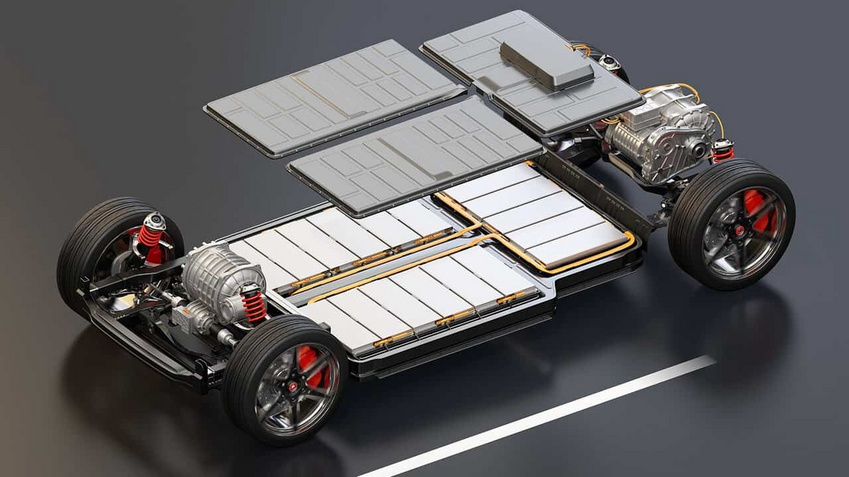
According to the latest report by the International Energy Agency (IEA), the cost of electric vehicle battery packs is projected to drop to $115 per kilowatt-hour (approximately HKD 897) in 2024. This marks a 20% decrease compared to last year's costs, setting a new historical low and indicating that electric vehicles are on the brink of achieving price parity with traditional gasoline-powered cars.
The IEA's annual survey reveals that the average cost of battery packs in 2024 is set to significantly drop from $139 in 2023, thanks to a decline in raw material prices, expanded manufacturing scales, and technological advancements. After peaking in 2022, the prices of key raw materials like lithium, cobalt, and nickel have seen a notable decrease, driving down battery costs.
As the world’s largest battery producer, China has managed to lower the cost of battery packs to as low as $95 per kilowatt-hour (approximately HKD 741), showcasing its advantages in economies of scale and supply chain management. In contrast, battery costs in Europe and the U.S. remain higher due to comparatively smaller production capacities and a supply chain that has not yet fully localized.
Industry experts generally predict that when the cost of batteries drops to $100 per kilowatt-hour, the manufacturing cost of electric vehicles will be on par with that of gasoline cars. Currently, the global average cost is already very close to this benchmark, and it is expected to be achieved by 2025. Some advanced automakers, like Tesla, have already reported battery costs below $100, which will help them maintain their competitive edge.
The promotion of lithium iron phosphate (LFP) battery technology is a key factor contributing to cost reductions. While its energy density is slightly lower than that of ternary lithium batteries, it offers advantages in safety and cost, making it widely used in mid-range and lower-end electric vehicle models.
Additionally, many car manufacturers are speeding up their development of solid-state batteries. For instance, Toyota is expected to achieve mass production of solid-state batteries by 2027, with an anticipated energy density increase of 40% and charging times reduced to just 10 minutes. Some startups like QuantumScape are also actively working to commercialize this technology, hoping to further decrease future battery costs.
As governments around the world push for the ban on gasoline vehicles by 2035, the demand for batteries is skyrocketing, prompting major manufacturers to significantly ramp up production. Chinese companies like CATL and BYD are also continuously boosting their capacity, with projections indicating that global battery production will double by 2025.