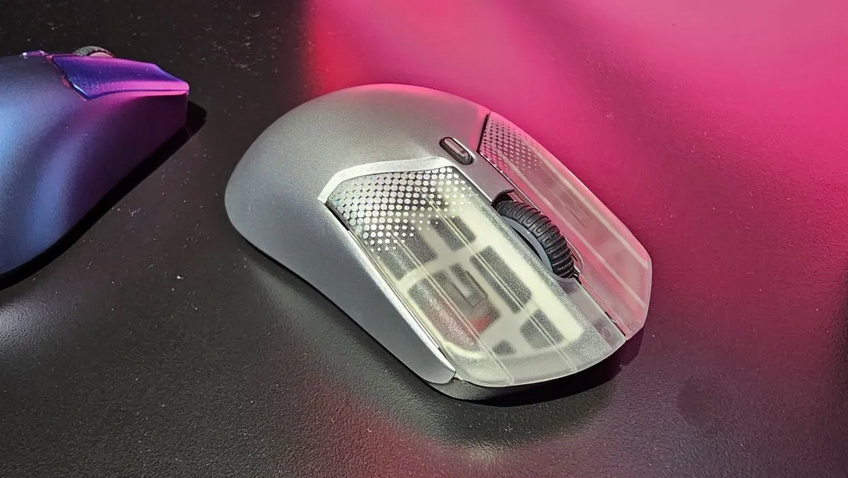
A research team from the University of California, Irvine, has recently launched a study named Mic-E-Mouse, revealing that high-performance mouse sensors can be transformed into listening devices through AI technology. Researchers Isaac Tunney, John Bass, and Alexis Lussier Desbiens discovered that mice equipped with sensors of 20,000 DPI or higher are capable of detecting faint acoustic vibrations on the desktop. These vibrations, processed through signal processing and machine learning analysis, can even capture the content of users’ conversations.
The high-performance mouse sensors can poll at a rate of up to 8000 times per second, a frequency that far exceeds what is needed for typical mouse operations. When sound waves are transmitted through the desktop, these sensors can detect lateral vibrations of the surface. Although these subtle signals are easily overlooked in everyday use, they contain the frequency range necessary for sound reconstruction. The research team initially applied a Wiener Filter to eliminate background noise, and then analyzed the sound wave patterns using a neural network model. Currently, their speech recognition accuracy has reached between 42% and 61%. Researchers point out that with the gradual refinement of AI technology, the accuracy rate is expected to improve further in the future.
The team specifically highlighted that high-performance sensors like PixArt’s PAW3395 and PAW3399 have brought down the prices of premium gaming mice to a range of $100 to $300 (approximately HKD 780 to 2340). This significant drop has greatly expanded the potential user base at risk of attacks. The mice involved in the study, including models like the HyperX Haste 2 S equipped with high DPI sensors, demonstrated exceptional performance.
Research shows that attackers can gather mouse data through seemingly normal open-source software, including creative applications or games that require high-frequency mouse data support. It’s particularly concerning that attackers can use commonly utilized libraries such as Qt, GTK, or SDL to collect mouse signals at the user level without needing sudo administrator privileges. The raw data collected can be exported from the target computer and further processed on other devices. The study indicates that this type of eavesdropping can operate effectively at sound levels typical in office or home conversations, ranging from 60 to 80 decibels.
This kind of surveillance technology evokes memories of classic Cold War cases, notably when the KGB implanted a passive microphone in a replica of the U.S. embassy’s emblem in Moscow. This device only activated upon receiving high-frequency radio signals, allowing it to remain hidden for almost seven years before being discovered. The Mic-E-Mouse concept also uses a similar approach, employing seemingly innocuous devices for surveillance. With the integration of AI technology, its data interpretation capabilities far exceed earlier methods.