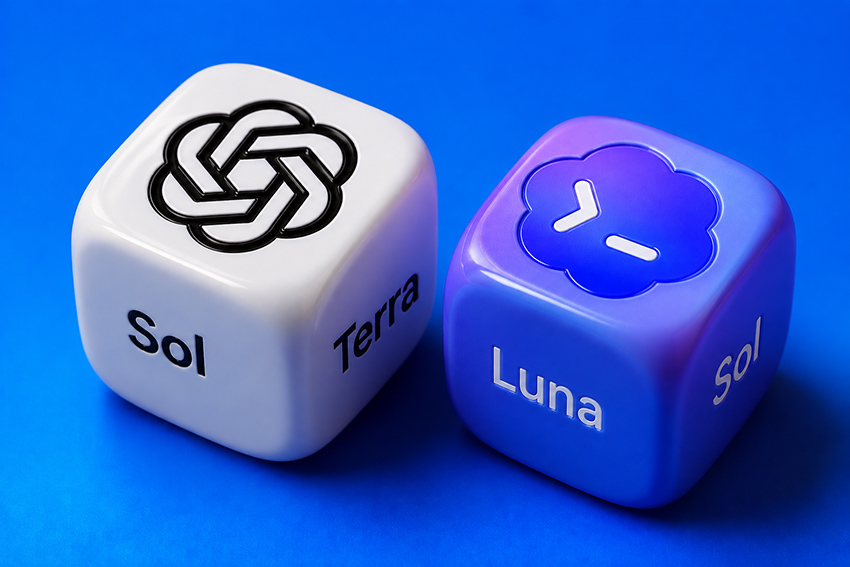
GPT 5.6 models arrived in an announcement on June 26, OpenAI said, introducing three fixed tiers, Sol, Terra, and Luna, to match task complexity, speed, and cost.
What the GPT 5.6 models are
OpenAI described the three tiers as clearly differentiated options for developers and customers, designed so users choose by task need rather than by a single version number.
- Sol: the flagship tier, intended for the most difficult reasoning and agent style tasks, with the highest reasoning effort and the strongest capabilities, and the highest cost.
- Terra: a balanced workhorse for day to day business uses, content creation, and analysis, aiming to trade some peak capability for lower cost.
- Luna: the entry tier for high volume, fast, low complexity requests, built for speed and the lowest per request cost.
How developers should choose GPT 5.6 models
The tiered approach means selecting a GPT 5.6 models tier depends on the job. OpenAI gave the example that complex code analysis or advanced agent tasks will likely need Sol, while bulk simple text processing will be cheaper on Luna.
OpenAI said the goal is to let teams optimize for latency, accuracy, and cost, and to avoid a one size fits all upgrade that forces all users onto the same engine.
Rollout plan and U.S. government review
OpenAI said GPT 5.6 will be released first as a limited preview to a small group of trusted partners, and that the list of participating organizations has been shared with the U.S. government. The company said it plans to expand access in the coming weeks.
This means immediate public availability will be staged, and access will depend on OpenAI’s partner selection as well as an external review process the company described as involving U.S. government officials.
What that means for ChatGPT, Codex, and API users
OpenAI warned that existing ChatGPT Plus subscribers and current OpenAI API customers should not expect instant access on announcement day. Instead, GPT 5.6 models access will roll out by tier and by partner list.
For companies and developers who have already integrated ChatGPT, Codex, or the OpenAI API into production workflows, OpenAI said the change will be operational rather than a single software update, and teams should plan migration by capability and cost, not by version number alone.
Pricing and performance details
OpenAI published per million token pricing for the three tiers, listed as input cost followed by output cost. Terminal Bench 2.1 Ultra scoring was cited for Sol, at 91.9 percent, which OpenAI used to illustrate Sol’s top reasoning capability.
| Tier | Use case | Performance note | API price, per 1 million tokens, input / output |
|---|---|---|---|
| Sol | Flagship model for hardest reasoning, advanced coding, and agent tasks | Terminal Bench 2.1 Ultra scored 91.9 percent, maximum reasoning effort | $5 / $30 |
| Terra | Balanced model for everyday business, content, and analysis | Performance comparable to prior generation GPT 5.5, at roughly half the cost | $2.50 / $15 |
| Luna | Entry model for high volume, fast, low complexity tasks, such as simple chatbots and content classification | Fastest and lowest cost of the three tiers | $1 / $6 |
OpenAI did not publish a full schedule for when each tier will become available to all customers, nor did it release comprehensive API billing rules or ChatGPT and Codex account level release dates.
Availability will drive adoption
OpenAI framed the tiered naming as clarifying model fit, but stopped short of releasing exact pricing tiers for enterprise contracts, or a public timeline for general account availability. Observers should watch OpenAI’s published partner list and API documentation for concrete dates.
Instead of social media benchmark comparisons, OpenAI said the key information for most users will be the official access list, the API usage and billing details, and the date when general accounts can use each GPT 5.6 models tier.
Developers should monitor OpenAI’s developer portal and their account dashboards for invitations, technical migration guides, and detailed billing rules as the company expands the limited preview.