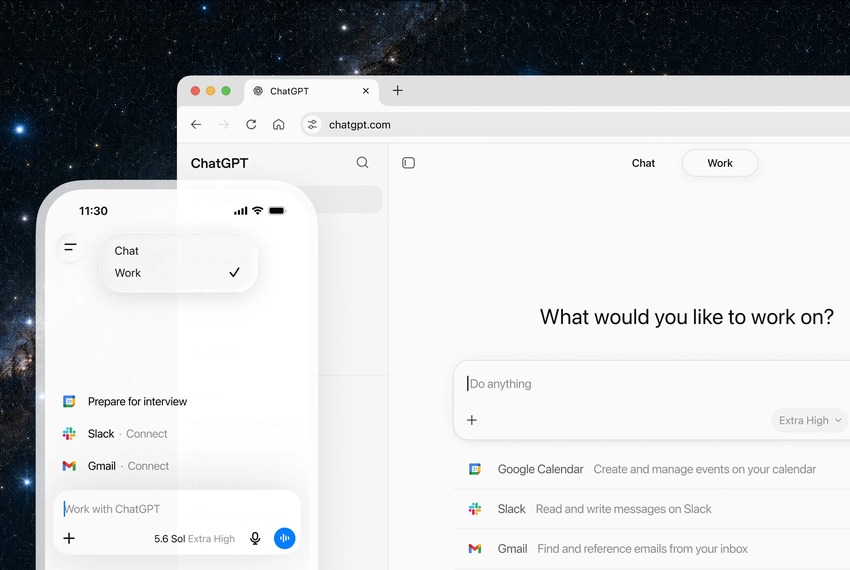
ChatGPT Work launched July 9, 2026, as OpenAI updated the desktop ChatGPT app to combine Chat, Work and Codex, and the company said it will retire the Atlas browser on Aug. 9, 2026.
ChatGPT Work moves Atlas browsing back into ChatGPT
OpenAI confirmed in its release notes that the separate ChatGPT Atlas product will stop operating on Aug. 9, 2026, because the company is bringing the browser style agent capability back into the main ChatGPT and Codex experience.
The company said the change means users will no longer need a separate AI browser to let models fetch web data, operate web tools, or run Codex workflows, and those features will be available inside the updated desktop ChatGPT app, the release notes said.
ChatGPT Work targets longer running tasks and workflows
According to OpenAI, ChatGPT Work is built to span connected apps, files and web pages to generate documents, spreadsheets, presentations, reports and simple sites, and to break larger tasks into sequenced steps, the OpenAI blog said.
The company said web and mobile access to Work will roll out first to paid tiers. Pro, Pro Lite, Enterprise and Edu will get early access, with Plus and Business to follow; the new desktop app will support macOS and Windows globally, OpenAI said.
OpenAI described GPT 5.6 as the underlying capability base for these changes, and said the shift is less about adding another chat model than about moving from asking an AI questions to assigning it a defined piece of work that connects to files and tools, the company blog and release notes said.
What users and IT teams need to do next
OpenAI told Atlas users to export or otherwise handle any browser data before the Aug. 9 shutdown, and advised teams preparing to use ChatGPT Work with Google Drive, Microsoft 365, Slack or local files to recheck permissions, company data policies and output approval workflows.
Security and governance teams should review which tools will be allowed to run inside the updated desktop app, and update approvals and audit processes accordingly, the release notes recommended.
OpenAI framed the move as a product simplification: consolidating features that were previously spread across ChatGPT, Codex, the Atlas browser and the plugins directory into a single desktop environment, the company said in its blog post.