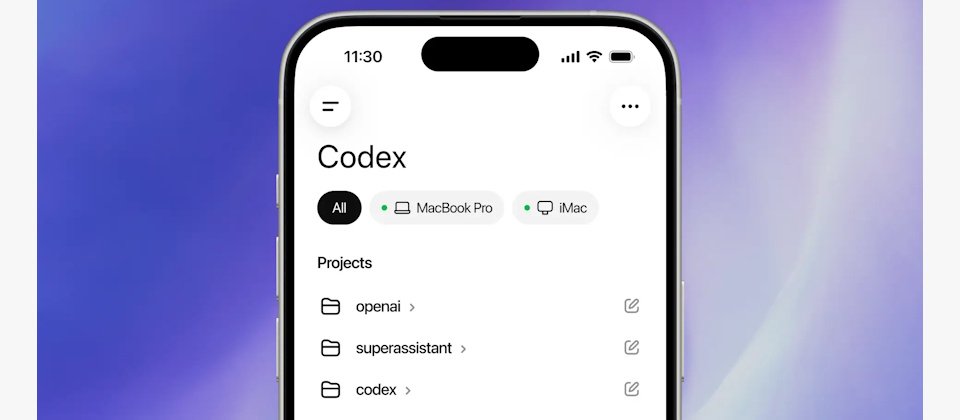
Codex mobile app preview landed in the ChatGPT mobile app on May 14, 2026, OpenAI said, letting developers review progress, respond to questions, change direction and approve the next step from a phone.
OpenAI described the release as a preview, not an attempt to move a full desktop development environment onto a small screen. The company said the mobile entry point focuses on supervision and decision making, bringing approvals and checkpoints to a more immediate place in the workflow.
OpenAI said Codex already has more than 4 million weekly users, and the mobile preview is meant to make long-running agent tasks feel more like remote collaboration than an unattended batch job.
How the Codex mobile app works
The Codex mobile app experience in ChatGPT loads project context, approval state, terminal output, screenshots, diffs and test results so a developer can make an informed decision without opening a desktop IDE, OpenAI said.
From the phone you can approve a proposed change, ask the agent for clarification, or switch the task to another connected host. The company positioned the phone as a control console, not a replacement for a development workstation.
What this means for developer teams
For teams running long-running automation or AI-driven code tasks, the Codex mobile app should reduce the time a job waits for human confirmation, allowing fixes to be approved between meetings or on the commute.
Product and engineering leads who need fast reviews can treat the phone as a place to sign off on incremental steps, while engineers can pull a task back if the agent heads in the wrong direction.
OpenAI said the preview is suitable for users who already rely on Codex for extended tasks, and it recommended that teams still using local, manual edits evaluate the preview before adopting it widely.
Limits and risks to consider
The company warned that the mobile interface is not intended to replace a full desktop development environment. Instead, it is meant to make supervision, tracking and midcourse corrections more immediate.
If a team has not clearly assigned test ownership, permissions and rollback procedures, moving approvals to a phone may simply move risk to a faster timescale. OpenAI urged teams to define those controls before delegating critical steps to an agent.
Which tasks to start with
Teams should begin with low-risk tasks, such as code formatting, documentation updates, small refactors and test runs, then expand as confidence grows. The Codex mobile app can then handle more complex handoffs once processes are proven.
OpenAI framed the preview as a step toward more fluid human-agent collaboration. As the Codex mobile app moves approvals out of the desktop and onto phones, teams will need to decide which approvals are safe to make on the go.
“Making approvals more immediate does not remove the need for clear testing and rollback policies,” a company spokesperson said. “The mobile preview gives teams options, but it does not replace established release controls.”