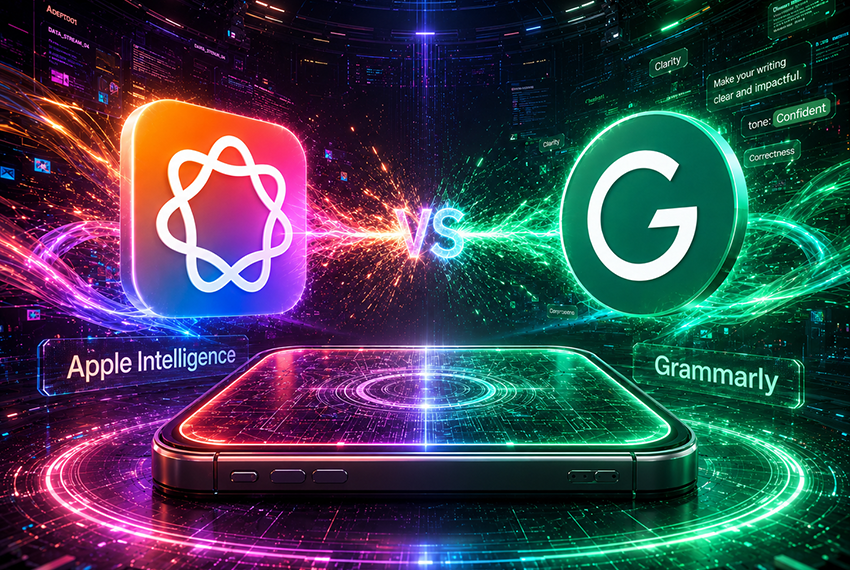
iOS 20 AI writing is expected to add a system level grammar and writing editor to iPhone, but people familiar with the plans say the feature could leave older phones unable to run it.
iOS 20 AI writing, a system level keyboard editor
People familiar with Apple’s plans, who asked not to be named because the work is private, told the reporter the company plans to introduce a built in writing assistant at next month’s WWDC 2026 developer conference.
The feature would replace reliance on third party keyboards and separate apps by sliding up a translucent menu from the bottom of the screen, showing the original text and AI suggestions side by side so users can accept edits word by word or apply changes with one click.
That deeper integration, proponents say, should eliminate the copy paste workflow many professionals use today, and make inline editing feel like working with a dedicated editor inside the system.
Keyboard changes aim for speed and privacy
The proposed design prioritizes low interruption and fast response, the people familiar with the project said, noting Apple wants suggestions to appear without switching apps or waiting for cloud round trips.
Apple’s approach appears focused on running the bulk of the language processing locally on the device, which the company argues preserves user privacy for business and personal messages.
Older iPhones face a hardware hurdle
People familiar with the effort said the advanced writing model Apple plans for iOS 20 will require the latest neural processing unit architecture and much higher memory bandwidth than older phones offer.
Analysts at Counterpoint Research said local, low latency grammar analysis and long form rewriting place heavy demands on on device compute, which helps explain why some two year old models such as the iPhone 15 Pro may struggle to run the new features smoothly.
The requirement for a newer NPU and higher memory bandwidth means Apple could limit the full feature set to recent models, or offer a reduced, cloud assisted version on older devices.
Will a native editor replace Grammarly
If Apple delivers a capable, free editor in iOS 20 AI writing, the company would clearly gain an advantage over third party subscription tools by keeping users inside its ecosystem, people familiar with Apple’s strategy said.
Grammarly’s website states premium tools are behind a paid subscription, and several industry analysts note that for most people who only reply to email and post on social platforms a robust system level editor could be sufficient.
Grammarly retains advantages for specialist academic work because it has years of corpus data and advanced long form structure analysis, analysts said, but for routine business and bilingual messaging the native tool could be a strong alternative.
Language support and who benefits most
People familiar with the roadmap said Apple intends to include support for Traditional Chinese and Cantonese in its on device suggestions, which would be significant for bilingual users in Hong Kong, Taiwan, and among Cantonese speakers globally.
The upgrade would be most useful for professionals who handle high volumes of bilingual messages and value on device privacy; users who depend on Grammarly for intensive academic editing may see less benefit.
Industry observers have suggested this combination of native language capability and privacy could prompt a wave of upgrades among users whose phones are two to three years old, especially if full features are restricted to recent hardware.
When asked for comment, Apple did not respond to a request. People familiar with the plans said the public announcement is expected at WWDC 2026.
With iOS 20 AI writing promising a seamless, privacy focused editor that supports Traditional Chinese and Cantonese, will you upgrade a two year old iPhone for the new experience?