



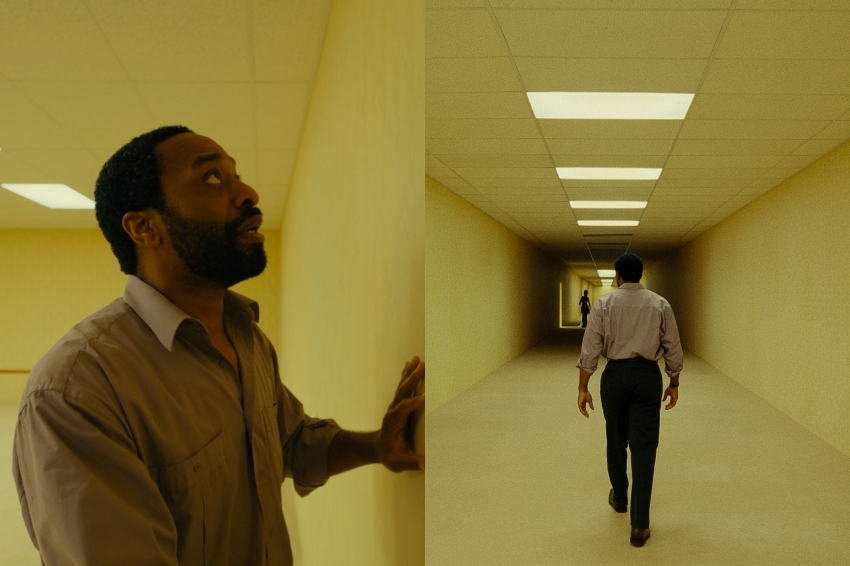
Backrooms movie explained: the film adapts a sprawling online myth rather than telling a self-contained horror tale, and that is why so many viewers find its ending puzzling.
How a single yellow room became a collective online nightmare
The Backrooms concept first reached a wide audience after an image of an empty, yellow-walled room circulated on internet forums in 2019, and users added a short, eerie prompt that turned the picture into a shared myth. That prompt described a wrong turn from real life into a monotonous labyrinth of yellow wallpaper, damp carpet, and humming fluorescent lights, a place where the architecture itself feels wrong.
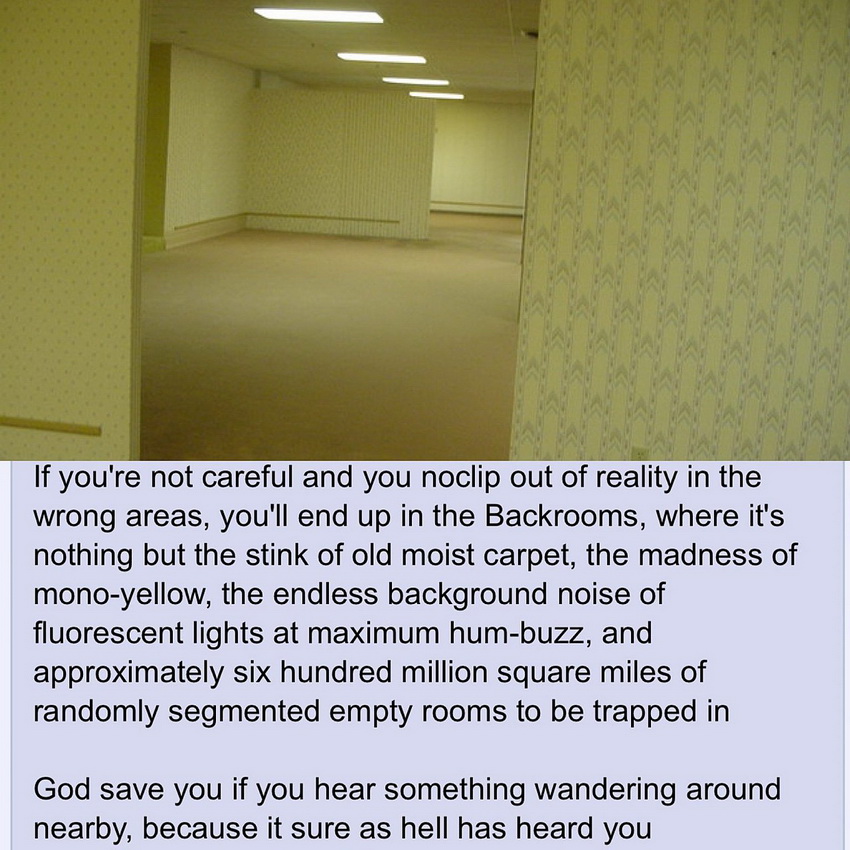
That aesthetic taps into the idea of liminal space, locations caught between functions, such as an empty shopping mall at dawn or a hotel corridor late at night. The unease comes from things that should feel familiar instead feeling wrong, and the Backrooms idea amplifies that sensation by imagining an endless, inconsistent interior that remembers but misremembers reality.
Why the Backrooms movie explained by the YouTube universe matters
The film does not start from zero, because it adapts a preexisting online universe built across years of YouTube shorts and found-footage shorts credited to creator Kane Parsons, who posts under the channel name Kane Pixels. Kane Parsons’ channel has millions of subscribers and billions of views, and those uploads supplied the film with a dense backstory, according to the channel’s public pages.
Rather than simply transplanting the Level system common to Backrooms posts, Parsons layered in institutional elements: Async Research, KV31 experiments, No Zone anomalies, memory errors, and the idea that humans tried to commercialize the space. The film compresses those elements into a character-focused story, so viewers unfamiliar with the online canon may feel they are missing pieces.
Kane Parsons and the move from YouTube to A24
Kane Parsons’ found-footage short titled The Backrooms helped popularize the current mythos by using restraint rather than jump scares, and the tone carried over to the feature. A24 invited Parsons to direct the feature adaptation, and the studio reported the film opened with $81 million in North America and $118 million worldwide in its first weekend, making it one of A24’s biggest openings, according to an A24 statement.
That commercial success signals the Backrooms universe has moved from niche forum culture into mainstream cinema, but it also explains why the film opts for hints over exposition: the source material is a connected universe, not a single closed narrative.
Async Research and KV31: how humans opened the door
Central to the expanded canon is Async Research, presented as a laboratory that studies fields, imaging, and spatial anomalies. In Parsons’ timeline, experiments culminating in the KV31 program attempted to exploit high-frequency fields to manipulate space, and one experiment on October 17, 1989, is written as the moment a gateway to the Backrooms opened.
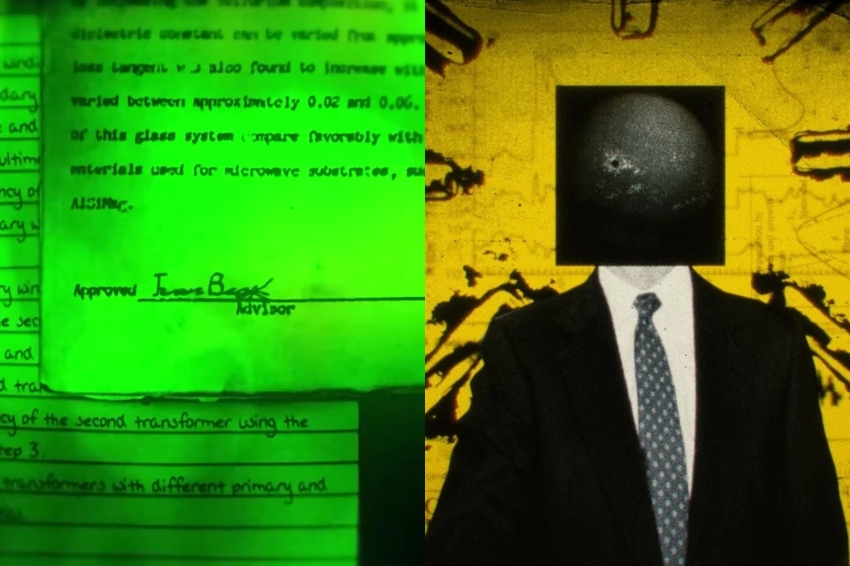
Parsons’ fiction intentionally overlaps that date with real-world events, creating a sense that the lab’s experiments coincide with larger disruptions. The story treats the breakthrough not as an accident but as the result of deliberate human attempts to control a dangerous unknown, which shifts the horror from discovery to culpability.
No Zone and the rise in disappearances
After a gateway opens, the universe introduces the concept of No Zone, small unstable connection points where real-world structures briefly intersect with the Backrooms. In the Kane Pixels narrative, those anomalies are tied to electromagnetic and structural irregularities, and they explain why ordinary people suddenly vanish in mundane situations.
The canon also folds in historical disappearances around 1990, using real increases in missing-person reports to lend the story plausibility. That blending of fact and fiction is deliberate; it forces the audience to consider that any ordinary place could hide an entrance.
Biological contamination, Still Life, and the question of what becomes of people
The expanded lore introduces disturbing discoveries: unidentifiable corpses colonized by a black fungal growth, and creatures called Still Life that mimic human figures. Async’s field teams report bodies with arrested decomposition alongside areas consumed by fungus, and those anomalies suggest the Backrooms can biologically alter whatever enters it.
Still Life figures are especially unnerving because they are not clearly alien, they are damaged imitations of people. The implication that some victims might be transformed into the environment’s own copies raises ethical and existential stakes beyond a standard monster movie.
A-Space and the corporate urge to monetize the unknown
Rather than retreat, Async pursues an A-Space plan that packages the Backrooms as a solution for storage, housing, and logistics. The proposal frames the space as isolated, low-maintenance, and vast, and that corporate eagerness forms a second layer of horror: an industrial appetite to profit from a phenomenon the company does not understand.
In both the YouTube canon and the film, the A-Space material exposes a critique: the scariest consequence may be human systems that ignore warnings and keep developing a space that is demonstrably hostile to life.
Why the furniture store basement functions as the film’s perfect doorway
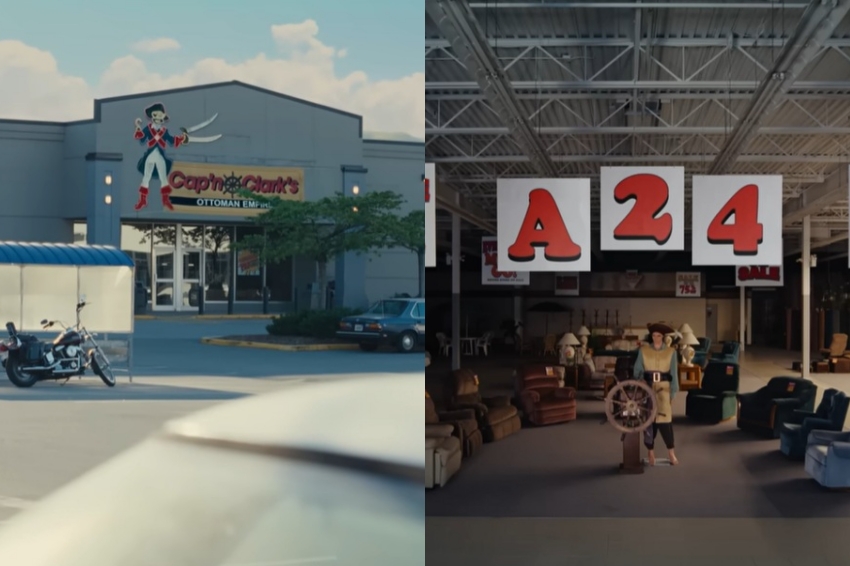
In the film, the furniture store is not a neutral set piece. It stage-manages domestic scenes that never host actual lives, a showroom of staged living rooms, dining rooms, and bedrooms. That status as a simulacrum makes it a logical weak point where the Backrooms, a false copy of reality, can slip into the real world.
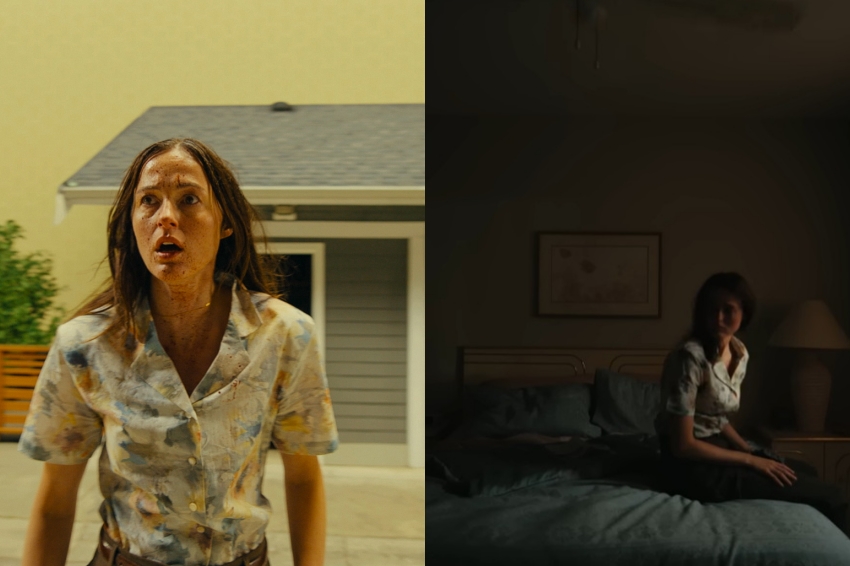
The character Clark works and sleeps amid these pretend domestic displays, and his personal collapse mirrors the store’s empty façades. The basement opens beneath a space built to simulate life, which underscores the film’s central idea: the Backrooms prey on the boundaries between real life and constructed illusion.
Mary, trauma, and the film’s most important prop
Mary is not a conventional rescuer. Her backstory, including a childhood raised in isolation by a mother with agoraphobia and paranoid tendencies, is central to the film’s emotional logic. She carries a concrete sample stamped with a handprint from her childhood home, and that fragment functions as a Chekhov gun in the climax.
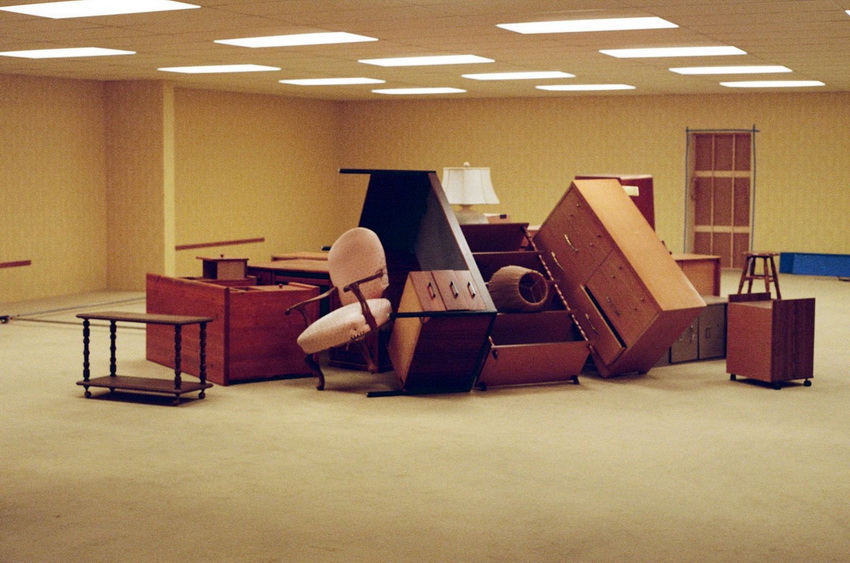
Where Clark is consumed by his failures, Mary attempts to turn her trauma into a defensive tool. That contrast anchors the film’s psychological reading: the Backrooms manifest inner collapse, and different characters either become consumed or weaponize their pasts.
Memory errors, recreation, and why the film swaps monsters for unease
A core mechanic of the Backrooms is that it attempts to remember the real world, but it misremembers. The space does not play a faithful tape, it reconstructs scenes like a faulty human memory, with distortions that grow with each repetition. That logic explains misplaced furniture, warped proportions, and familiar places that do not add up.
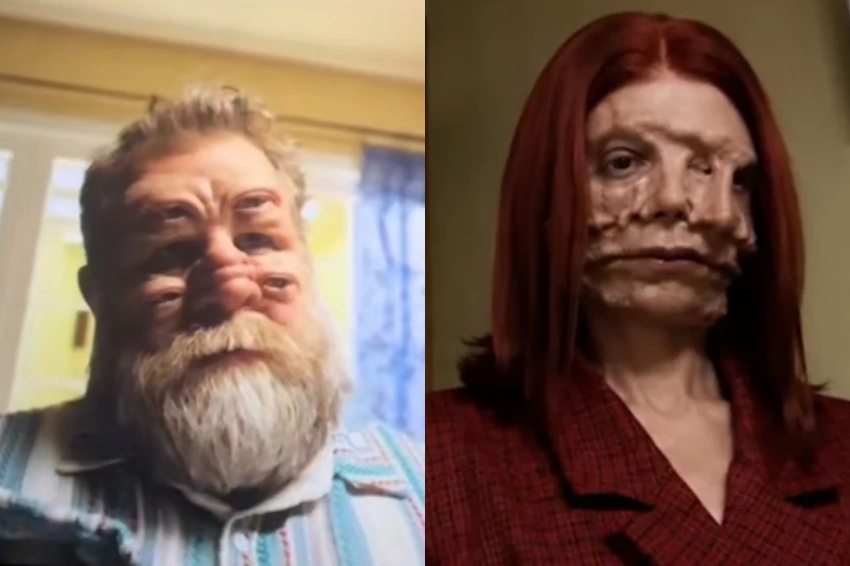
Rather than relying solely on visible monsters, the film uses this memory-duplication concept to create existential dread. If your sense of place and identity can be copied imperfectly, escape may not restore the original self.
Still Life and the terrifying possibility that people can be turned into objects
Still Life creatures look like people but are wrong in ways that feel intimate: blurred features, unnatural movement, and the absence of an inner life. They suggest the Backrooms does not merely trap bodies as dead matter, it may rewrite living persons into pale imitations.
That prospect raises the film’s most unsettling question: the horror is not only being eaten, it is being recorded into a substitute existence that mimics, but does not equal, life.
Clark’s “pirate” and the idea of a self consumed by projection
The so-called pirate creature that pursues Mary is also a symbolic doubling of Clark. He is a man who numbs himself with alcohol, refuses accountability, and clings to control by rewriting his own story. The pirate figures as Clark’s outward, predatory shadow, the part of him that plunders relationships and selfhood.
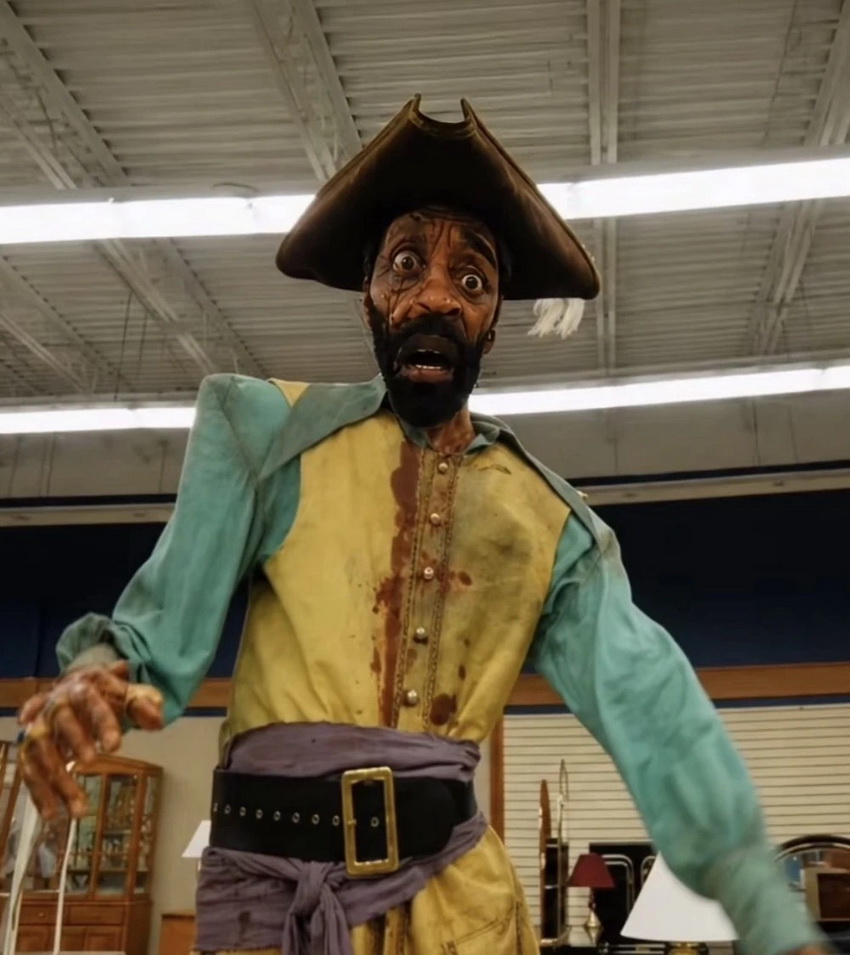
That the film has Clark ultimately consumed by this entity is narratively fitting: it externalizes his interior failings as literal violence, reinforcing the movie’s alignment of psychological collapse with spatial collapse.
Two endings, both bleak: did Mary leave the Backrooms?
The film deliberately refuses a tidy resolution. It presents two equally chilling possibilities: Mary never escapes and becomes a Still Life, or her body leaves while the Backrooms keeps a version of her inside. The latter tracks with the movie’s memory theory, where being remembered by the space is enough to claim a version of you.
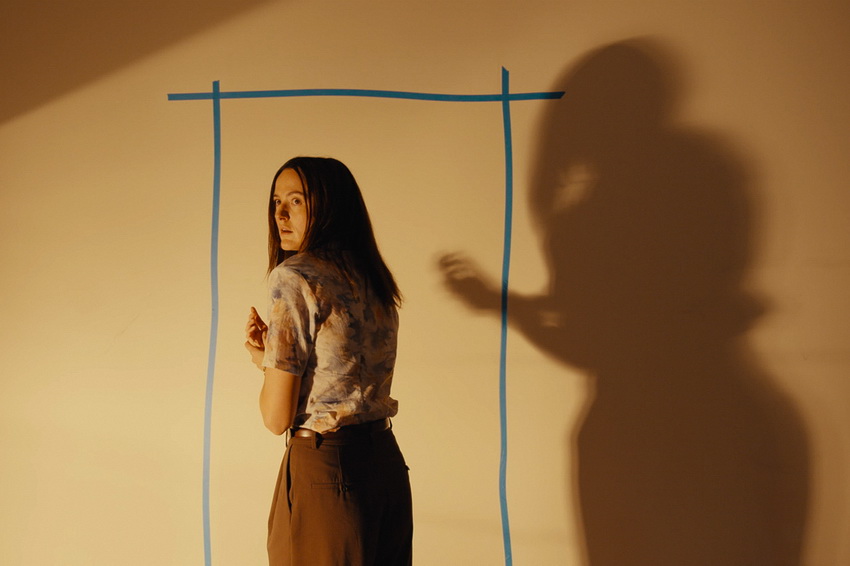
That ambiguity is not a flaw but a formal choice. Parsons keeps the audience in partial knowledge, mirroring characters who must navigate fragments, footage, and corrupted records to approximate the truth. In that sense, the film is less a puzzle to solve than an experience to feel.
How the film relates to the larger YouTube canon and what comes next
For newcomers, the Backrooms movie explained above will read as an elliptical horror film. For fans of the Kane Pixels channel, the movie functions as a continuation that compresses a broader set of details into thematic signposts. The film uses Async footage, monitoring clips, No Zone hints, and malformed human replicas to signal a preexisting universe rather than to catalog every backstory beat.
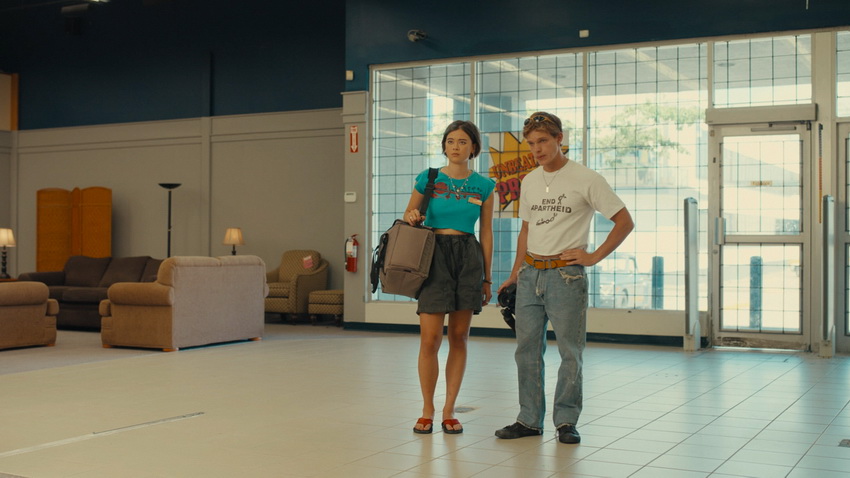
Key unresolved threads remain, including whether Peter survived and can expose Async, the full motives and history of Ivan Beck, and whether No Zone phenomena will spread. Those open doors make the movie feel like an entry rather than an end, and they create obvious narrative room for sequels or parallel projects.
In short, the Backrooms movie explained as an adaptation is not trying to be exhaustive. It translates a multimedia myth into a psychological horror focused on memory, corporate hubris, and what it means to be a mistaken copy. Its refusal to resolve everything is intentional: the world it depicts is one where escape may not restore what was lost.