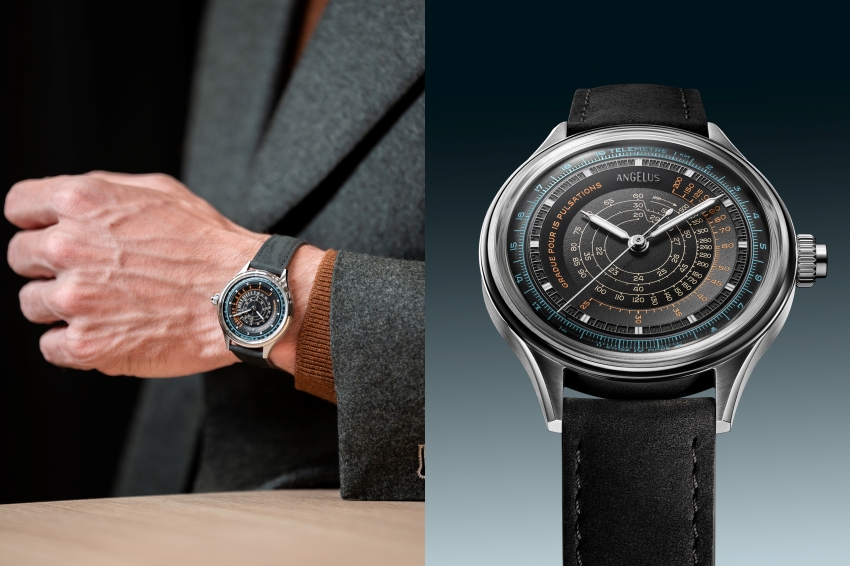
Angelus Instrument de Mesures places a tachymeter, telemeter and pulsometer on a single watch dial, a configuration the brand says is intended as a precision measurement instrument rather than a conventional chronograph.
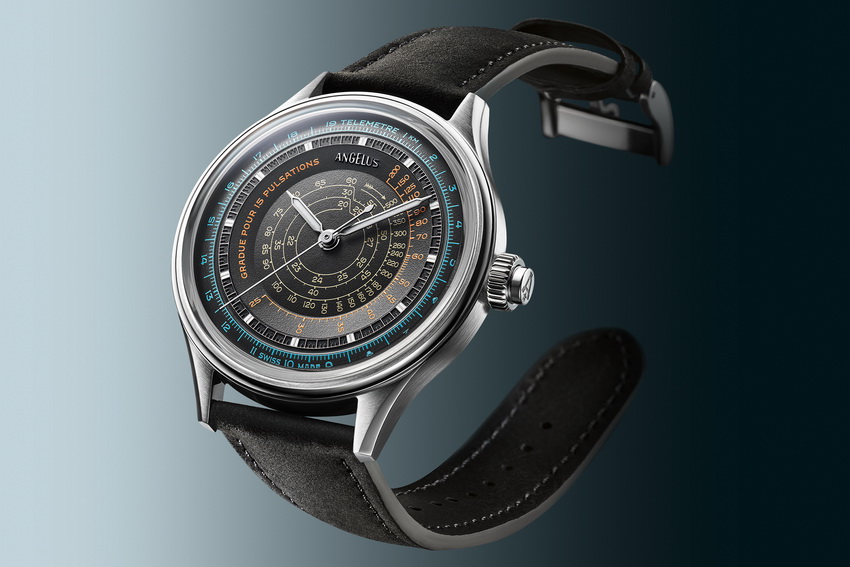
Angelus unveiled the Instrument de Mesures as its latest chronograph, and the brand said the model gathers the three classic measurement scales associated with 20th century professional stopwatches: a Chronographe Md9dical pulsometer for heart rate, an Instrument de Vitesse tachymeter for speed, and a Chronographe Td9ld9me8tre telemeter for distance to a sound source.
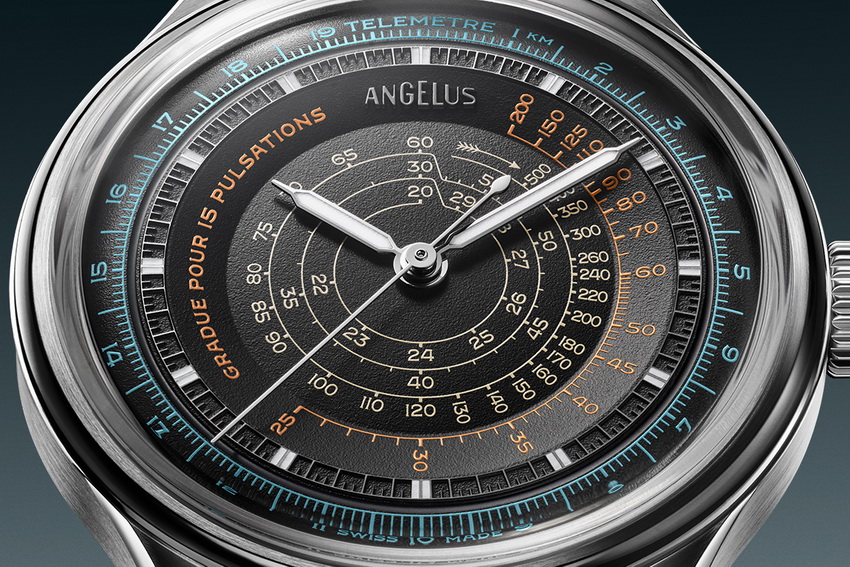
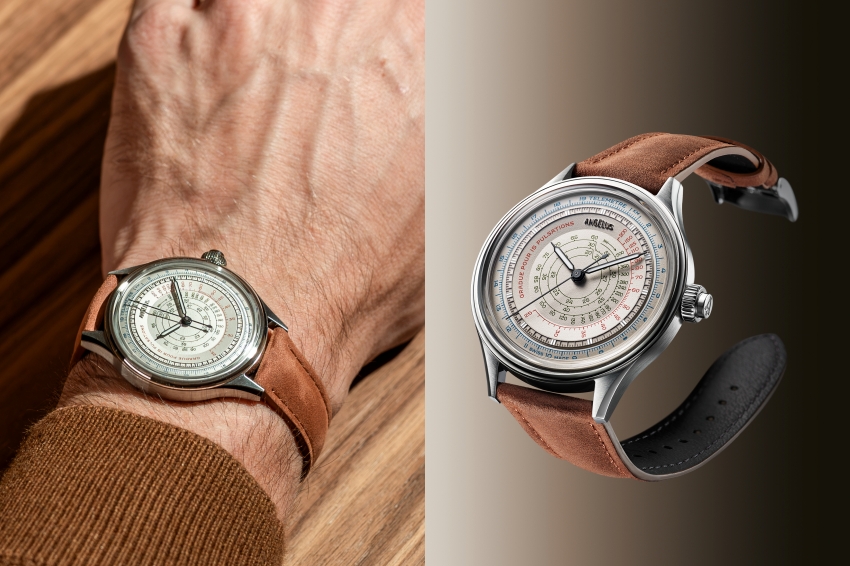
At first glance the Instrument de Mesures draws the eye with a densely detailed dial. The telemeter, pulsometer, tachymeter and minute track share the surface, but Angelus arranged them in distinct zones so the layout remains orderly. The brand used a stepped, three dimensional structure to separate the scales, placing the telemeter at the outer rim, the pulsometer on a sloped mid level, and a spiral tachymeter that extends toward the center. Each function is color coded, which Angelus said helps keep readouts direct despite the large number of markings.
Manufacturing techniques include laser cutting to integrate text and graduations into the different levels. The outer rim and center rise slightly and join via the sloped intermediate ring, reinforcing the layered look and underscoring the instrument like aesthetic. The approach reflects Angelus’s stated design priority of function first for the Instrument de Mesures.
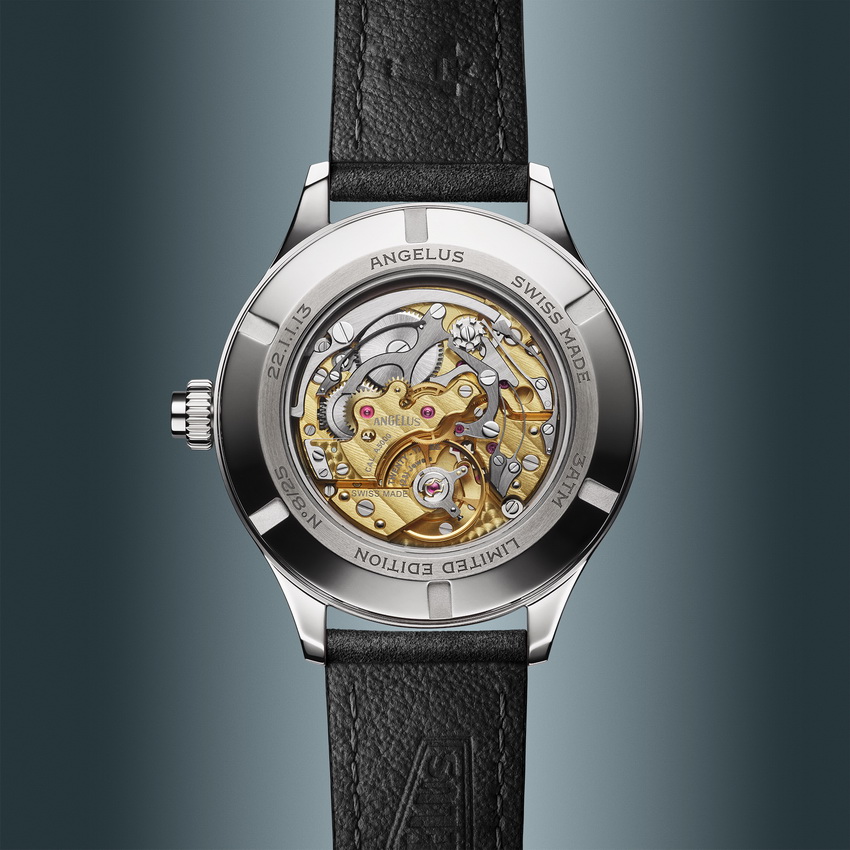
The case measures 39 millimeter in stainless steel and keeps a vintage proportion, with a thickness of 9.25 millimeter. Twisted lugs and a box shaped sapphire crystal echo 1960s professional chronograph styling. Angelus offers two dial colors, a dark ebony version with blue orange and off white scales that leans into a tool watch look, and an ivory version with blue red and green accents for a more striking visual effect.
Movement and mechanics of the Angelus Instrument de Mesures
The Instrument de Mesures houses Angelus’s in house A5000 manual wound movement, visible through a sapphire display caseback. The caliber measures 24 millimeter across and 4.2 millimeter thick, and the brand lists a 42 hour power reserve at a frequency of 21,600 vibrations per hour.
Construction follows traditional chronograph practice with a column wheel and horizontal clutch. Angelus finished the movement with three N gold tone plating, Geneva stripes, circular graining and polished chamfers, details the brand said reflect its commitment to classical watchmaking craft.
How the scales work and controls
Operation is straightforward, according to Angelus. The watch uses a single pusher integrated into the crown to start stop and reset timing. When a measurement starts the central chronograph seconds hand runs across the scales; stopping the hand allows the user to read the corresponding value on the telemeter, pulsometer or tachymeter.
The telemeter calculates the distance to a sound source by timing the interval between seeing an event and hearing it. The pulsometer reads heart rate from a set number of beats, while the tachymeter measures average speed over a known distance, with a stated range from 20 to 500 kilometers per hour.
Limited edition, pricing and availability
Angelus will make two versions of the Instrument de Mesures, ebony and ivory, each limited to 25 pieces for a total of 50 watches worldwide. Retail is approximately $22,777 (originally HK$178,500), Angelus said in its announcement.
Angelus did not name specific retailers in its release, but said deliveries will be limited and that collectors should contact authorized Angelus dealers for ordering information.
With the Instrument de Mesures Angelus positions the watch as a modern mechanical instrument that concentrates three specialist measurement scales into a single, layered dial layout.