



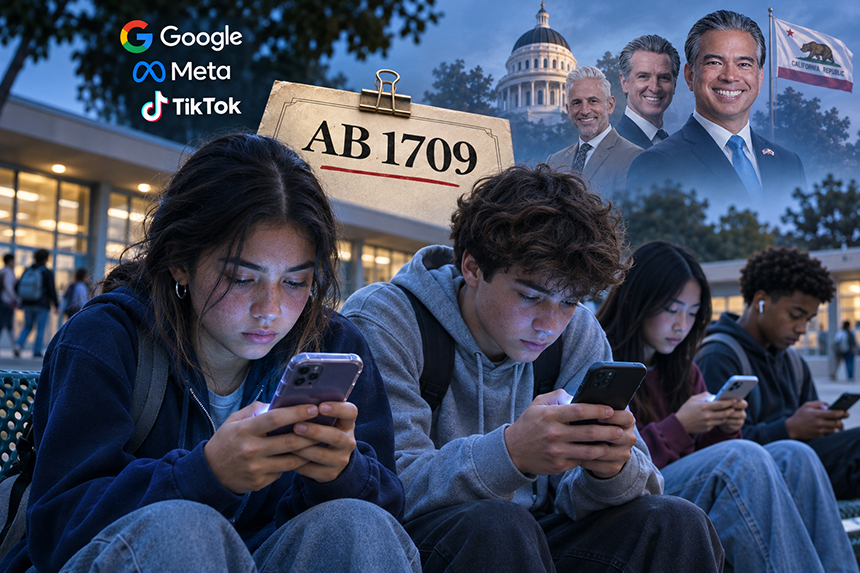
California AB 1709 is at the center of three federal lawsuits after Meta, Google and TikTok filed challenges on Nov. 4 seeking to block the law before it takes effect.
How California AB 1709 would change social platforms
The law, scheduled to take effect on Jan. 1, 2027, would require platforms to disable certain personalized recommendation features and automatic playback for users under 16, even with parental consent.
Under the bill, minors under 16 could still open and keep accounts and would be able to search for videos, view content from creators they choose to follow, and send private messages to friends.
If platforms do not offer accounts that comply with the rules for this age group, they would be required to delete those accounts and associated personal data. The statute names addictive recommendation features and autoplay explicitly, and it allows the attorney general to designate additional functions by rule.
Platforms face civil penalties, with intentional violations carrying fines up to $50,000 per affected minor, and negligent violations carrying fines up to $25,000 per affected minor, according to the text of the bill.

Why Meta, Google and TikTok filed suit
Meta filed in federal court in San Francisco, Google and YouTube filed in San Jose, and TikTok filed in Los Angeles. All three cases name California Attorney General Rob Bonta as the defendant.
The companies argue in their complaints that California AB 1709 violates the First Amendment by restricting how platforms select and arrange content. They also contend the law conflicts with Section 230 of the federal Communications Decency Act, which shields platforms from liability for third party content.
Meta said its choices about picking and ordering posts on Facebook, Instagram and Threads are editorial judgments protected by the First Amendment. TikTok pointed to its For You page as an example, saying recommendation choices are part of how the service presents content to users.
Google said parents should retain control over settings for their children, and warned the law could make it harder for YouTube to recommend age appropriate videos. YouTube currently defaults autoplay off for users it considers minors, and parents can disable Shorts for their children through parental controls, the company said in court papers.
California officials defend the law
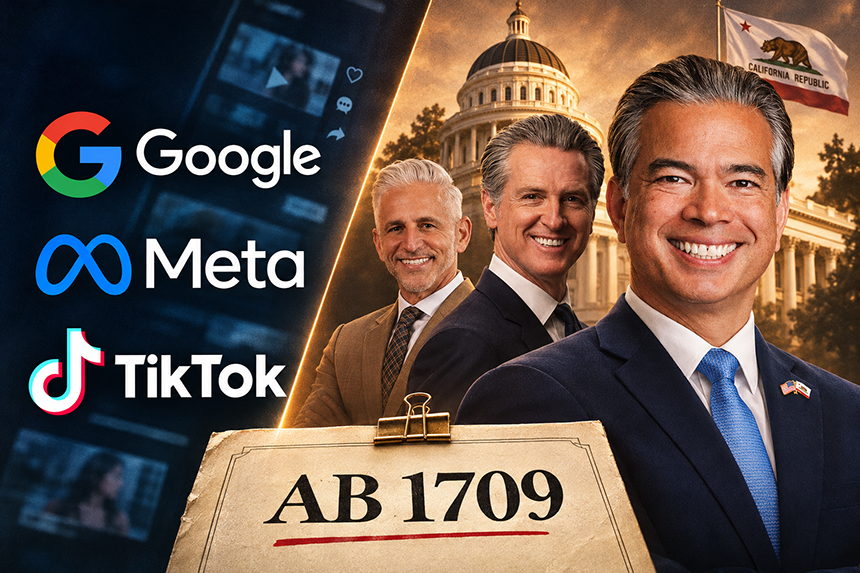
Bonta’s office said it was reviewing the filings and will defend California AB 1709, calling the measure part of the state’s effort to protect children online. Governor Gavin Newsom signed the bill on Sept. 10, saying child safety should come first.
Assemblymember Josh Lowenthal, the bill sponsor, said some platform features are designed to keep teenagers on screens longer. He framed the bill as a response to that design choice.
Age checks raise privacy concerns
Before enabling restricted features, platforms must verify a user’s age, which could be done using signals from an operating system or an app store, the bill allows.
The Electronic Frontier Foundation expressed concern that mandatory age verification will push platforms to collect more personal data and could erode privacy and online anonymity for adults as well. The group also said that if platforms choose to simply close accounts for users they believe are under 16, some young people could lose access to information and resources they rely on.
As litigation proceeds, the cases will test tensions between state efforts to protect minors online and platforms’ claims of constitutional and statutory protection. Court schedules and the attorney general’s formal response were not immediately available.

