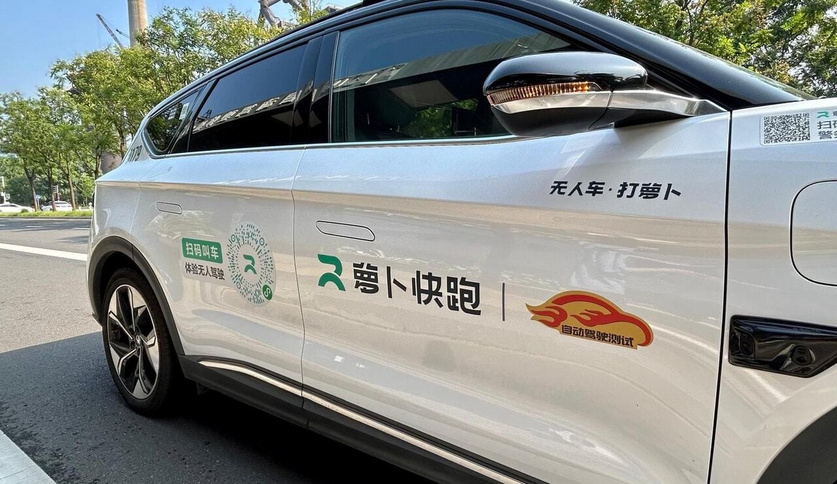
In today’s policy address, Chief Executive John Lee emphasized the government’s commitment to accelerating the development of autonomous vehicles in Hong Kong. According to the report, the government plans to designate three areas within the year for testing self-driving cars, aiming for inter-district travel and connections with other modes of transport. The goal is to expedite commercial operations, positioning Hong Kong as a gateway for the industry to explore overseas markets, particularly highlighting the potential in right-hand drive markets.
The report also mentioned that the government established a regulatory framework for autonomous vehicles last year. John Lee pointed out that this year, three test areas will be designated to promote the automation and large-scale development of self-driving technology, enabling autonomous vehicles to achieve interconnectivity across regions and connect various forms of public transportation.
Currently, Baidu’s autonomous ride-hailing platform Radish, run! has begun testing in various areas of Hong Kong, including Lantau Island, Airport Island, Tung Chung, and Cyberport. In August, the Transport Department issued a pilot license to Baidu, allowing it to conduct road tests of self-driving private cars in Cyberport, with the initial stage permitting the operation of two autonomous vehicles simultaneously for testing.
John Lee emphasized that the regulatory issues surrounding ride-hailing services in Hong Kong have existed for over 11 years, and this government is determined to tackle this long-standing challenge. The administration aims to pass regulations for ride-hailing services before the current Legislative Council recess, ensuring the safety of citizens’ travel.
In addition, the Transport and Logistics Bureau has previously submitted document Legislative Proposals for Regulating Online Taxi Booking Services to the Legislative Council’s Transport Affairs Committee. The contents involving Draft of the Road Traffic (Amendment) (Ride-Hailing Services) Ordinance 2025 have also been officially published, and the next step will be submitting it to the Legislative Council for the first and second readings.
In terms of transportation development, the Transport and Logistics Bureau plans to release Transportation Strategy Blueprint by the end of the year, outlining the future direction of transportation development and specific measures. Additionally, the government will establish appropriate regulatory frameworks targeting different system technologies and operators, with plans to submit relevant legislative proposals next year to swiftly introduce innovative collective transportation systems from around the world.
At the same time, the smart green public transport system project in Kai Tak will enter the bidding stage, while new development projects in East Kowloon and Flood Bridge / Ha Village will also begin bidding next year.