



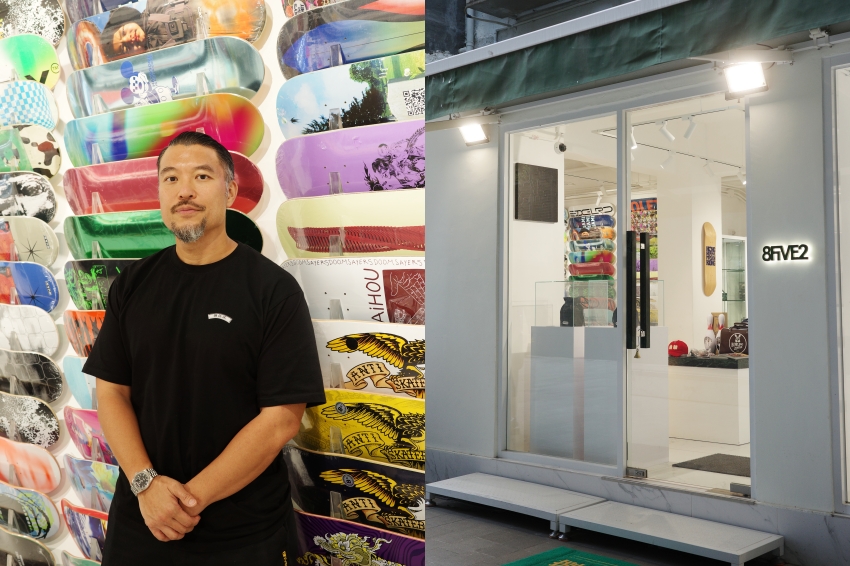
Paterson Vibe arrived as a way to name what has always been true in Hong Kong: street culture never had a single address, it migrated with people and habits. Paterson Vibe links skate shops, music, design and food along Paterson Street (a shopping street in Causeway Bay, a dense commercial district on Hong Kong Island) and captures a habit more than a fashion.
In the 1980s and 1990s people were drawn to Causeway Bay for record stores; later they came for skateboarding, sneakers, Hip Hop and graffiti; later still they came for independent pick shops that shaped personal style. Unlike Tokyo’s Harajuku or New York’s SoHo, Hong Kong never settled on a single formula. Street culture grew as people layered activities and rituals across different pockets of the city, and Paterson Street became one of the most representative places for that accumulation.
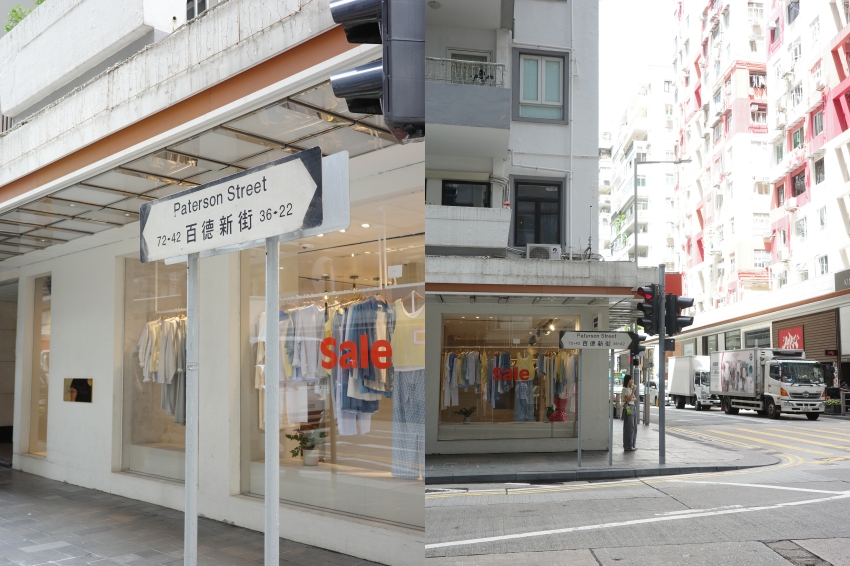
From the era of the old Daimaru department store to the rise of sneaker stores and fashion brands, and now to Fashion Walk promoting the Paterson Vibe initiative, Paterson Street has kept a distinct rhythm. Some people come with a shopping list, some come to meet friends, and some wander until they stop in a shop that introduces a new brand or a new way of life.
For Brian, that neighborhood culture did not appear overnight.
He moved to Causeway Bay in 1985 and grew up in the community. He skated as a student, later opened 8FIVE2, and eventually brought a storefront to Paterson Street. Nearly every memory he associates with street culture is rooted there. When many people call 8FIVE2 a skate shop, Brian prefers to describe it as a place for cultural exchange.
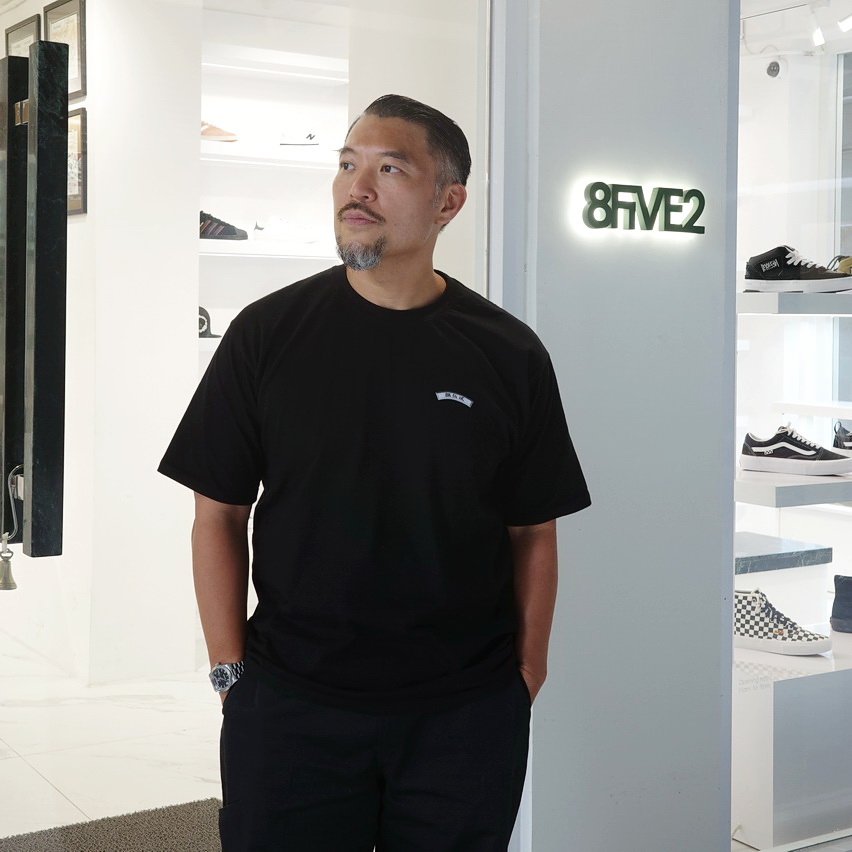
“I always dreamt, I want to be on Paterson Street,” Brian said. The dream was not about daily foot traffic but about a store that truly belongs to its place, a store that becomes part of the street over time.
Paterson Vibe and the patience of place
When asked to sum up the principle behind 8FIVE2 after more than two decades, Brian answered without pause: “Don’t Follow the Market.”
That phrase is not a slogan for him. It is the guiding rule for the shop and the brands he supports. Brian says many companies make the mistake of chasing trends, producing what sells today and moving on to whatever looks hot next. “No one knows what will definitely succeed,” he said. “Believe in yourself, that is most important. I think a lot of people will disagree, but I don’t give a damn. Don’t follow the market.”
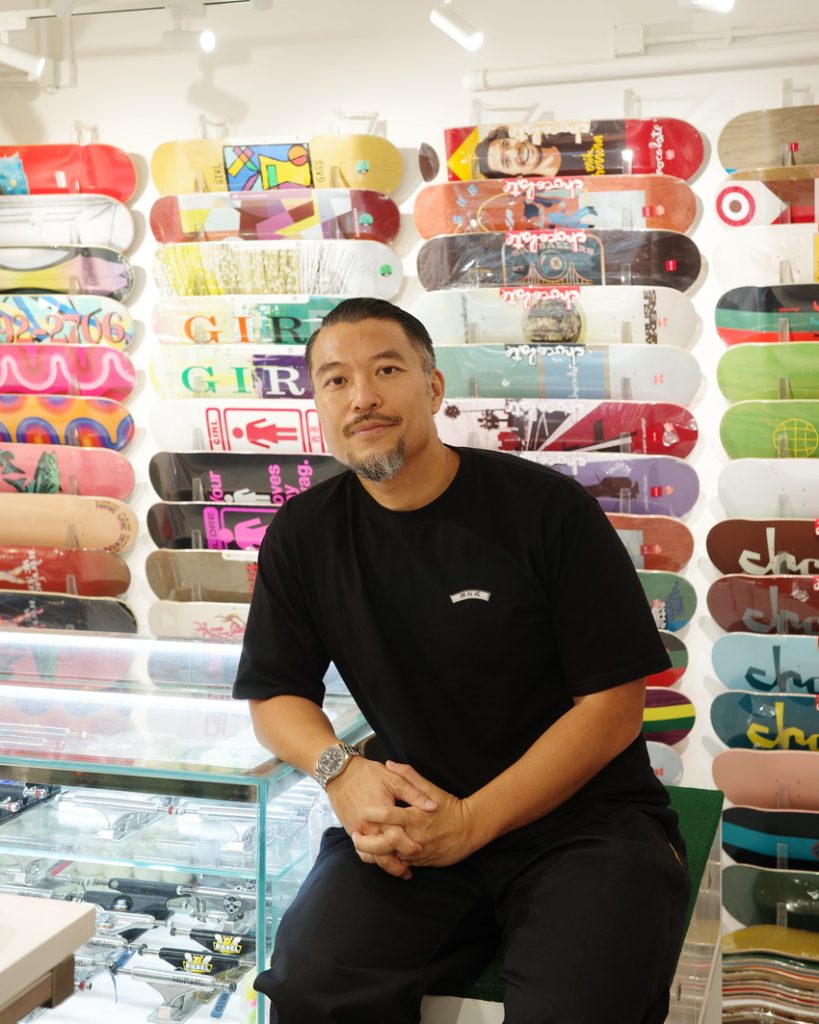
He believes a lasting brand is not the one that changes fastest to match market currents, but the one that stays true to its culture and value judgments. “If you follow, everything looks the same; there is no authenticity,” he said. Deep work in a chosen field is how a brand earns recognition, not one-off collaborations or momentary hits.
A skate shop is more than what sits on the shelves
Brian first touched a skateboard in 1988. At that time skate culture in Hong Kong was niche. Aside from the 1990s shop BFD, he could not find a skate shop that matched his idea of what a skate shop should be.
He did not want merely a store with a wide product selection. He wanted a shop run by skateboarders that understood the culture. “I always wanted to open a shop because I understand what skaters think and what they really want,” he said.
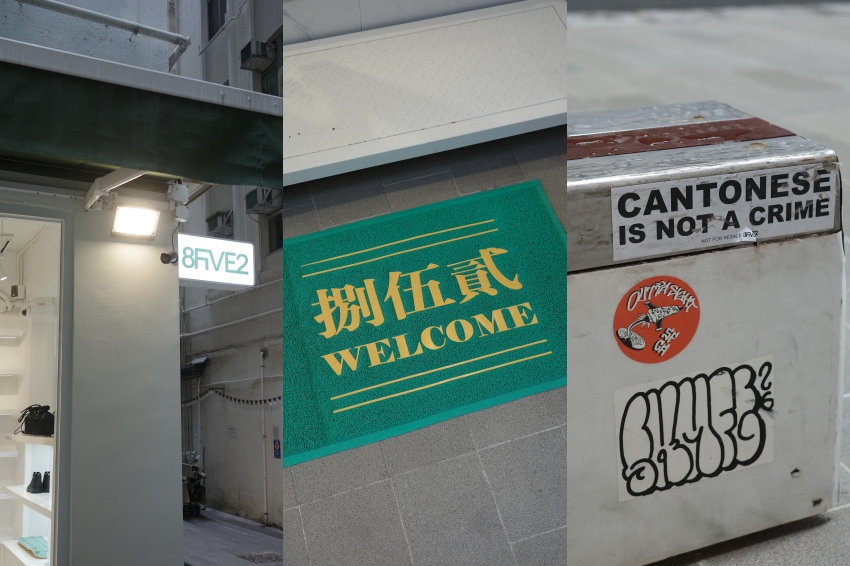
To Brian, skateboarding links music, photography, design, graffiti and style. A true skate shop sells not only skateboards but the wider culture around them. 8FIVE2 seeks out brands with stories and cultural depth, not just the most popular labels of the moment.
He jokes that he is a “skate nerd.” “If you really skate and have seen 8FIVE2’s brand selection, you will understand what I mean,” he said. His aim is simple: “I want a skate shop in Hong Kong that foreigners look at and say, That’s a good skate shop.” That recognition from the community matters more than sales figures.
Running a brand is like learning a trick
When asked about the biggest challenge over twenty years of running 8FIVE2, Brian did not point to competition. He pointed to market swings. The pandemic brought a sudden global rise in skate culture and many brands saw unprecedented demand. When the market stabilized in 2023 and 2024, brands had to re-evaluate inventory, orders and cash flow, and 8FIVE2 had to adapt too.
Brian said he learned by doing. “Business is truly live and learn. In good times I thought, Make more orders. Looking back, you can tone down and save some because you never know,” he said. He has ordered wrong, seen brands exit, and watched products stagnate, but he never thought about quitting.
He compared business to learning a skate trick, where you fall thousands of times before landing it. “You keep failing, but you search for small improvements, order less, promote differently, and slowly climb back up,” he said. Falling is part of the process. Getting back up is what matters.
There is no single look called skate style
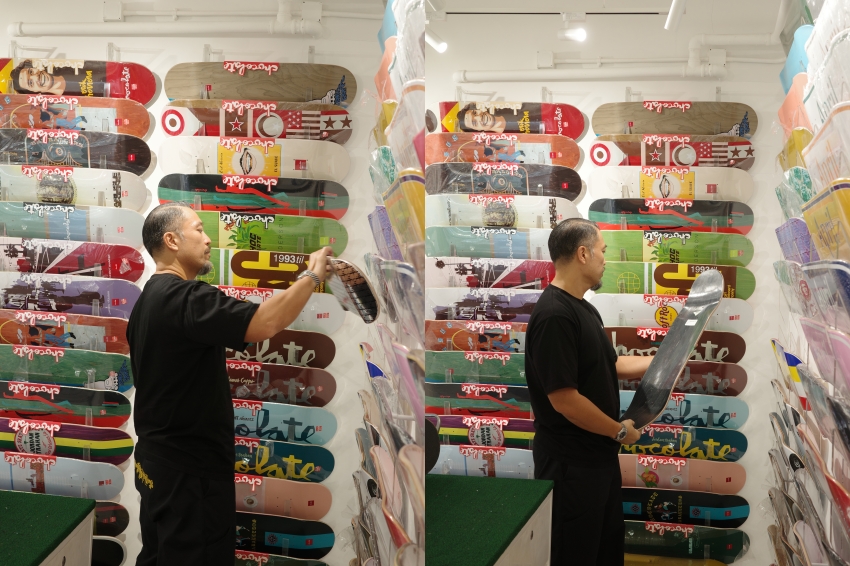
Many people equate skate culture with oversized clothes, graffiti or loud patterns and call everything “skate clothes.” Brian disagrees. “There is no one thing called skate clothing,” he said. Clean cuts, quality fabric and smart tailoring can be skate influenced when the designer comes from the skate world or is deeply shaped by skate culture.
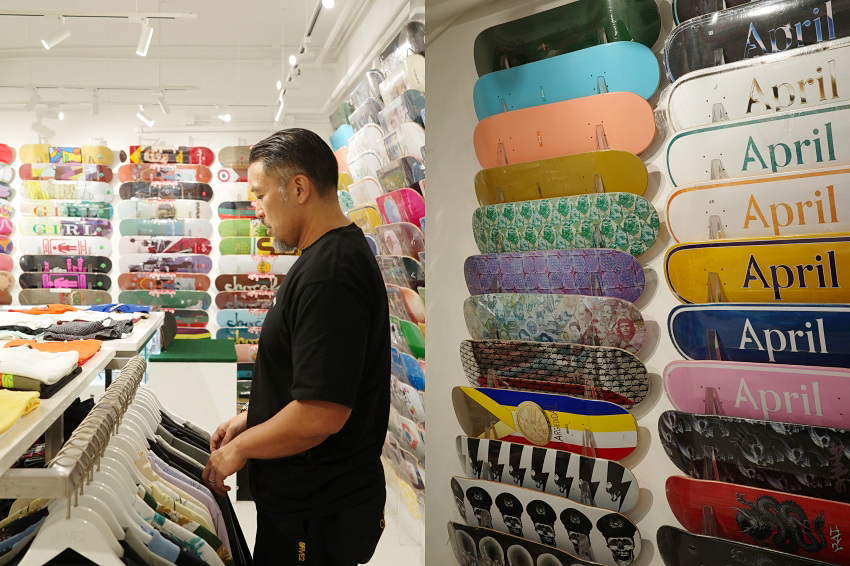
When selecting brands, Brian does not start with a lookbook. He starts with the creator. “If the designer is a skater, I give extra points. If they were a strong skater, even more. If I respect their team, that adds weight,” he said. He admires how some brands, from Japan’s Mura Sport to New York’s Fucking Awesome, use fabric, cut and detail to fold skate culture into everyday clothes rather than rely on logos.
He and his friends walk into Prada and Sacai stores not to check price tags but to feel the fabric and study tailoring. “We touch the fabric, examine the corduroy, judge the shape of the cap. There is no shortcut to taste, it is built over time,” he said. “You have to really love it.”
A brand is never built by one person alone
On partners, Brian returned to the same point. Many founders try to do everything themselves, but mature brands assign tasks to the right people. He gave the example of Handsome Factory. “I love barbershop culture and the 1950s fade, but I cannot cut hair,” he said. He hired Bob, who has more than twenty years of skill, to handle hair while Brian contributed cultural direction.
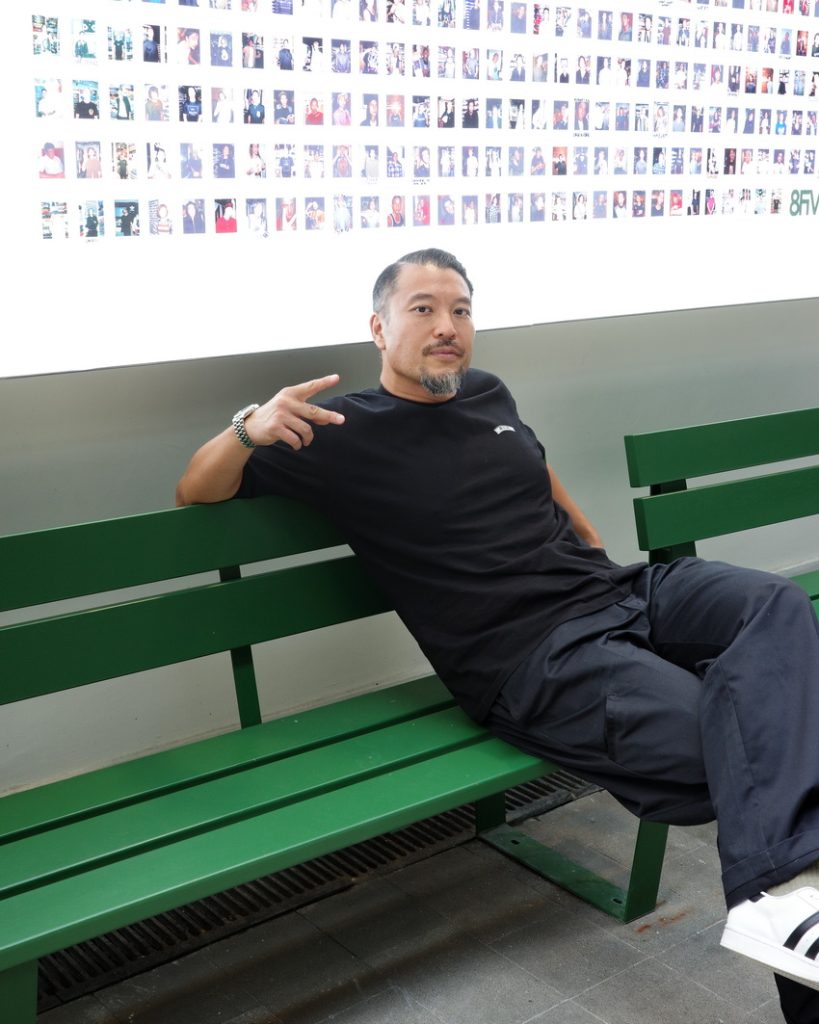
At 8FIVE2, Brian and his partner AD debate every season, from product mix to store operations. “We ask, What about this? What about that? Does this work?” He said a shared mission matters more than shared profit.
Paterson Street fulfilled a youthful dream
Opening 8FIVE2 on Paterson Street was not simply another store for Brian. “I wanted to be hidden,” he said. He did not seek the loudest corner but a place that people willing to look would find, a spot that rewards curiosity.
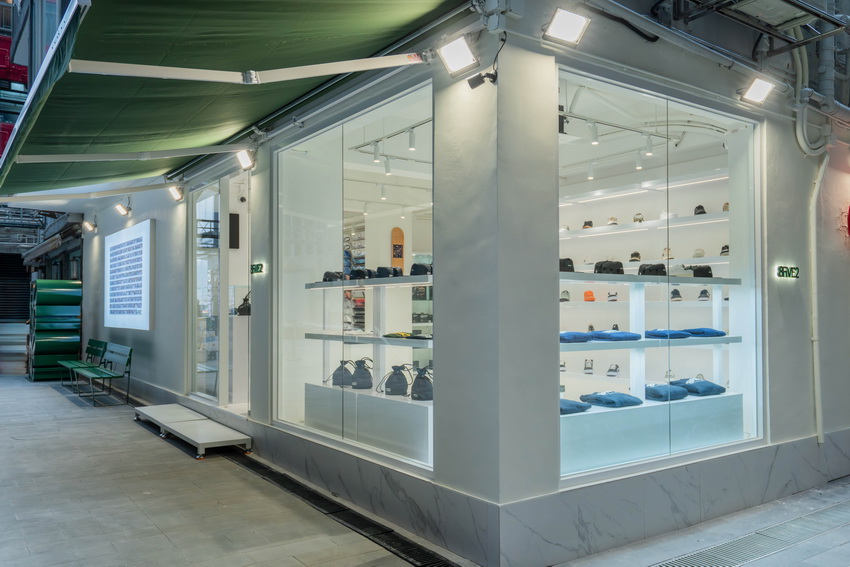
Today 8FIVE2 has a low key facade, modest decor and corners for hanging out, talking and even practicing tricks. “I want people to hang out, meet friends, skate and chit chat,” Brian said. He hopes the shop functions as community space as much as retail space. If a visitor sits, admires a new deck and leaves without buying, the shop has still done its work.
That outlook aligns with Fashion Walk’s recent push for the Paterson Vibe. Fashion Walk says the campaign aims to stitch together streetwear, design, food and lifestyle so that diverse cultures can grow naturally along the street. For Brian, the charm of a street is not how many brands are present but whether people want to stay and spend time.
Less ornament, more canvas
On first visit to 8FIVE2 the difference from a typical skate shop is clear. The space avoids an overt industrial look and does not cover every surface in graffiti. Instead it uses white with green marble as the main palette. “White with green marble has been our design since we opened in 1999,” Brian said.
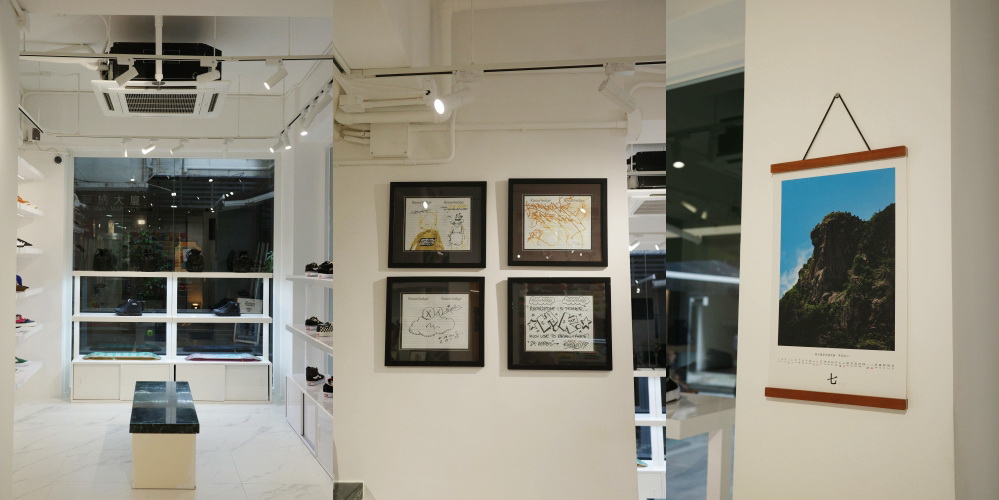
He believes the store should act as a plain canvas so the brands become the artists. Around the shop he displays long held collectibles, from works by Futura, Jose Parla, KAWS and Eric Haze to friends’ sketches and Nigel Ong’s Lion Rock calendar photos. Those items are not arranged as a curated museum. They are personal keepsakes that carry warmth beyond monetary value.
A Hong Kong brand that does not pretend to be from elsewhere
Brian is fond of the brand name 852, the Hong Kong telephone area code. From the shop’s founding in 1999 he placed identity at the core and never tried to package the business as foreign. “We are a Hong Kong brand, loud and proud,” he said. He recalled local companies in the 1990s inventing foreign backstories to feel international. He prefers local honesty.
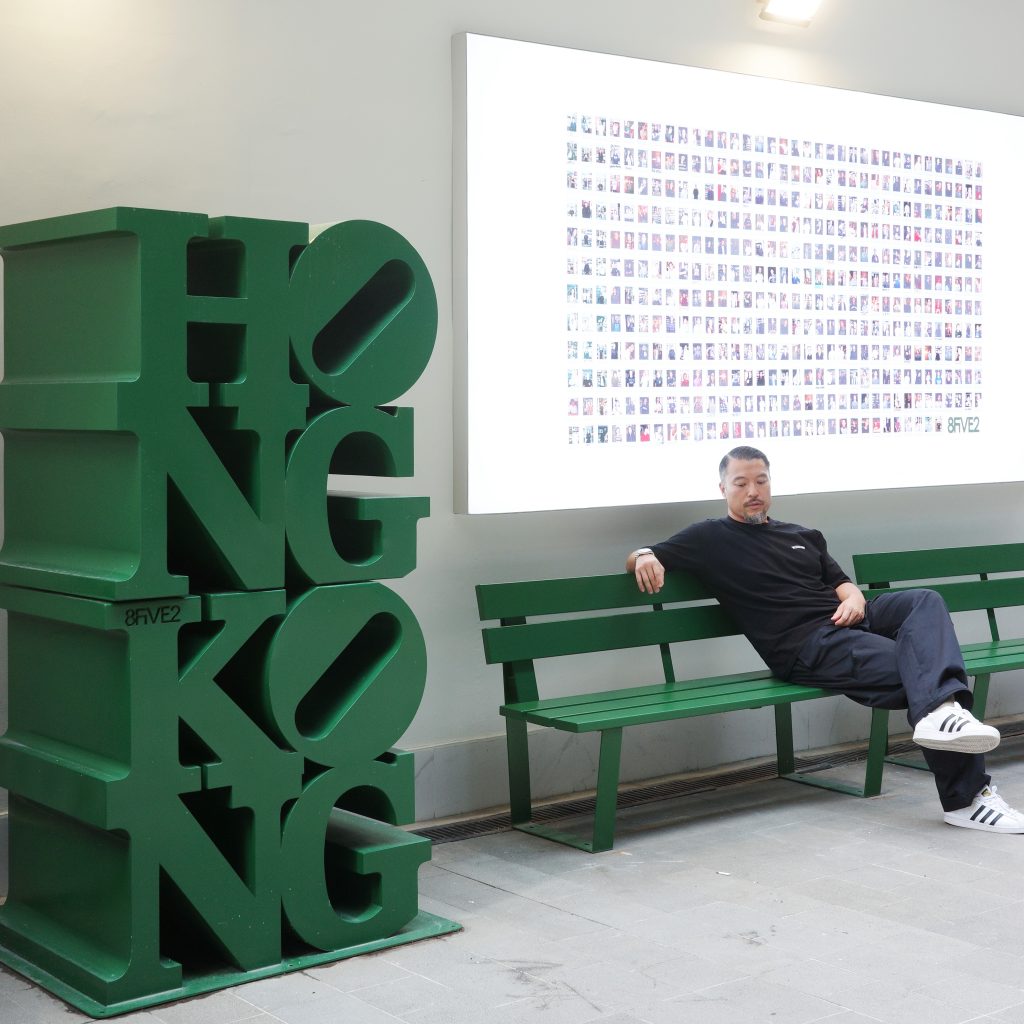
“Hong Kong can be international still,” he said. Representing Hong Kong does not require neon signs or taxi graphics. It can be a well cut jacket, a quality fabric and a mature design language. 8FIVE2 once released designs riffing on Hong Kong banknotes and taxis, but Brian says he would rather people remember the store for quality and culture than for an obvious Hong Kong gimmick.
Paterson Vibe is a collective habit
At the end of the interview we asked Brian to imagine a perfect weekend afternoon. He did not begin with shopping. He began with pizza. Then a walk down Paterson Street to see skateboards, a haircut, a movie, dinner with family and a last stop for snacks. In that sequence 8FIVE2 is only one stop among many.
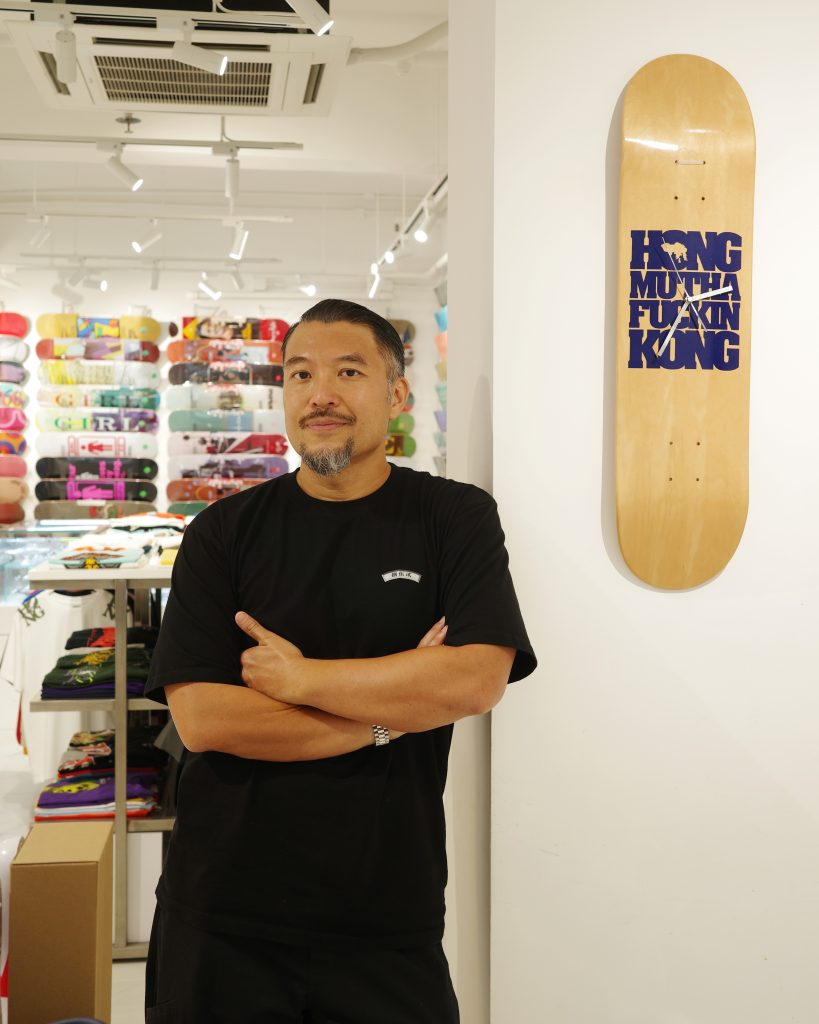
That, he said, is neighborhood culture: a street becomes magnetic because people choose to stop, to trade ideas and to make it part of daily life. Some come for skateboarding, some for coffee, some simply wander through and discover a brand they did not know. “Believe in your culture, believe in your taste, believe Hong Kong brands can stand on the international stage,” he said. That belief, and the refusal to Follow the Market, is what Brian thinks defines the Paterson Vibe.