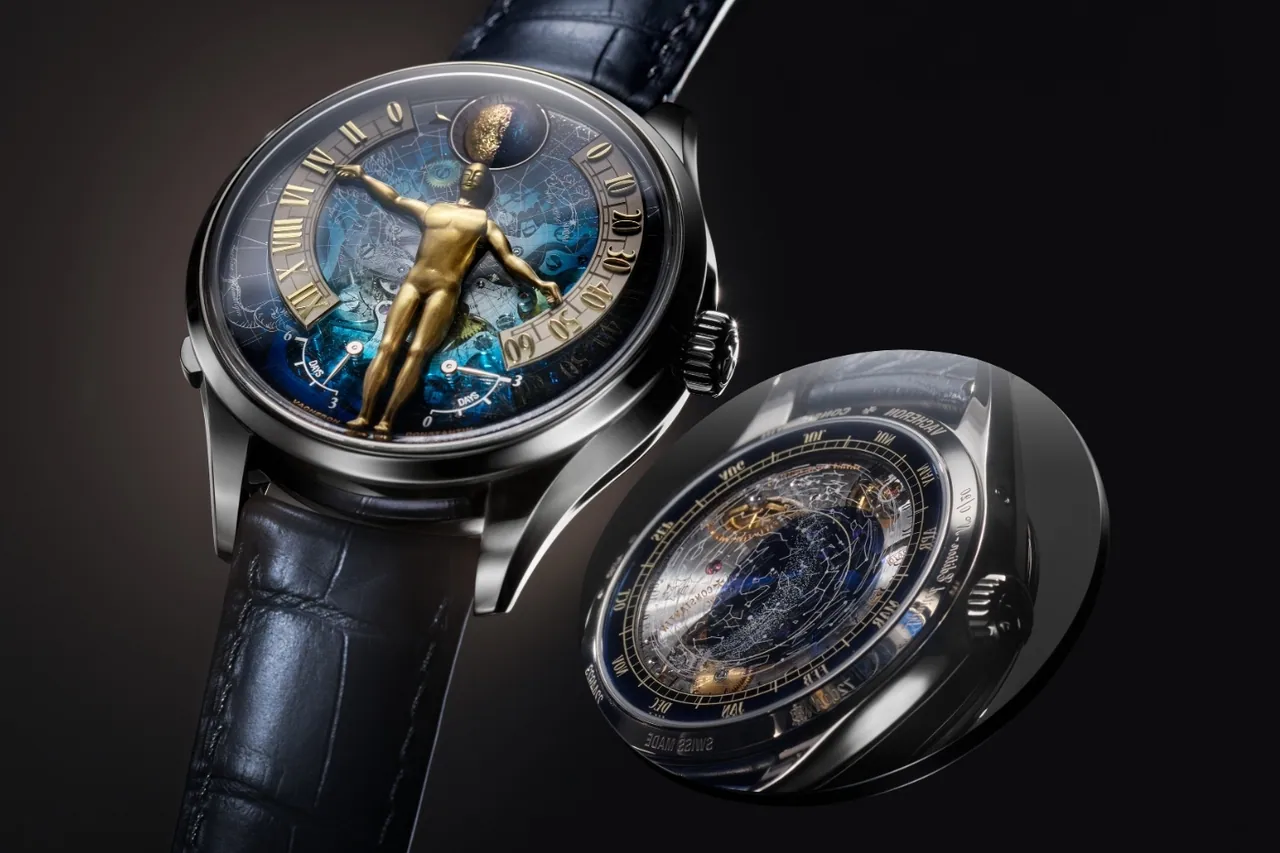
On the occasion of its 270th anniversary, Vacheron Constantin has unveiled two significant pieces: the double-faced watch from the Métiers d’Art collection, identified as A Homage to the Pursuit of Time, and the unique La Quête du Temps Mécanique d’Art astronomical clock. Both creations seamlessly combine high-end watchmaking techniques with exquisite decorative arts.
The watch features the newly developed manual-winding Calibre 3670 movement, made up of 512 components housed within a 43 mm platinum case. This movement has secured four patents, showcasing the pinnacle of miniaturization craftsmanship. Its design draws inspiration from the brand's rich history, authentically reflecting Vacheron Constantin's centuries-long pursuit of precision in timekeeping and the evolution of horological technology. The dial showcases sculpted gold figures, with dual retrograde hour and minute hands that can seamlessly switch between continuous display and on-demand display features. It also includes dual power reserve indicators and a precise moon phase display, set against the backdrop of the Geneva night sky on September 17, 1755.
Turning to the back of the watch, the sapphire-constructed star chart quietly reveals itself, capable of tracking sidereal time and real-time constellations, with an astonishing margin of error of just one day every 9,130 years. This watch has undergone three years of meticulous development, blending guilloché machine-engraved patterns, hand-carvings, and Grand Feu enamel craftsmanship, and boasts a power reserve of six days; the series is limited to just 20 pieces, with pricing available upon further inquiry.
The La Quête du Temps Mécanique d’Art has undergone seven years of interdisciplinary collaboration to redefine the marvel of mechanical art. Its movement comprises 6,293 components, integrating 23 complex functions and seven watchmaking patents. The built-in Astronomer automaton is driven by 158 cams, and the overall structure features rock crystal and lapis lazuli. It will debut this fall at the Art Mechanisms exhibition in the Louvre.
At the top of this clock is an automatic figurine of an astronomer that depicts Earth and the planets, capable of performing 144 different movements while synchronizing with the built-in mechanical music box; the bottom features a double-layered base encrusted with gemstone decorations symbolizing Earth and the planets. This translucent modern marvel carries the legacy of 18th-century watchmaking romance, embodying Vacheron Constantin's enduring pursuit of connecting human intellect with the cosmos through the art of mechanics.
For more details about the anniversary collection, feel free to visit the official Vacheron Constantin website.