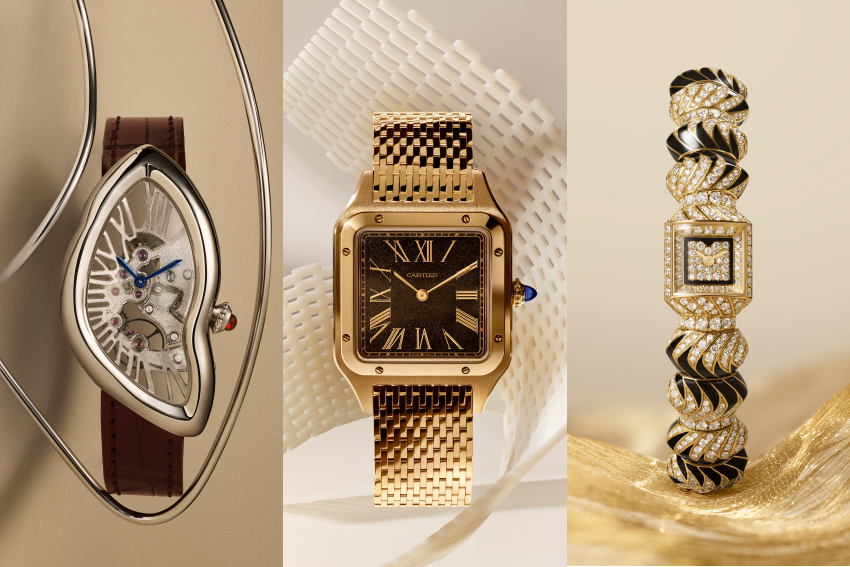
Cartier new watches unveiled at Watches & Wonders 2026 move beyond visual styling to integrate structure, materials and craft, turning timepieces into three dimensional jewelry objects.
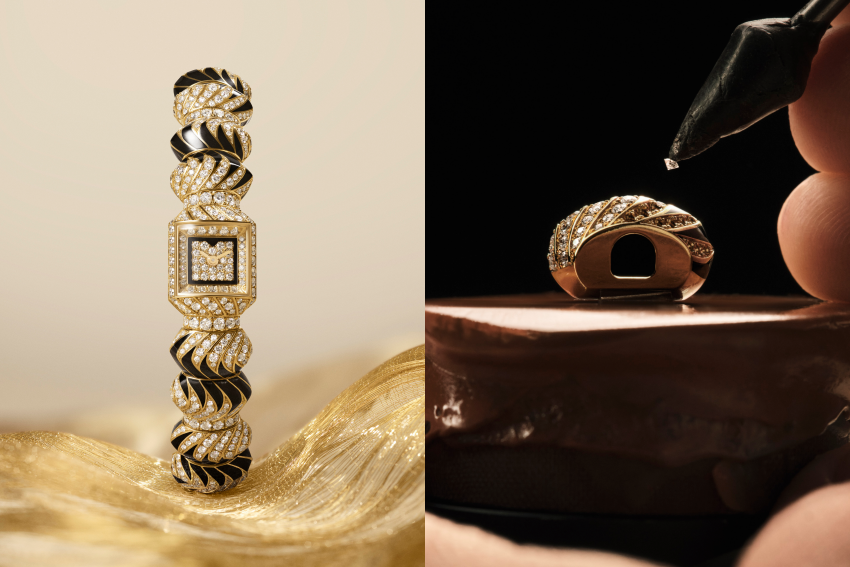
The new releases show Cartier refining a long standing practice of translating geometric forms into wearable design, while explicitly merging high jewelry work and watchmaking engineering to increase visual motion and structural complexity.
Cartier new watches: Myst de Cartier blends jewelry and mechanics
The Myst de Cartier model exemplifies the approach, drawing on 1930s jewelry watch silhouettes to emphasize mass and flowing lines. The case and bracelet are not separate parts, they connect through curved modules to form an almost sculptural outline that changes subtly as the wrist moves.
Gem setting alone takes about 112 hours, with multiple stone sizes stacked for depth, plus banded onyx and black lacquer for contrast. The bracelet opens and closes without a visible clasp through an internal mechanical telescoping structure, a rarity for high jewelry watches that underlines Cartier investment in structural research.
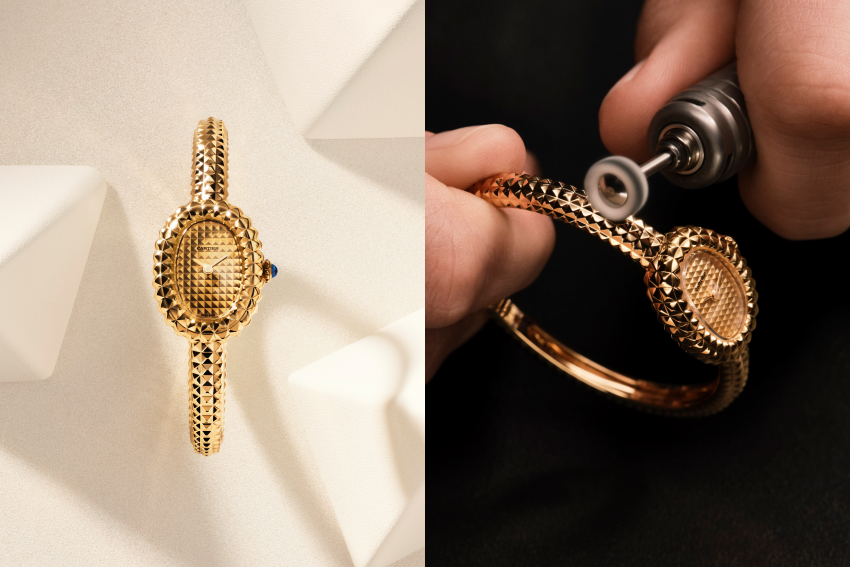
Baignoire surface work sharpens an oval classic
The Baignoire updates concentrate on surface finishing and proportion control, covering the case, dial and bracelet with a dense Paris stud motif made of small pyramid textures. Each three dimensional texture must keep crisp edges, so the entire polishing sequence is done by hand to preserve the geometry.
The diamond set dial adds roughly 100 stones, while an inverted setting on the case uses light from multiple angles to increase sparkle. The treatment gives the traditionally soft oval shape a sharper visual edge, creating a new contrast between silhouette and surface detail.
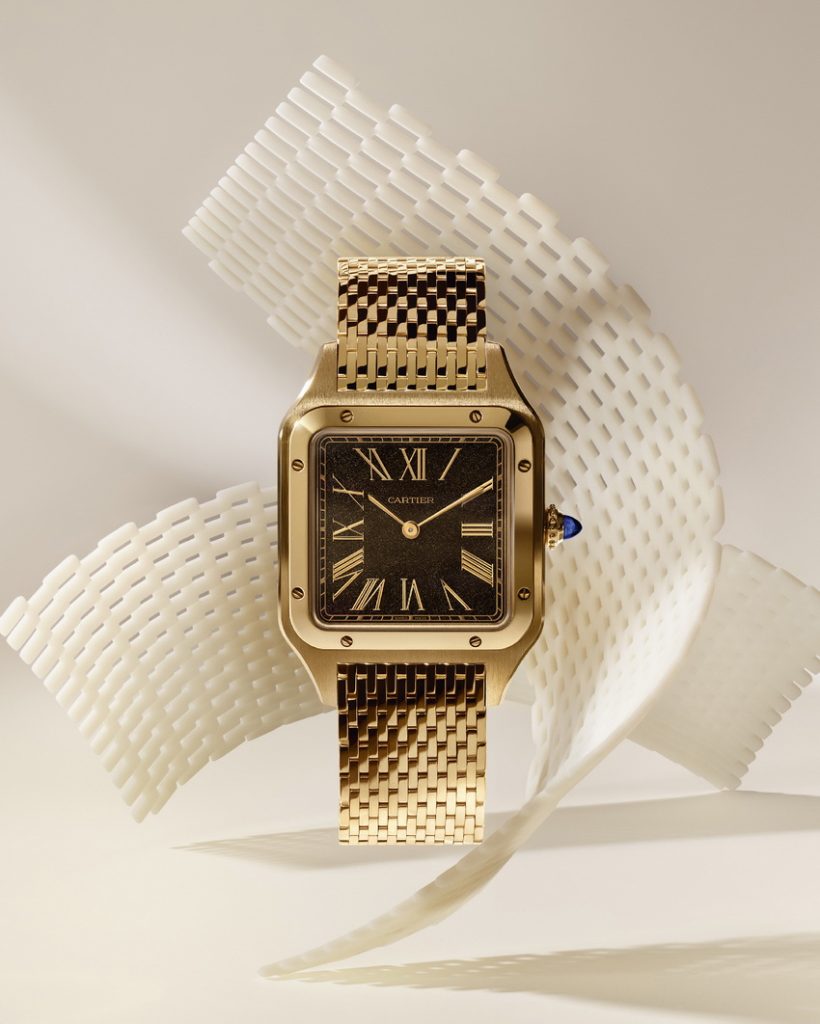
Santos Dumont refines comfort and thinness
The Santos Dumont update is comparatively restrained, but changes to detail have a direct impact on how the watch feels on the wrist. The new metal bracelet uses 15 rows made from a total of 394 links, each link just 1.15 mm thick, which improves suppleness significantly, and 1.15 mm is about 0.045 inches.
The dial is made from golden sheen stone that is only 0.3 mm thick, about 0.012 inches, requiring extreme precision during machining and assembly. Paired with a 31.4 mm case, about 1.24 inches, and a manual movement with roughly 43 hours of power reserve, the watch remains positioned between thinness and elegance.
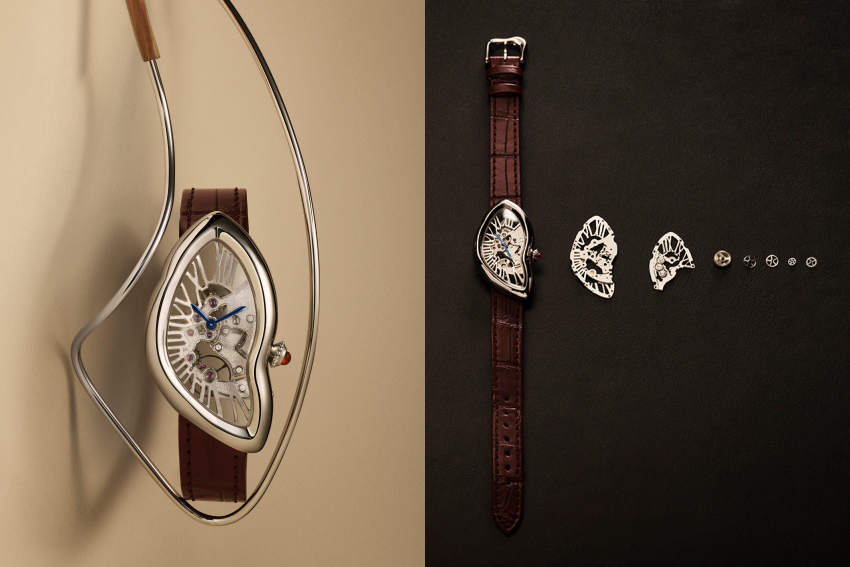
Cartier Privé Crash, craftsmanship for collectors
The Cartier Privé series reached its tenth chapter, continuing a program that uses modern techniques to reinterpret historical designs. The Crash skeleton model is one of the more technical pieces, powered by the 1967 MC manual movement, which comprises 142 components and uses skeletonized Roman numeral bridges.
Because the case is inherently asymmetrical, the movement architecture was redesigned rather than adapting an existing caliber. Some decorative operations, such as hand hammering the bridges, can take nearly two hours each, demonstrating the density of workmanship. The watch is limited to 150 pieces, clearly aimed at collectors.
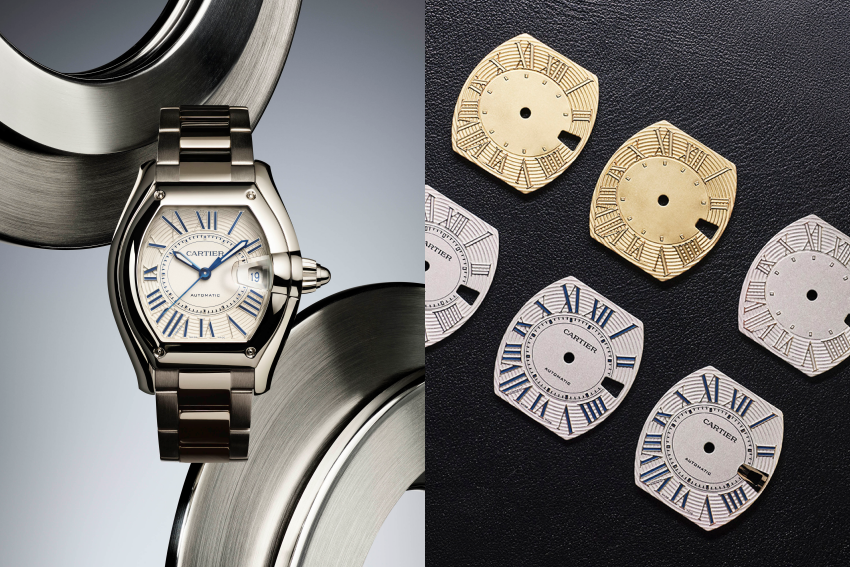
Roadster returns as a modern classic
The Roadster revival reflects renewed interest in early 2000s design, keeping the original barrel case and flowing profile while tightening proportions for a more compact look. Design work emphasizes integrated form, smoothing transitions among crown, case and crystal, and retaining signature elements such as the magnified date window.
Movement options include the 1847 MC for larger sizes and the 1899 MC for mid sizes, with power reserves of about 42 hours and between 38 and 40 hours respectively. The range will include stainless steel, yellow gold and two tone options, a strategy that balances daily wearability with collector interest.
Across this launch, Cartier new watches emphasize a convergence of jewelry technique and engineering, from gem heavy Myst de Cartier creations to the structurally ambitious Santos Dumont bracelet designs. The collection signals the brand is prioritizing integrated structure and material innovation as much as surface styling.