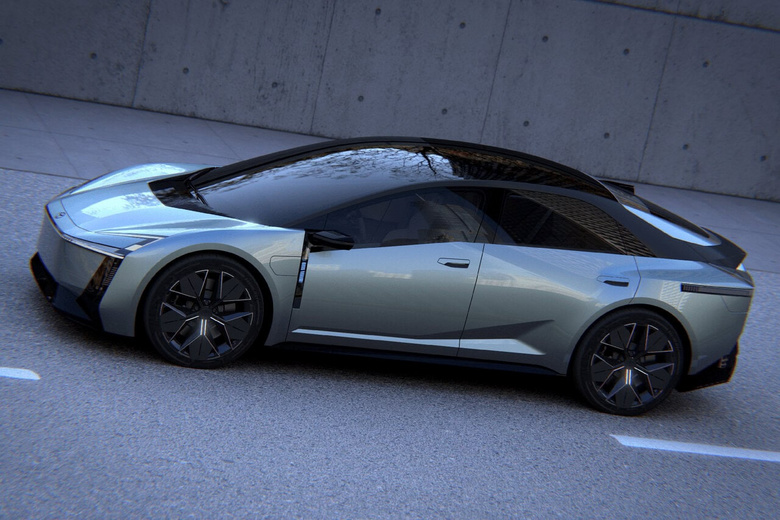
Toyota has officially unveiled the all-new Corolla hydrogen energy concept car at a mobile exhibition in Japan. This model not only steals the show but also embodies the brand's proactive stance on sustainable energy development. The concept car features a newly developed hydrogen internal combustion engine technology, challenging the common belief that hydrogen-powered vehicles are limited to fuel cell systems. This engine is not battery-driven; instead, it directly burns hydrogen as its power source, allowing drivers to enjoy the engine response typical of traditional gasoline cars while achieving nearly zero carbon emissions.
The Corolla hydrogen energy concept car maintains the classic silhouette that the series is known for, yet sports even more streamlined overall lines. The front features a large grille that not only adds a futuristic touch to its appearance but also serves a functional purpose for heat dissipation, optimizing airflow for the hydrogen internal combustion engine. The car adopts a lightweight design throughout, enhancing energy efficiency and driving stability. Inside, it embraces a minimalist tech aesthetic, featuring a spacious digital dashboard and a central touchscreen that provides drivers with real-time vehicle status and energy information. The user interface has also been redesigned for a more intuitive and smooth experience.
Toyota highlights that hydrogen combustion engines offer advantages like quick refueling, long-range capability, and stable operation, making them particularly suitable for long-distance journeys or high-frequency usage scenarios. While electric vehicles currently dominate the market, Toyota believes hydrogen energy can provide another viable option. The similar technical platform to traditional internal combustion engines helps lower the barriers to transition, while also maintaining efficiency in the use of a large number of existing parts and supply chains.
Hydrogen combustion engine technology isn't just something cooked up in a lab; Toyota has already been testing the stability and durability of this tech through its Gazoo Racing team in various endurance races. The data gathered from these competitions, in turn, accelerates the R&D process, focusing on aspects like combustion efficiency, engine compression ratios, and cooling system adjustments. This development approach, driven by real-world feedback, significantly enhances the practicality and market potential of the technology.
Even with significant breakthroughs in technology, the widespread adoption of hydrogen fuel cell vehicles faces a critical obstacle: inadequate infrastructure. Currently, the distribution and number of hydrogen refueling stations worldwide lag significantly behind electric vehicle charging facilities. Toyota believes that for this technology to see broader application in the future, collaboration between the government and the industry is essential to accelerate the establishment of hydrogen infrastructure and formulate specific supportive policies. The brand emphasizes that this is not just a corporate responsibility, but also a vital part of the entire society's energy transition.
In addition to its promotional potential in the domestic market, the Japanese government is actively working to build Hydrogen Energy Society in hopes of reducing dependence on traditional energy sources. As the largest automotive brand in Japan, Toyota is poised to lead this transformation. However, the brand has also stated that in order to promote related vehicle models to overseas markets, it will need to tackle multiple challenges such as cost control, infrastructure alignment, and user education.
The production timeline for this Corolla concept car has yet to be revealed, but Toyota has confirmed its commitment to investing in hydrogen energy technology. They will carefully decide whether and when to launch a production version based on market responses and infrastructure development progress. This vehicle represents a significant step in the evolution of alternative energy, and whether it can successfully replace a portion of the traditional or pure electric vehicle market will be a key indicator to watch in the future.