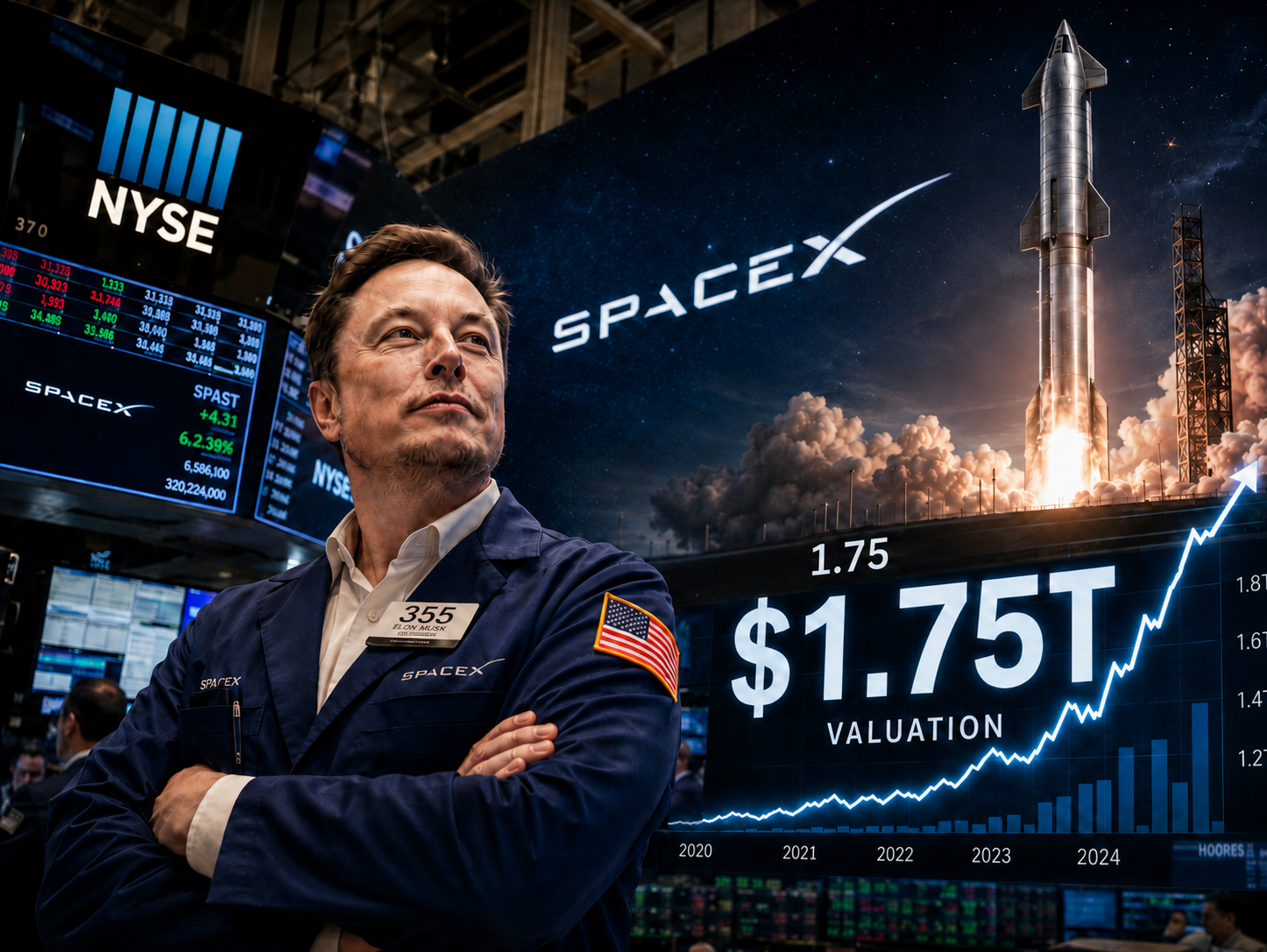
SpaceX AI contracts with Google and Anthropic commit about $2.17 billion in monthly payments and more than $75 billion over three years, the company disclosed in its IPO filing as it prepares to list publicly.
SpaceX reported roughly $18.7 billion in revenue for 2025 and an overall net loss of about $4.9 billion, the filing shows. The company said the loss was driven primarily by its xAI artificial intelligence unit, which lost about $6.4 billion in the year, and by ongoing Starship research and development costs.
SpaceX AI contracts reshape the company’s revenue picture
The headline development is the two major AI deals announced before the IPO, which altered investor attention from rockets and satellites to data-center capacity. In May, Anthropic said it will pay SpaceX about $1.25 billion per month to lease all compute from the Colossus 1 data center, a deal that runs through May 2029 and is worth roughly $45 billion on its face.
On June 5, Google announced a separate arrangement to pay about $920 million per month for roughly 110,000 Nvidia GPUs and related capacity through 2029, a contract the company described as a response to unexpectedly high demand for its Gemini Enterprise services. Together, the two agreements add about $2.17 billion a month in committed revenue and more than $75 billion over three years.

Anthropic said the Colossus 1 lease covers more than 220,000 Nvidia GPUs, including H100, H200, and the GB200 accelerators, and supplies more than 300 megawatts of power. Anthropic also stated it wants to explore extending the work to orbital AI centers, describing ground-based power, land, and cooling as potential long-term constraints on model scale.
SpaceX framed the deals as part of a broader vision to move large-scale AI compute into space, but the IPO filing notes that orbital data centers remain experimental and face many technical hurdles that could prevent commercial viability for years.
Starlink, not AI, is currently the profit engine
Despite the eye-popping AI deals, SpaceX said Starlink was its only profitable business unit in 2025. The Starlink satellite broadband network generated about $11.4 billion in revenue and roughly $4.4 billion in operating profit that year, according to the filing.
Starlink now covers more than 160 markets worldwide and supplies in-flight connectivity to over 1,400 commercial aircraft. If you have used internet service on a long-haul flight, a cruise ship, or in remote locations recently, Starlink may already have been providing the connection.

In 2026 SpaceX introduced Starlink Mobile, a direct-to-device service that lets standard smartphones connect to satellites without changes to the handset, by subscription. The service launched commercially in the United States in partnership with T-Mobile, and SpaceX said it plans to expand to Canada, Japan, and other markets.
SpaceX bought EchoStar’s mid-band spectrum license in 2025 for about $17 billion, a step the company said was necessary to operate a fully independent mobile service. Under a roadmap SpaceX presented at the 2026 World Radiocommunication Conference, a direct-to-device upgrade targeting speeds near 150 Mbps is slated to begin testing by the end of 2027, with analysts citing 2028 as the likely inflection year for broad adoption.
Analysis firm Omdia projects more than 400 million users could be on satellite-direct mobile service by 2030, and SpaceX has identified roughly 7.4 billion existing mobile devices as its addressable market. Incumbent carriers in Europe and Asia have begun lobbying regulators to tighten satellite spectrum rules, and spectrum allocation disputes remain unresolved in several markets.
Risks remain: governance, timing, and technical hurdles
The contracts underline a basic industry fact: when ground-based compute is constrained, top AI developers call new suppliers. Still, the deals are currently for terrestrial data-center capacity, not orbital compute, and SpaceX itself cautioned in the IPO filing that orbital AI data centers are at an early stage and may never reach commercial viability.
Another variable is company leadership. Elon Musk runs multiple public and private businesses, including SpaceX, Tesla, xAI, and X, and setbacks at any of those companies could reverberate across the group. The filing and the timing of the contract disclosures, which were made in the weeks ahead of the IPO, raise questions for some investors about information timing and valuation, a matter the company declined to quantify further in public filings.
For now, the market will be watching whether SpaceX can translate its Starlink cash flow into the capital and technical momentum needed to pursue its more ambitious AI and orbital plans, or whether the AI contracts simply reshape expectations for the company’s near-term revenue mix.
Reporting for this article is based on SpaceX’s IPO filing, company announcements, and statements from Anthropic and Google. Analysis firm Omdia provided user projections cited above.