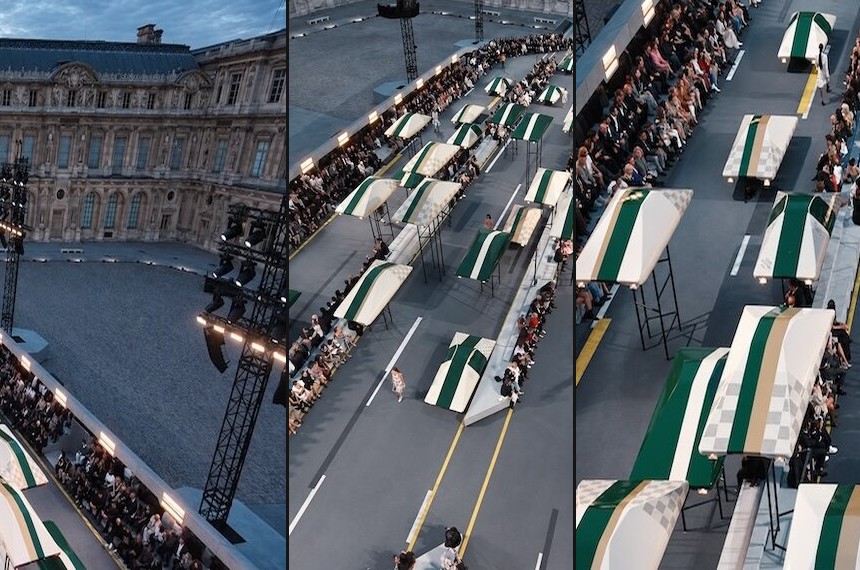
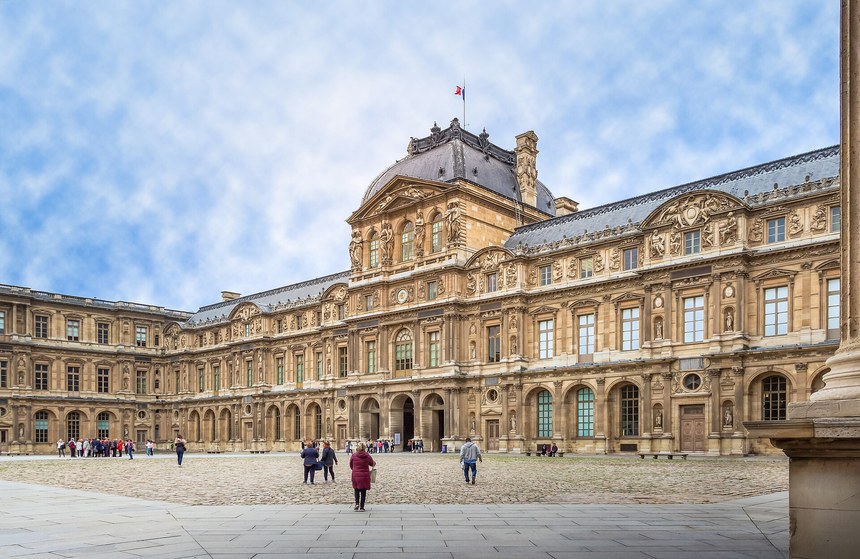
Louis Vuitton Spring 2027 opened with 34 floating concept cars suspended over the Louvre’s Cour Carrée (the museum’s square courtyard in Paris), a spectacle that doubled as the Paris Fashion Week finale and a theatrical frame for Nicolas Ghesquière’s new womenswear collection.
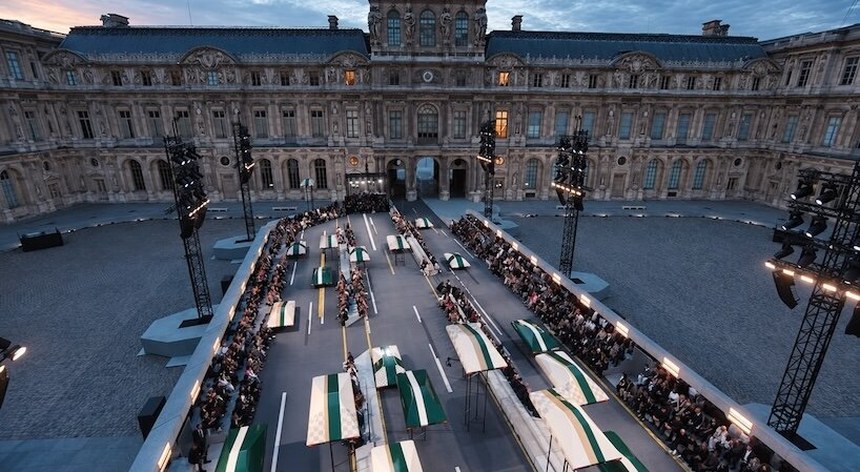
The show, staged on the evening of Oct. 6, arranged milk white bodies with deep green accent lines into an aerial fleet, headlights and taillights lit, hung at varying heights against the seventeenth century stone facade.
Louis Vuitton Spring 2027 at the Louvre
The installation was the work of production designer James Chinlund, who is known for large cinematic sets and who served as production designer on The Batman (2022). Chinlund has collaborated with Nicolas Ghesquière before, including the 2025 early spring show in Barcelona’s Parc Güell and a 2022 courtyard installation with artist Philippe Parreno.
Installation and design choices
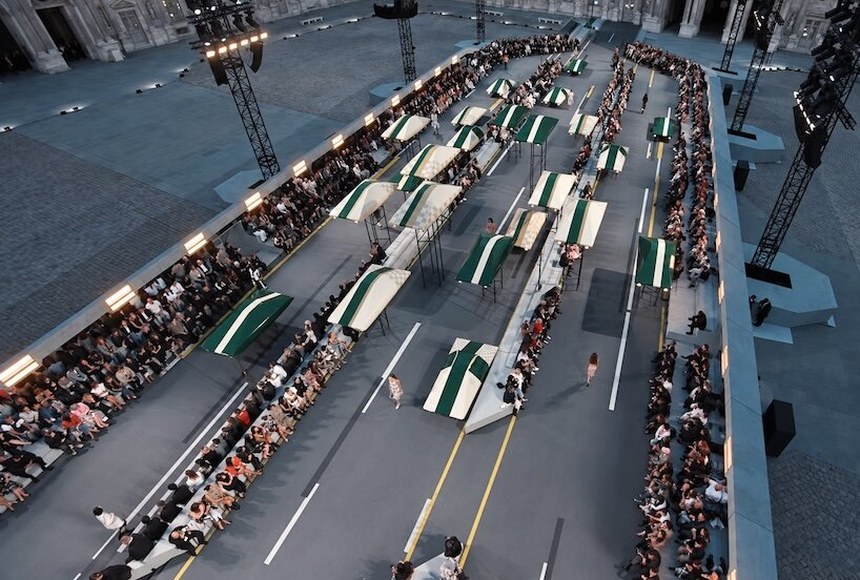
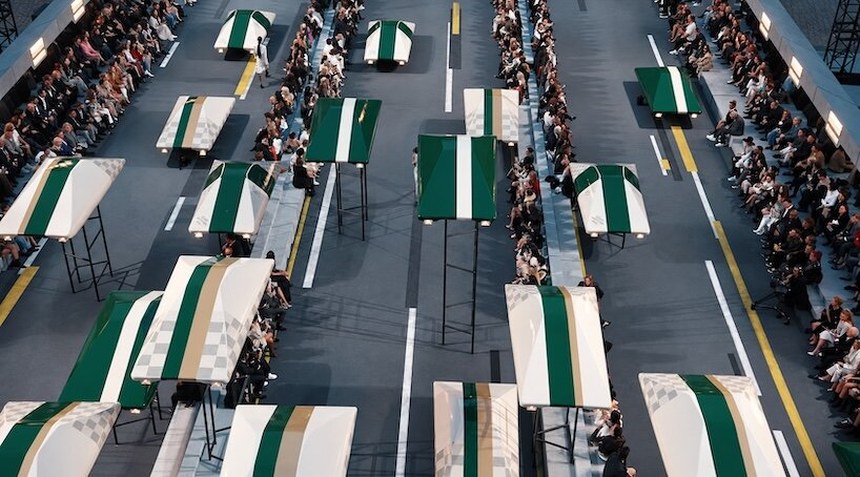
The 34 concept cars are divided into four pure geometric silhouettes that deliberately depart from current mass produced automotive design. Each body is wrapped in Louis Vuitton’s signature Damier checkerboard motif and detailed in milk white with deep green contrast lines.
Chinlund suspended many of the vehicles in midair while several remained parked on the ground, leaving the museum facade fully visible so the ancient stonework acts as a frame for the futuristic urban tableau. The result is a composed, almost arrested aerial scene that contrasts classical history with a speculative vision of city mobility.
Runway clothes and ergonomics
On the runway, models walked a catwalk textured to resemble asphalt, the floating cars forming an overhead transit network. The clothing line, titled Ergonomie, emphasizes ultra lightweight fabrics and fluid tailoring that move with the body.
Nicolas Ghesquière said the collection draws on the ergonomic furniture ideas of the late French designer Pierre Paulin, and that more frequent heat waves across Europe helped push breathability and weight reduction to the center of the work. Ghesquière said many of the jackets weigh less than a typical T shirt, a decisive statement about mobility and comfort in warm climates.
Visual tension between object and garment
The show staged a clear tension between the industrial speed suggested by the installation and the quiet practicality of the clothing. The airborne vehicles suggested density and a nonstop urban rhythm, while the clothes pursued what Ghesquière described as a weightless fit that follows natural movement.
Materials focused on breathability and minimal structure, with cuts that intend to reduce drag on the wearer and maximize comfort. The collection’s name, Ergonomie, signals the studio’s attempt to design clothing that responds to the demands of city life and climate change.
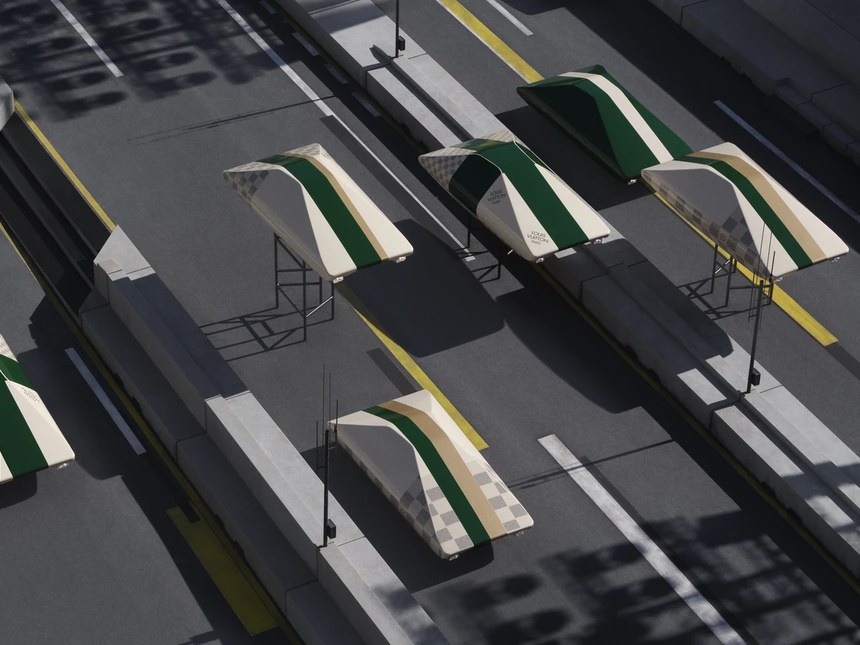
For Louis Vuitton Spring 2027, the pairing of Chinlund’s cinematic set and Ghesquière’s fluid clothes reimagined the fashion show as both a design laboratory and a staged future, using the Louvre’s historic stone face as a counterpoint to a proposed urban mobility aesthetic.